On Dec. 2, 2025, an array of acclaimed artists, scholars and journalists congregated into room 1113 of the CHASS Interdisciplinary Studies at the University of California, Riverside (UCR) for the Indigenous Truthtelling Symposium & Art Exhibit. Displaying the works of artists like Mona Kadah and Weshoyot Alvitre while inviting intellectuals to speak, the event focused on the current plight and resilience of indigenous people.
More specifically, the Indigenous Truthtelling Symposium & Art Exhibit touched upon the ongoing genocide in Gaza, highlighting the grave injustices done on Palestinians while noting the bravery of journalists and artists willing to speak out about it. With many of the atrocities against those native to their land being both ongoing and unrectified, the event emphasized the need for solidarity among indigenous people around the world.
Journalists, professors and those familiar with indigenous struggles against oppression took the floor, speaking on a variety of topics such as the memorialization of those who died trying to speak out about brutalities as well as strategies on how to fight back against modern day imperialism. Panelists of different indigenous backgrounds spoke about their experiences with imperialism, drawing from both firsthand accounts as well as their own family histories. The symposium additionally called out the failure of Western journalism when it comes to accurately and impartially covering the brutalities happening in occupied territories such as Gaza.
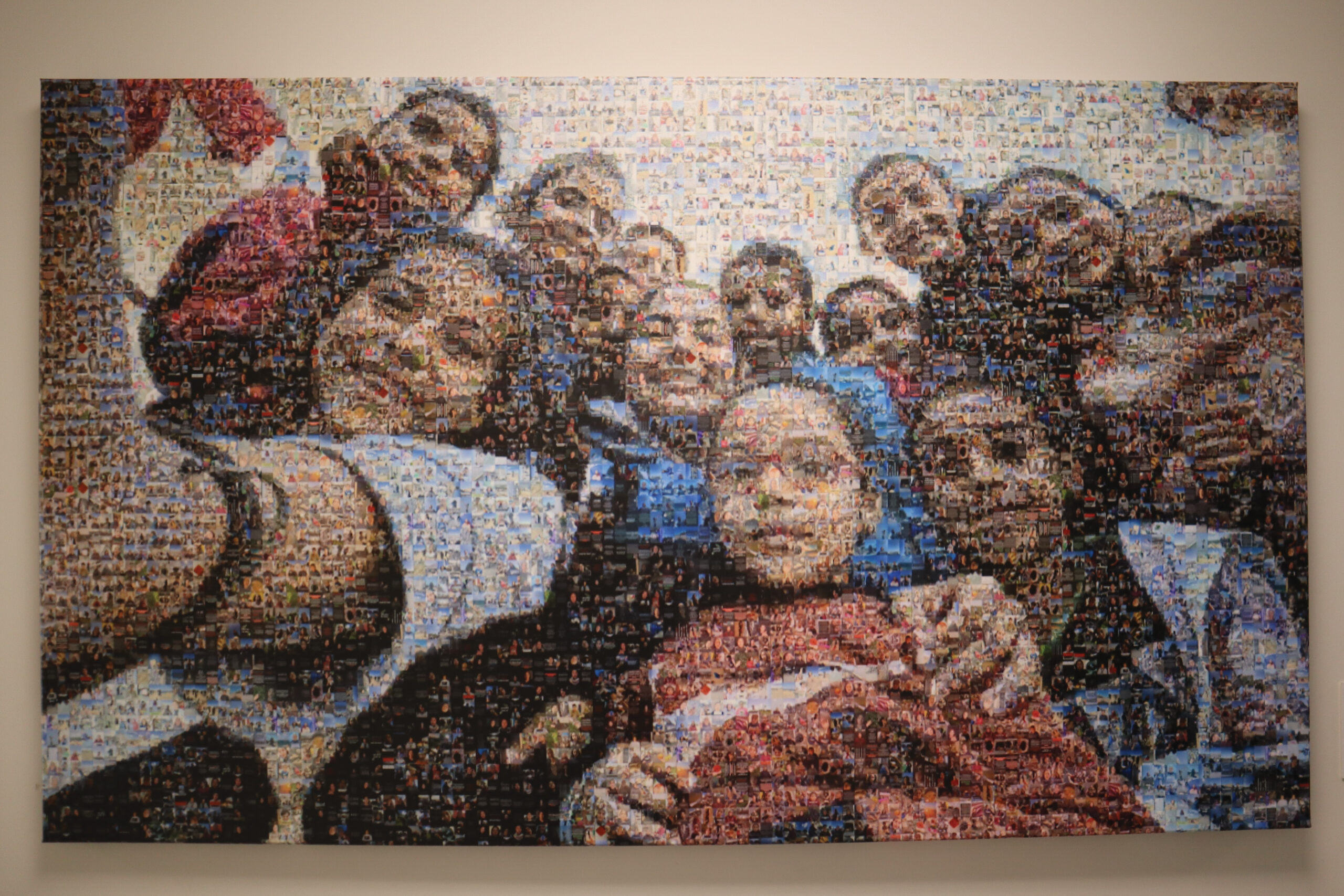
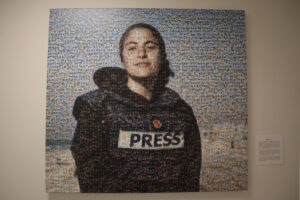
Among the panelists stood the mosaics of those who’ve dared to shed light on atrocities rampant in their homelands, one of them being Shireen Abu Akleh. Shireen was a prominent Palestinian journalist who reported on the subpar conditions persistent during the occupation of Gaza, being renowned to many as “the voice of Palestine.” She was killed on May 11, 2022 while covering an Israeli raid on the Jenin refugee camp. Her mosaic is made from the photographs of more than 200 journalists who were also killed while reporting on the Gaza occupation.
Additionally, a mosaic dedicated to Bisan Owda was also unveiled at the exhibition. A journalist and filmmaker, Owda has documented the unbearable circumstances that have befallen those in Palestine. Reporting via social media, Bisan’s coverage garnered acclaim by many as an accurate and detailed portrayal of what’s going on in Gaza.
Alongside Al Jazeera, Owda has also made Peabody and Emmy award-winning documentaries focusing on the conditions of Palestinians in Gaza. Her mosaic is made up of more than 700 Instagram posts – a number that continues to grow as she continues to document the ongoing genocide in Gaza to this day.
Some of the artwork displayed during the exhibit comes from Mona Kadah. Mona, an award-winning watercolor artist, painted true-to-life depictions of the ongoing conditions in Gaza. One of her works, “Gaza Prayer,” candidly depicts the continuation of Muslim prayer amidst city ruins while a minaret symbolically stands damaged but not completely broken.
It is hard not to associate the minaret with the hardy spirit of Palestinians during the ongoing genocide. Another one of her works displayed at the symposium poignantly depicts the displacement of Palestinians, particularly focusing on a single mother lugging along her children and bags. Poppies are a recurrent motif within her works, symbolizing resilience and hope in troubled times.
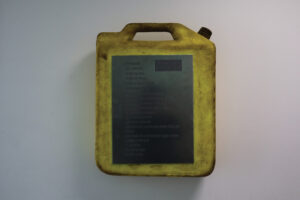
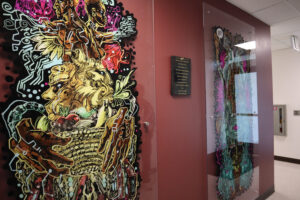
Weshoyot Alvitre, a Tongvan and Scottish comic book writer and illustrator, also unveiled her artwork during the symposium. Her work primarily focuses on the past, present and future of California, especially in regards to its colonial past. One artwork panel that completely stood out centers around the Spanish influence of California, in which an eclectic mix of objects can be seen such as swords, mission bells and a statue of the Virgin Mary. The last panel of her work depicts a hopeful future for California marked by the presence of blooming flowers. Just like with Mona, the poppies are present throughout her works.
A prominent figure that stood for uplifting the voice of the people of Gaza, was the late writer, poet and activist Professor Refaat Alareer. With a background in English literature, he utilized his platform to shed light of real accounts of experiences from Palestinian citizens in his 2014 collection of writings “Gaza Writes Back.” He effectively used social media as a tool to continue raising awareness of these events that transpired in Gaza with the help of many students he has worked with in the past.
One of Refett Alareer’s last efforts was shown in his posthumously released poem, “If I Must Die,” in which he describes where in the event that he passes away, may those listening continue spreading his message far and wide to bring hope for all those lost in Gaza. He was a selfless man that put his heart and soul into every living moment for none other than his people. Despite all the oppression and destruction he’s had to sustain across his lifetime, he never wavered in his resistance to fight against oppression, and care for the Palestinian people.
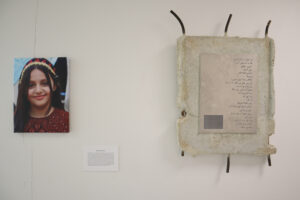
Assistant Professor Charles A. Sepulveda of the Department of Ethnic Studies was in charge of translating Refaat Alareer’s piece into Taraaxam language. He saw many parallels in the Palestinian struggle that connected with the indigenous people’s struggle in the US. The purpose behind the translation was to effectively spread Refaat’s message, symbolizing unity among communities of indigenous peoples from around the world as they face settler colonialism and its atrocities together.
As Poet Yahya Ashour mentions, the form of anger regarding the pain he feels, is expressed within his works of poetry. This is a sentiment felt within his culture and he sees within other cultures affected by the same levels of oppression as well. Historically, groups that expressed their anger were met with grotesque reactions, as the abnormal situations sustained by indigenous groups, psychologically, had to be met with abnormal reactions. By catering with preferred reactions and demonstrations of resistance to their colonizers, really is hurting them more while dealing with tragedy.
Yahya Ashour and Dr. Refaat Alareer urge people to think about more than just the “U” in the USA. The same issues faced by other groups is a universal systemic failure that only with the help of those who can listen to their stories, can they be alleviated for the next generation. It is the responsibility of humans to continue helping and uplift others so that all may be free living in peace.