
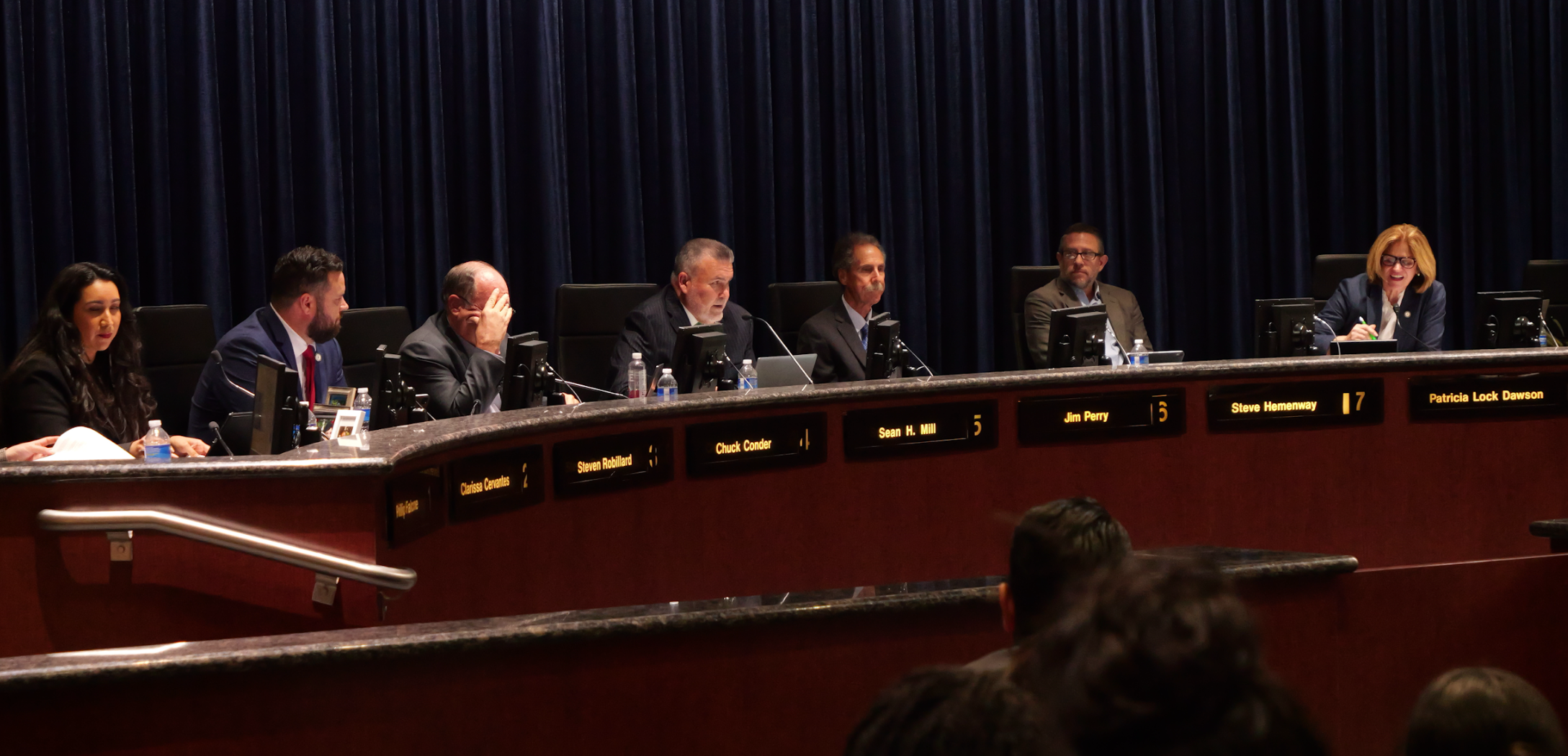
The Riverside City Council held a special meeting on Oct. 14 to discuss the Safe Communities Resolution, a formal statement by the City Council that condemns the U.S. Immigration and Customs Enforcement (ICE) officers’ use of “non-transparent tactics” while carrying out federal immigration policy within Riverside and creates mandates for city offices to protect civilians. The meeting saw over sixty community members speak during its public comment section, nearly all in support, and was passed in a 4-3 decision.
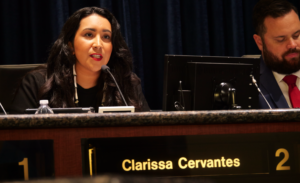
The resolution was curated in a joint effort by the social justice non-profit organizations the Coalition for Humane Immigrant Rights (CHIRLA) and the Inland Coalition for Immigrant Justice (IC4IJ), along with the Riverside Police Department and Councilmember Clarissa Cervantes.
The Safe Communities Resolution formally urges immigration enforcement officers active within Riverside to adhere to the directives of passed California bills concerning federal immigration enforcement within the state; however, it does not mandate that they follow them, as the city cannot override federal authority. It cites explicitly California bills SB-54, the California Values Act, which was passed in 2017, and SB-627 and SB-805, which were both passed on Sept. 20, amongst others.
The California Values Act authorizes the state government to limit federal law enforcement’s ability to require state agencies to work with them in enacting immigration policies because immigrants are essential to the state. The Safe Communities Resolution directly cites the act to affirm Riverside’s right to place limitations on the “use of local resources in federal immigration enforcement while allowing cities to take proactive measures to ensure transparency and protect civil rights.”
SB-627, or “Law enforcement: masks,” specifically prohibits ICE agents and other law enforcement officers from wearing opaque masks and other identity concealing facial coverings and SB-805, or “crimes,” addresses the incidents of civilians impersonating law enforcement officers such as ICE agents to harass immigrants and other vulnerable groups and also mandates law enforcement officers clearly display identification at all times and prohibits them from working in civilian clothing.
Both bills work to hold law enforcement agencies accountable and rebuild trust between law enforcement and immigrant communities in the current contentious and uneasy political climate. Both bills are set to go into effect Jan. 1, 2026.
Although the resolution does not directly prohibit ICE from being present in the city, it does require city agencies to take action in support of Riverside’s residents. Specifically, the resolution directs the Riverside Police Department to monitor and report the presence of immigration enforcement officers; prohibits city databases and registries from recording residents’ immigration status and bars the sharing of license plate reader data or camera footage with immigration authorities without a warrant. It also mandates that the City Manager’s Office and the City Attorney’s Office report ICE and other federal activity to the Human Relations Commission (HRC) every month, enact a public awareness campaign to provide resources to Riverside residents and explore legal avenues to respond to ICE activity in the case it violates the city’s values.
In effect, the Safe Communities resolution defines how Riverside’s city government will work to mitigate the fears felt by many of its residents during this time of strict immigration policy. According to the 2023 U.S. Census Bureau and cited in the resolution, 68% of the Riverside population identifies as Latino or Hispanic, and 22.5% of residents are foreign-born. Many Riverside civilians of these groups feel as if the presence of ICE in the city threatens their safety.
CHIRLA’s Inland Empire regional field coordinator, Christopher Vazquez, spoke to this fear during the meeting by reporting that the rapid response hotline run by CHIRLA and IC4IJ has been receiving calls from multiple counties, including Riverside, from civilians seeking counsel who are afraid to reach out to their communities due to the invisibility of ICE.
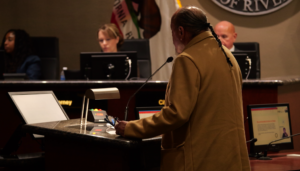
“When someone is detained or followed or threatened, they don’t reach out to their council members or their local police. They reach out to a local response hotline, hoping that someone will protect them … they’re afraid that calling for help might destroy their families. They’re afraid that speaking up might make them a target,” Vazquez explains.
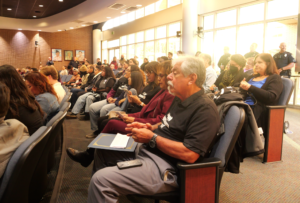
Whilst there were a few proponents of the resolution, such as one caller who did not identify himself, suggesting that its adoption would only provoke a response from the federal government and incite violence, many of the supporters echoed sentiments of alarm. They shared personal stories of relatives isolating themselves regardless of immigration status, argued that ICE’s actions were cruel and called for the city to approve the resolution and reassure them in their time of uncertainty.
Before the vote to adopt the resolution was held, Cervantes expressed that the large turnout of support for the resolution by Riverside residents was “a testament to where Riverside wants their City Council to vote alongside them.” She expressed feeling an “incredible pride” for the passion of those who spoke and the efforts put into passing the resolution.
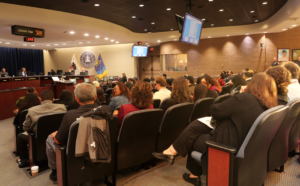
First-generation University of California, Riverside (UCR) student Luis Diaz was one of many UCR students to speak in support of the resolution. Diaz expressed to the council in public comment that the resolution was a way they could stand with their immigrant and other affected citizens in their time of distress as “safety and dignity are not relatives, they are something our city should consider basic and continue to uphold,” and later elaborated on this point by stating “We’re not asking, from my perspective, of a lot. We’re not asking to make sure there’s no ICE agents within the city … We’re only asking that these agents be able to identify themselves. That’s when they’re within the city of Riverside, we were able to keep them accountable.”
Councilmembers Philip Falcone, Cervantes, Sean Mill and Steve Hemenway voted in favor of the resolution and Councilmembers Steven Robillard, Chuck Conder and Jim Perry voted against it. With six of the seven congressmembers being registered as non-partisan and Riverside generally being considered a purple county with, according to the 2023 Report of Registration by County, with 40.44% of the city being registered as Democrats and 31.28% being registered Republicans, the resolution was able to solidify that, regardless of the general neutrality, the City is looking to support its residents.
As put by Diaz, “Riverside stepped out of the place of neutrality and decided to reaffirm its standing on its city values. They value their diverse culture; they are kind of proud of their immigrant population… I think students should know that the city of Riverside doesn’t want to take a neutral stance anymore.”