
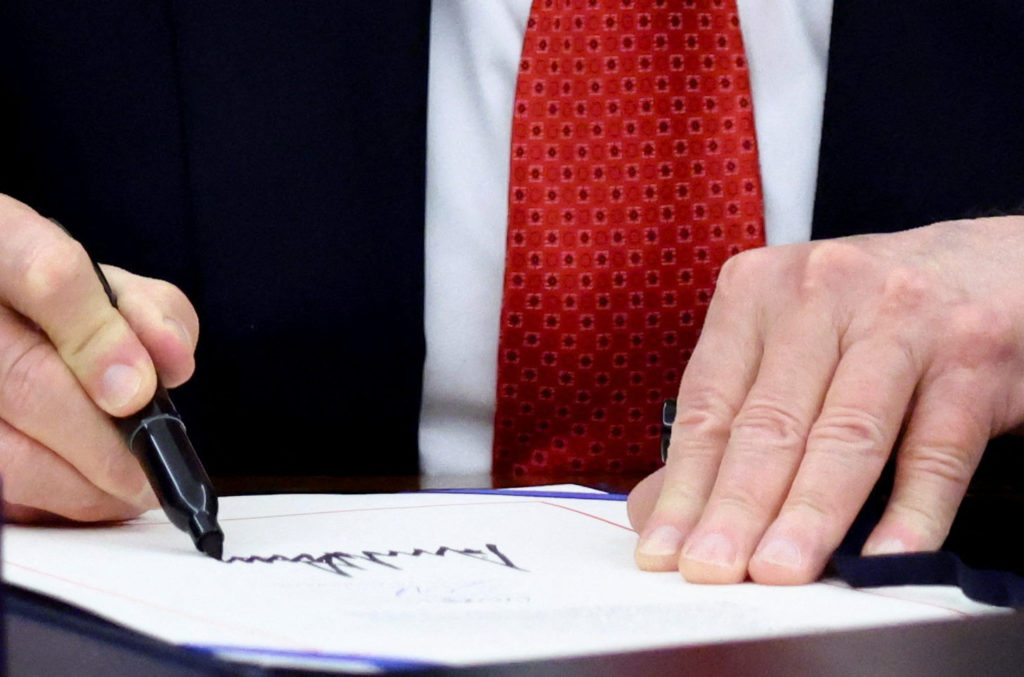
President Donald J. Trump signed off on the Epstein Files Transparency Act on Nov. 19 following its nearly unanimous passing through the House of Representatives and Senate. The bill, authored by Calif. Democrat Rep. Ro Khanna, mandates that the Department of Justice (DOJ) release the Epstein Files in their entirety within 30 days of the bill’s passing.
The bill’s passing follows the release of emails by the DOJ on Nov. 12, which highlighted the relationship between Epstein and Trump.
The Act specifically mandates that the DOJ release all files relating to Epstein, including any travel logs, prosecutions, information regarding his former girlfriend and accomplice Ghislaine Maxwell, information regarding implicated individuals and entities and any legal deals made by Epstein. It also mandates the DOJ release its own communications regarding the investigation and all documentation of Epstein’s death.
Although the bill is set to release the Epstein Files in its entirety and has support from both parties, it did include permitted grounds for withholding. The clause could withold the release of information which could identify victims within the case, material related to child sexual abuse, material displaying deaths and other records of abuse and information that could jeopardize national security of the ongoing federal investigation.
Another factor is that the “Epstein Files” is a relatively abstract concept in the sense that there is no concrete file held by the DOJ depicting all relevant material. As explained by CNN senior legal analyst and commentator Elie Honig in an interview with the Law and Crime Network, “it’s not so neat and tidy as the Epstein Files. There’s not some file cabinet at DOJ that has it all in there. There’s a combination of video and surveillance and audio and documents.” Honig went on to report that in its totality, the DOJ currently has over 300 gigabytes of material in relation to the case, which is expected to increase as investigations continue.

The one dissenting vote in the 427-1 decision within the House of Representatives was imputed by Republican Clay Higgins as he argued its release posed a threat to innocent individuals.
Besides this, the release of information within the Epstein files has been bipartisanly advocated for such as on Nov. 18, when Khanna and Republican Representative Marjorie Taylor Green joined Epstein Survivors on Capitol Hill as they pressed the House of Representatives to pass the Epstein Files Transparency Act.
On a political scale, members of both parties have spoken in support of promoting public transparency through releasing the bill, but both also allege that doing so will reveal incriminating implications of members of their opposing political parties.
For instance, in a post to Truth Social, President Trump announced that he had signed the bill in an effort to help expose democrats implicated with Epstein by saying, “Perhaps the truth about these Democrats, and their associations with Jeffery Epstein, will soon be revealed, because I HAVE JUST SIGNED THE BILL TO RELEASE THE EPSTEIN FILES!”
With the deadline now looming three weeks away the release of the files remains spotlighted as both political parties speculate the changes it will make to the American political climate.