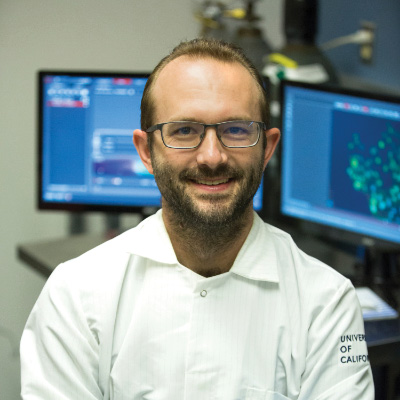
Aging is often treated as a snapshot: a comparison between young and old, healthy and diseased. But according to the University of California, Riverside (UCR)’s bioengineering professor Joshua Morgan, this approach misses the most important part of aging- the slow, complex process that unfolds in the years between. His research aims to fill the gaps in the field, bridging the divide between simple cell-based studies and animal models that don’t fully reflect human biology.
Professor Morgan’s research focuses on aging and cellular stress, examining how human tissue changes over time under environmental and internal pressures such as oxidative damage, UV radiation and toxic exposure. Rather than relying solely on traditional cell cultures or animal models, his lab builds engineered human tissue models that more closely resemble real organs and can be studied over months rather than days.
“We can take early tissue, middle-aged tissue and aged tissue and compare them,” Professor Morgan explained. “Those are great experiments, but they’re also very tricky.” Human samples come with decades of individual life history baked in — different diseases, medications, environmental exposures and stressors. While valuable, that variability makes it difficult to isolate precise mechanisms of aging.
This challenge is what led Professor Morgan’s lab, UC Riverside Tissue Injury & Mortality Engineering (TIME Lab), to focus on engineered tissue model systems designed to strike a balance between realism and experimental control. One example is the lab’s multi-layered skin model, composed of epidermal cells, fibroblasts, vascular cells and a subdermal adipose layer. By assembling these components in the same organization found in the human body, the lab can examine how different cell types communicate and age together.
“All models are wrong; some are useful,” Professor Morgan stated. “The question is which interactions matter most for the question you’re asking.”
These engineered tissues allow researchers to ask questions that were previously difficult to approach: How does the epidermis signal to blood vessels? How does vasculature influence adipose tissue? How does environmental damage to one layer ripple through an entire system?
Professor Morgan’s goal is to make these models simple, accessible and affordable, lowering the barrier for biologists and clinicians who may not specialize in organoid or tissue-scale engineering.
“If someone has a question, we want them to be able to say, ‘Oh, there’s a model for that,’” he said.
To complement these physical models, the TIME Lab also develops computational models that tackle a major limitation in aging research: time. While lab experiments are constrained to weeks or months, computational simulations can model years or even decades of biological change.
In one ongoing project, the lab is modeling how repeated UV exposure leads to DNA damage and cellular senescence across many cell divisions. “We can model 10 or 20 days in a few seconds,” Professor Morgan explained. “We can model years in about 30 minutes.”
This approach opens the door to studying chronicity, the long-term accumulation of damage that defines aging. Though computational models are more abstract and dependent on the assumptions built into them, Professor Morgan believes they offer a powerful new tool when paired with experimental data.
This work also connects to emerging ideas around digital twins which are the computational versions of cells, tissues or even people that can be simulated over an entire lifespan. “If we can simulate 80 years of aging,” Professor Morgan said, “we can finally study aging on the scale that it actually occurs.”
Beyond modeling, one of the lab’s most unexpected and exciting projects draws inspiration from an unlikely organism: the tardigrade, a microscopic animal known for its extreme stress tolerance. Professor Morgan’s team has been inserting tardigrade-associated genes into human cells to see whether they can increase resistance to oxidative, inflammatory and toxic stress.
“We published a paper last year showing a broad protective effect in stem cells,” Professor Morgan noted. While the work began as a side project, early results suggest these stress-tolerance mechanisms could have implications for aging research, regenerative medicine and cell therapies. “It’s a little sci-fi,” he admitted, “but it’s been a lot of fun and surprisingly promising.”
Central to Professor Morgan’s lab is a hands-off mentoring style that gives students significant independence. This freedom encourages creativity and innovation, but it also requires discipline. Students from a wide range of backgrounds including bioengineering, biology, mathematics, chemical engineering and neuroscience have worked in the lab. While prior experience isn’t required, Professor Morgan looks for curiosity, conscientiousness and an interest in programming, which underpins both the lab’s computational work and data analysis.
“Research isn’t like a lecture,” he explained. “You have to be willing to ask your own questions and chase them.”
As the lab enters a new phase of growth, with a renewed emphasis on computational aging models, Professor Morgan hopes his work will help shift how the field thinks about aging not as a fixed endpoint, but as a slow, interconnected process unfolding across tissues and time.
“Aging isn’t something that suddenly happens,” he stated. “If we want to improve quality of life, we have to understand how it starts and how it progresses long before the end.”