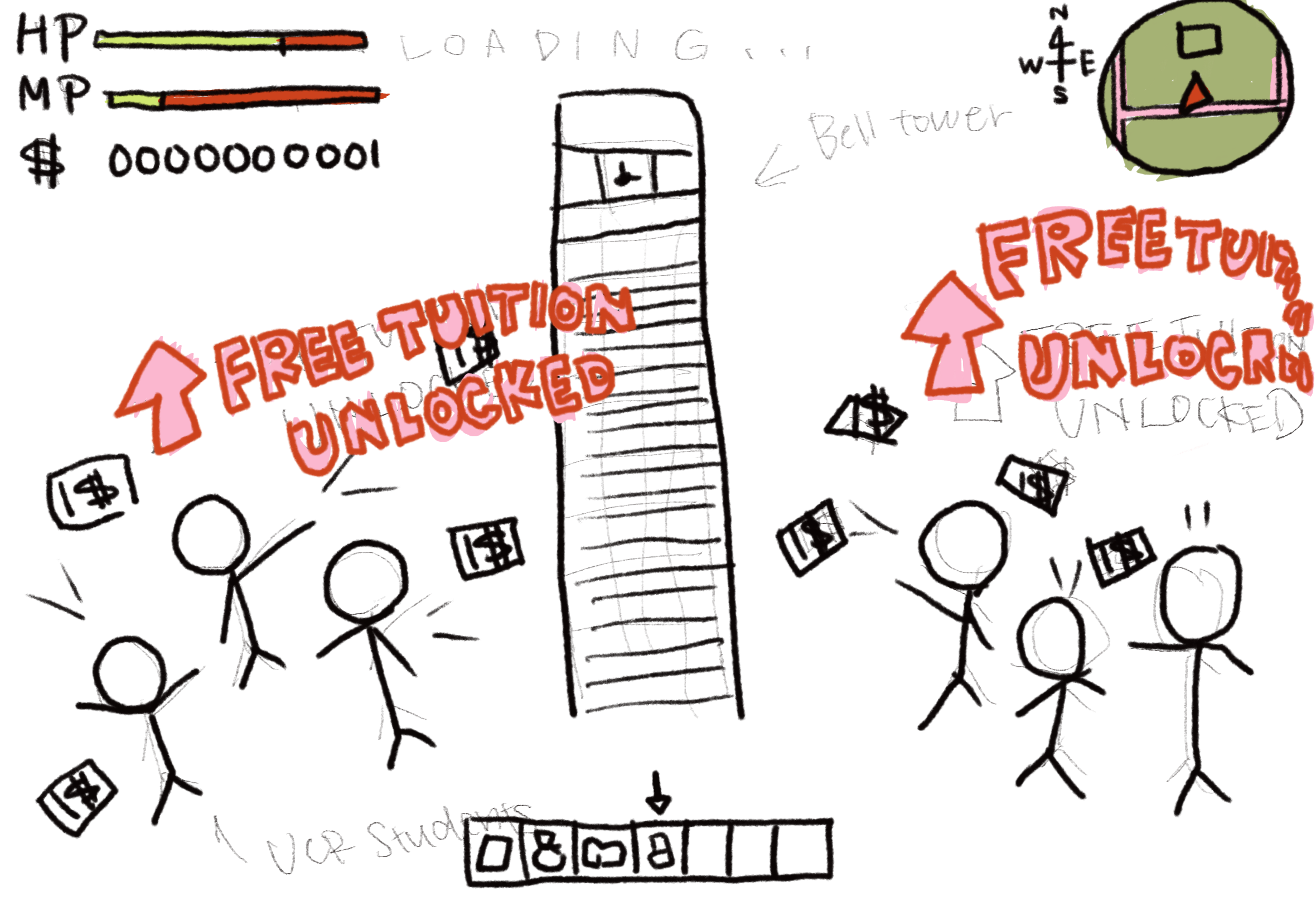
In a monumental decision, the University of California (UC) Board of Regents voted on March 23 to make tuition free for all students at the University of California, Riverside (UCR) starting in the 2027-28 academic year, citing student concerns about the affordability of tuition as their utmost priority. Gone would be the days of thousands of dollars students don’t have going toward tuition, along with the hours spent stressing over financial aid applications like the Free Application for Federal Student Aid (FAFSA) and California Dream Act Application.
Students will no longer have to contemplate whether they will get run over by a scooter on the way to their next exam, hoping to get injured enough to warrant an accident payout that will offset the costs of their tuition and student fees. For a moment, they can instead take a break to rejoice — maybe even breathe, something students rarely get to do — as their prayers for affordable education have been answered and life as a student stops feeling like a constant barter.
Then comes the reveal, the ruiner of dreams: it’s April Fools’ Day, and governing boards wouldn’t dare give up millions in funding from student tuition so easily. The headline speaks for free tuition, but the real April Fools’ joke is that students can only dream about free tuition, as it may as well remain a dream that they will never hold in their hands.
Free or reduced tuition doesn’t feel like a dream because it’s actually unattainable; it feels so far out of reach for students because they have been conditioned to not expect it. The system tells students they need a college education to be a valuable contributing member of corporate society, but it gives no instruction manual on how to navigate the higher education system and the mountain loads of hidden fees necessary to make it out of the rat race.
The struggle doesn’t end when students manage to climb out from under piles of college application essays and associated application fees, unless they’re part of the minority that qualifies for a fee waiver. The UC waives the $80 per campus application fees for up to four campuses for qualifying low-income students, saving up to $320 in application fees alone.
Once students step away from the application portals, they immediately must consider how they will proceed to pay for any colleges they are admitted to. They have to wager whether they will rely on family support, juggle multiple jobs, take out federal and private student loans, qualify for scholarships or otherwise source money.
The 2025-26 estimated tuition and fees for continuing undergraduate students who initially enrolled at UCR in the 2022-23 academic year are $13,104. In contrast, the 2025-26 estimated tuition and fees for those who initially enrolled at UCR in the 2025-26 academic year are $14,934, a $1,830 difference from that charged to the 2022-23 incoming cohort.
The headaches don’t stop there for students, as that tuition sticker price climbs for every year’s cohort of students in adherence with the UC Tuition Stability Plan, in which the UC Admissions page notes “tuition will be adjusted for each incoming undergraduate class but will subsequently remain flat until the student graduates,” beginning with the 2022-23 incoming class of UC students.
For now, a tuition-free UCR remains a mere fantasy and the product of sleep-deprived students’ April Fools’ humor. But behind the joke, there is a possibility and the withering hope of UCR students and those around them, that one day will bring a reality where students no longer need to pray for affordable education.
That one day, UC and local policymakers will remember the daily struggles and lived realities of students, something they once were but seem to have forgotten, abandoning any recognition that education should serve the public and not mere financial statements or bookkeeping records.
Until then, and until the punchline of free tuition becomes a lived reality, students will continue to spend everyday calculating every dollar and every second, hoping to capitalize on every opportunity to make their tuition worth it. And maybe, through it all, students will keep laughing, and the line between humor and coping blurs. Because while the humor may be wistful, at least it’s one that’s theirs to claim and a lasting college memory, marked by years spent paying back the crushing costs of a college education.
*This is an April Fools’ publication. This article is not intended to communicate any true or factual information about the writer’s opinion except through humor and/or exaggeration. Any resemblance to persons, living or dead, is entirely coincidental or is intended purely as satire, parody or spoof of such persons and is not intended to communicate any true or factual information about that person.