One big question that the architects of the war in Iran won’t and can’t answer is why the U.S. is fighting this war. The solution emerges through visualizing the convergence of various actors with conflicting agendas on a failing war.
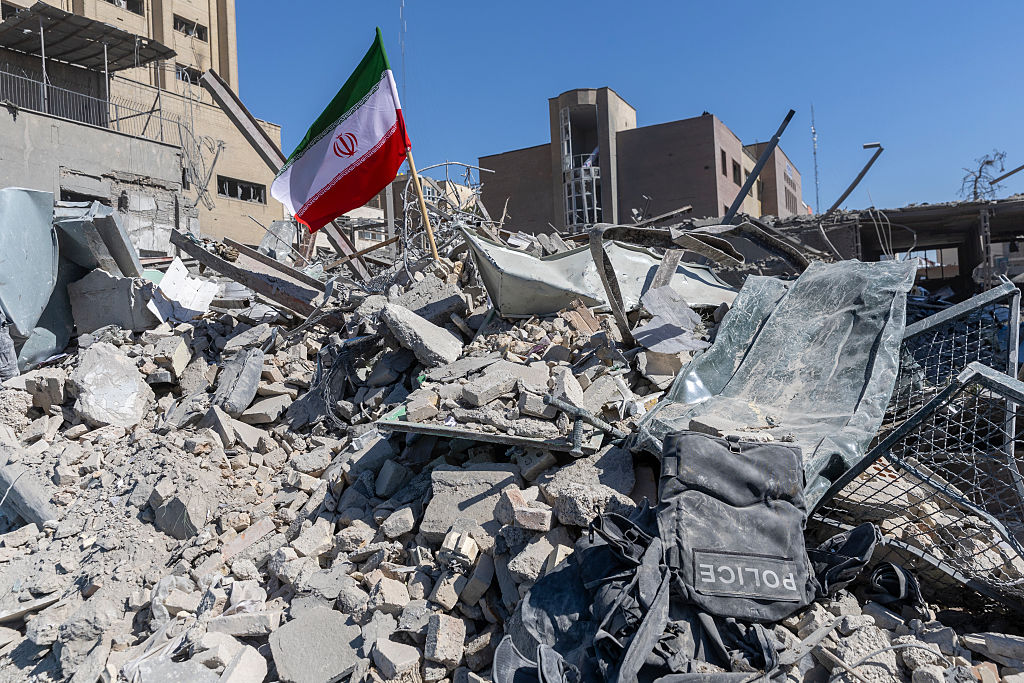
The war in Iran isn’t being led by a single plan, but by many differing agendas that have led to this conflict being pulled in many directions. Three competing goals are at play here.
First, President Trump has called for a rapid change in leadership, shadowing his approach during the 2019 Venezuela crisis when his first administration supported opposition leader Juan Guaidó in a failed bid to oust Nicolás Maduro. Similarly, Senator Lindsey Graham, a close Trump ally and leading voice on foreign policy in Congress, has publicly advocated for a more aggressive stance toward Iran, including sanctions and potential military action. The White House’s focus is on the destruction of Iran’s weapons, such as its ballistic missile program, nuclear enrichment infrastructure, and advanced drone capabilities.
In an interview after the war started, President Trump stated, “What we did in Venezuela, I think, is the perfect, the perfect scenario,” which he said meant replacing the Iranian leadership with someone who is friendlier to the U.S. This is exactly what his administration did in Venezuela. The U.S. and Venezuela have had a history of hostile relations, but then Trump launched a special forces operation to capture Venezuela’s President Maduro and his wife. This wasn’t a regime change, as Venezuela’s political system has remained unchanged. Instead, Maduro’s Vice President took over.
At the start of the conflict, President Trump claimed responsibility for the killing of Iran’s supreme leader, Ali Khamenei, and stated that he must be involved in selecting Iran’s next leader, for which he said he already had “three very good choices.” This approach echoes his earlier policy toward Venezuela, where his administration supported opposition leadership in efforts to oust Maduro. Together, these examples illustrate a consistent emphasis on promoting regime change as a central feature of his foreign policy strategy.
Second, the U.S. and Israel want to destroy Iran’s military hardware and nuclear capabilities. The desired model here for Iran seems to be the Clinton administration’s 1998 Operation Desert Fox, a bombing campaign intended to destroy Iraq’s military installations and suspected weapons of mass destruction. This explanation has been promoted by numerous White House statements of the “nuclear threat” and figures like Senator Graham, who stated that the goal of this operation is to “change the threat, not the regime.”
This form of limited warfare has precedents in American foreign policy, including Ronald Reagan’s 1986 announcement of U.S. airstrikes on Libyan military and command targets, and President Bill Clinton’s 1998 announcement of strikes on Iraqi military and strategic targets.
What is less widely known is that Saudi Crown Prince Mohammed bin Salman allegedly pressed Trump repeatedly to launch airstrikes against Iran to neutralize its military before it could grow stronger. The Saudis had kept their role secret as they didn’t want to risk a protracted regional war that could harm their interests. They wish to maintain regional stability, avoiding retaliation and protecting their broader economic goals, especially Vision 2030. They also want to preserve their influence over the Gulf states and keep energy markets and trade routes predictable in such a volatile environment.
Third, Israel’s Benjamin Netanyahu and his obvious agenda are at play here. In a speech given to an Israeli TV station a week into the war, Netanyahu stated he wished to liberate Iran and that he had a systemic plan to destroy or destabilize its entire political system and government. He has pushed this agenda for a long time. In 2002, while testifying to Congress, he said he wanted to “see” a regime change in Iran, followed by Iraq.
Ultimately, this war has three different kinds of goals launched to fulfill three different agendas on behalf of a few different actors, each pulling the Iranian state into a conflict. The least preferable move would be to let the conflict expand without a clear U.S. end state, since wars that begin with limited objectives often become harder to contain once allies have different goals.
If Trump’s aim is really to avoid a protracted regional war, which he promised to keep the U.S. out of, then the safer course is to withdraw the U.S. from open-ended involvement, focusing on a narrow and specific mission, and resisting being drawn into Israel’s broader intent of regime change unless there is a compelling direct threat to U.S. interests.
He should acknowledge Netanyahu’s security concerns, but certainly not outsource American strategy to them. This is because the U.S. public is unlikely to support another prolonged Middle East war — and wars in general — as President Trump’s unpopularity in the Iran war increases. The next step should be de-escalation, consistent diplomacy, and a clear definition of what and how success looks like before the conflict widens further.