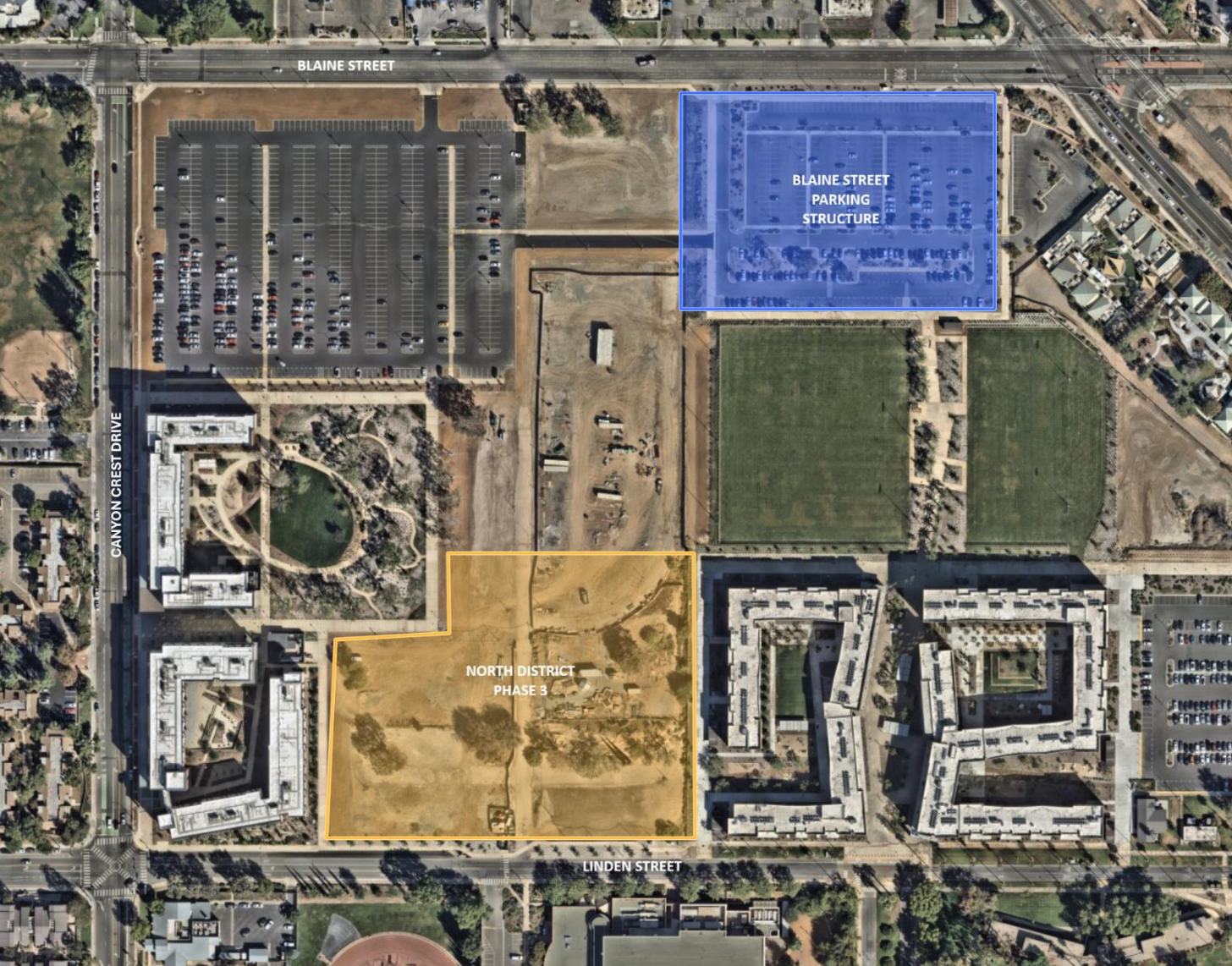
On April 8, 2026, the University of California, Riverside hosted a community meeting to introduce plans for North District Phase 3 alongside major parking structures on Blaine Street. The meeting, led by Melissa Garrety, Senior Planner for UCR Planning, Design & Construction, aimed to inform the community about the proposed expansion and gather public input before construction begins.
North District Phase 3 is part of a long term plan to expand student housing and support facilities. Garrety estimated the new construction will add approximately 1,200 to 1,300 new student beds, along with amenities such as study spaces, fitness areas and limited retail stores intended primarily for residents.
The Blaine Street parking structure will be a four level parking structure with roughly 2,000 spaces. This parking structure will replace the existing surface parking located behind North District Phase 1.
According to the project representatives, the expansion is designed to address current housing demand and accommodate future enrollment growth. Garrety emphasized the increasing on-campus housing could reduce overall traffic, as students living nearby are less likely to rely on cars. However this claim was met with skepticism from Ward 2 residents, who cited ongoing issues with students parking on residential streets to avoid campus parking fees.
Residents questioned whether adding more parking spaces would solve congestion if students continue to avoid paid facilities. One resident raised her concerns about spillover effects in nearby neighborhoods, noting that local streets are already heavily impacted. While planners acknowledge these concerns, they explained that parking pricing policies fall outside the scope of their jurisdiction.
Beyond parking, some attendees expressed frustration over a perceived lack of community benefits. In response, planners noted that while some small-scale amenities are planned, the primary focus remains student housing.
Questions were also raised about the project’s scale and its cumulative impact when combined with the other North District housing facilities. Residents voiced concern about increased population density and infrastructure strain in the area. The project representatives stated that future phases are still being evaluated and the total housing capacity is expected to align with previously established limits.
Despite tension, Garrety encouraged residents to provide written feedback about the project. A second community meeting is expected in the coming months, where more detailed design plans will be presented.