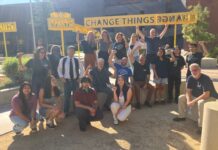
On April 21, the Associated Students at the University of California Riverside (UCR) Office of external affairs alongside the Green Campus Action Plan gathered in front of the bell tower for an environmental protest aimed at raising awareness about climate justice issues affecting the Inland Empire. The demonstration brought together campus groups and local organizations, including the Center for Community Action and Environmental Justice (CCAEJ), to highlight concerns about air pollution, warehouse expansion and the need for stronger community involvement in environmental policy.
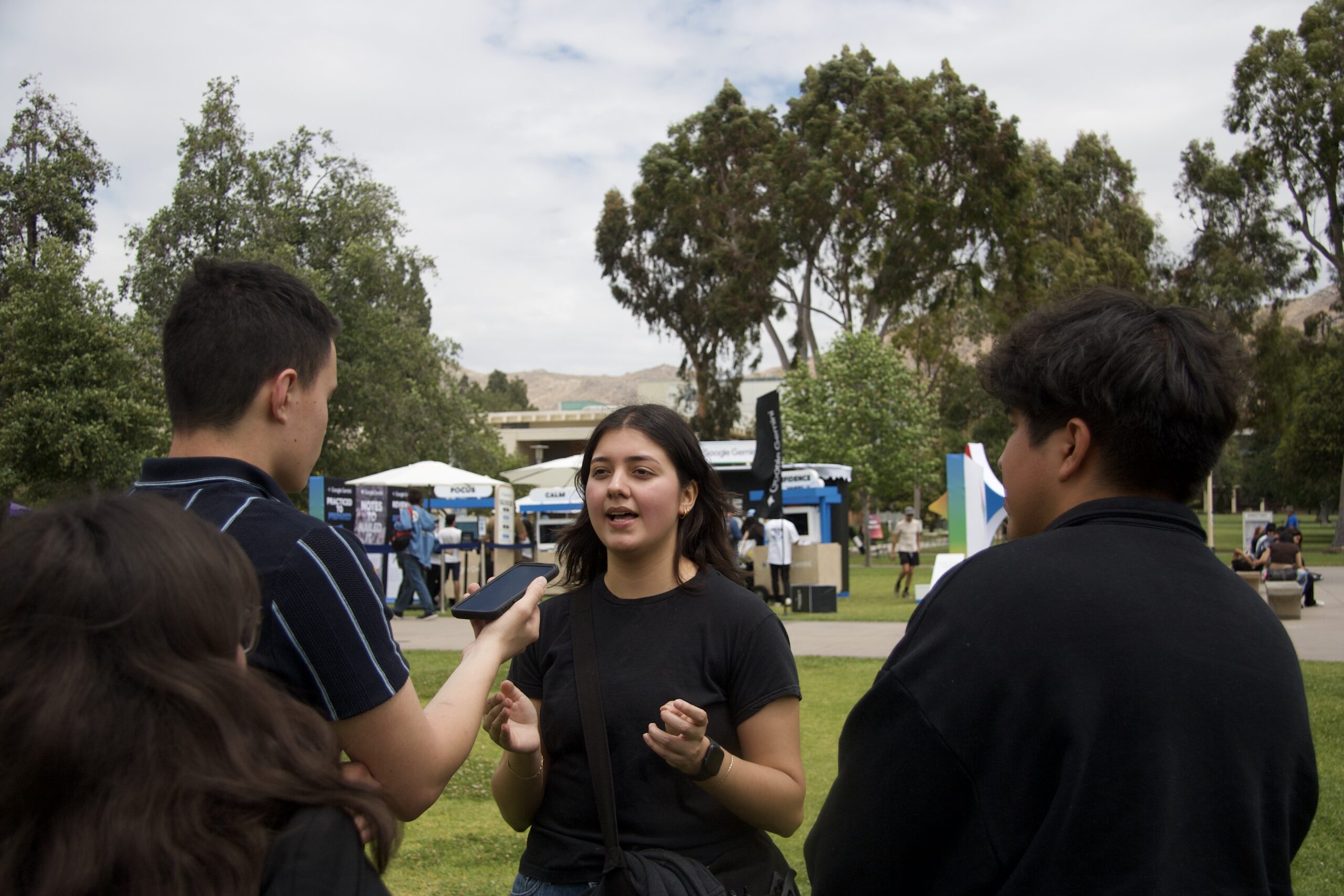
Tatiana Flores, a community organizer with CCAEJ, explained that the group joined the protest to advocate against the continued growth of data centers and warehouses in Southern California, which contribute to pollution and environmental degradation. She emphasized the urgency of addressing climate issues locally, pointing to UCR’s industrial boiler as a significant source of emissions in the region. Flores connected these concerns to broad environmental justice efforts, noting that many Inland Empire communities already face some of the worst air quality in the country.
For Flores, the issue is also deeply personal. As a resident of nearby Moreno Valley, she has witnessed firsthand the increasing impact of climate change, including recent wildfires. She stressed that rising temperatures and worsening air conditions disproportionately affect local commutes, making it essential for residents, especially students, to take action. “All of us deserve to have a safe environment to live in, to play in, and to learn in” urging greater awareness and participation.
A key goal of the protest was to encourage UCR students to become more engaged in local politics and environmental advocacy. Flores highlighted the importance of youth involvement, explaining that many past decisions affecting the region were made without input from younger generations. By organizing events like the protest, CCAEJ hopes to empower students to speak out on issues such as truck routing, warehouse development and regional planning efforts like Riverside’s General Plan update.
Graduate student Miguel Muñoz Valtierra, who is studying Hispanic Studies at UCR and works with CCAEJ, echoed these sentiments. He described climate change as visible and pressing tissue, pointing to its effects on weather patterns and ecosystems. According to Valtierra, the purpose of the protest was not only to inform but also to remind people that environmental justice remains an ongoing concern “As long as you can hear those things and see them, it reminds you that people still care,” he said.
Valtierra also emphasized the importance of community participation in decision making processes, particularly regarding warehouse development in nearby areas of Bloomington. He noted that protests and public gatherings serve as a way to amplify awareness and encourage residents to take part in local governance.
Another organizer involved in the event highlighted the policy driven aspects of the movement, focusing on efforts to reduce emissions from industrial sources. They discussed ongoing work with the South Coast Air Quality Management District to strengthen regulations and transitions towards zero emission technologies, such as electric boilers and heat pumps. These efforts are part of a broader campaign to address the Inland Empire’s air quality crisis, which they claimed has been linked to high rates of asthma and respiratory illness.
UCR students stressed that one of the biggest challenges is the lack of public participation in decision making spaces. Monthly air quality board meetings, for example, often see limited attendance from Inland Empire residents. As a result, officials may not feel sufficient pressure to adopt stricter environmental policies. Protest leaders encourage community members to attend these meetings, make public comments and advocate for cleaner air and sustainable practices.