The entertainment industry is one of the most competitive industries in the world, with less than 1% of all actors making it to A-List status. There are millions of entertainers in the world, among many disciplines, trying to “make it big” in a career field that doesn’t pay much of anything to those on the lower end of it. This pressure can lead many to make harsh decisions in their careers that put themselves and others at risk of exploitation by the large corporations hiring them.
There are over 160,000 unionized actors, but the large majority of actors in the world are non-unionized and, as such, are not covered by union standards when working on sets. This leaves them liable to extremely long working hours, lack of food or water, harassment, unsafe environments and most importantly, unpaid labor.
Screen Actors Guild-American Federation of Television and Radio Artists (SAG-AFTRA) is the globally recognized labor union for actors, providing benefits such as a pension and secure working environments for performers on set. Some of their standards include actors needing to receive a meal within a six hour working period and an additional meal after that, provided they are working long hours on set. Any violations of these policies can be reported to SAG-AFTRA if an actor feels they were wronged.
It is difficult for actors to receive work, and it is even harder for non-union actors to receive paid work. Because actors rely on building connections and securing footage to find future work, many feel pressured to work in unsafe environments just to obtain material they can show employers.
Even then, it is not required for producers to release the footage to the actor unless stated otherwise in a contract between the two parties. If a performer does not have an agent, they become their own contractor and only have themselves to blame if they are met with an unfavorable situation.
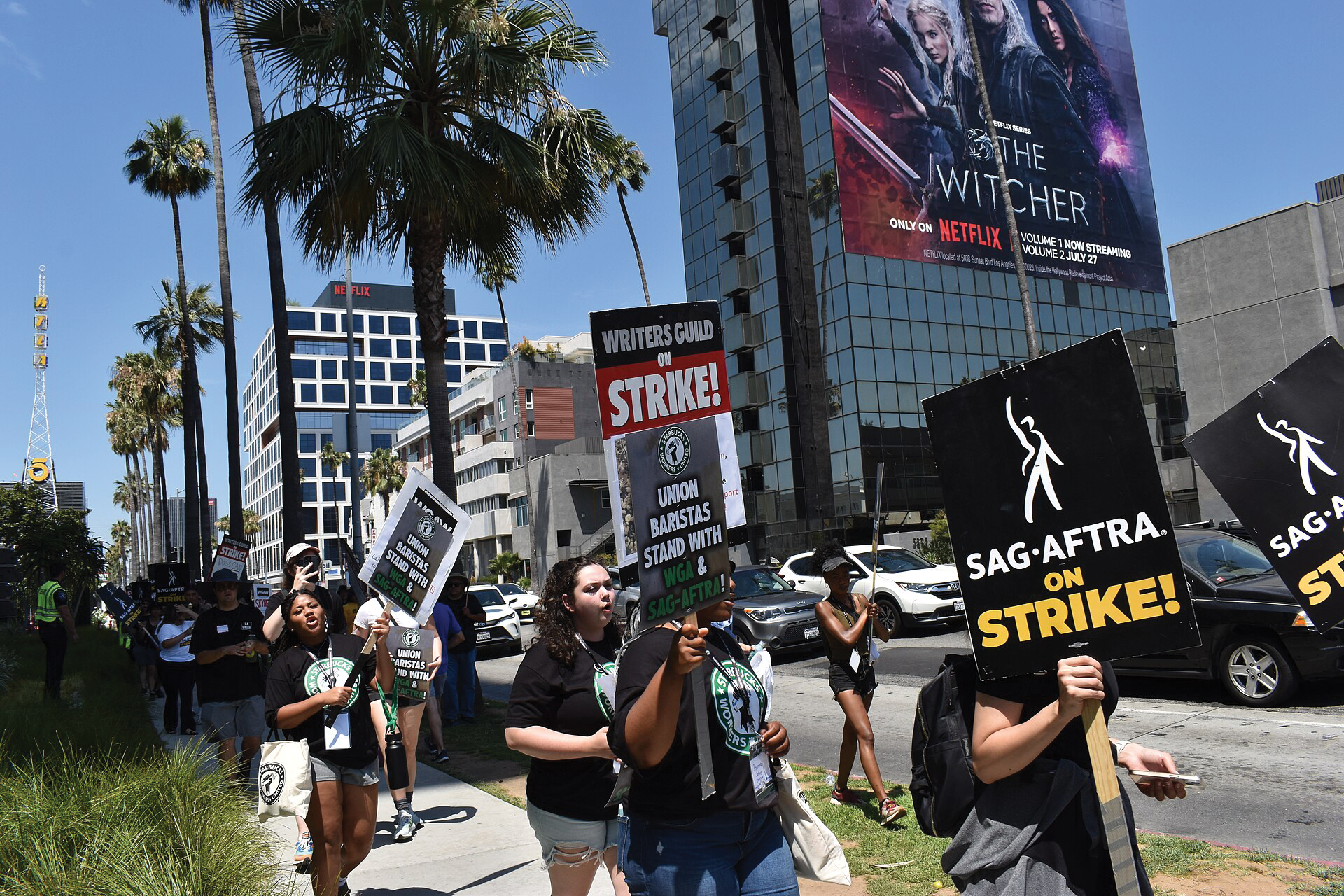
Actors who put themselves in positions to be exploited lower the market value of every other actor in the industry because it brings a sense of easy replacement. Many actors fear that they are easily replaceable because millions of other actors would love to have their spot in a project.
This leads to easy exploitation by large streaming corporations or anyone producing a theatrical-related project. These companies and producers leverage the fact that some people are more desperate than others to be a part of a project or make ends meet and subsequently choose to utilize them over actors with higher standards.
An example of this would be the 1993 show “Mighty Morphin Power Rangers,” where many of the performers were exploited heavily. The performers of that show were denied royalties and residuals for their work and subjected to strenuous working conditions.
One such actor, Austin St. John, who portrayed Jason Lee Scott, the Red Power Ranger, revealed, “We weren’t paid a lot, at all. I could have worked the window at McDonald’s and probably made the same money the first season.” The show ended up making over $1 billion, and not even a fraction of that money went towards the performers, even to this day.
Many actors working on non-union productions can be subjected to harsh exploitation, and almost nothing can be done about it, given the position of the performers needing to make ends meet or continue their passion. Joining a union has its benefits, but it also brings struggles for performers due to the $3,000 paywall required to join only after completing certain milestones as an actor.
While the acting industry as a whole is incredibly corrupt and full of greedy corporations looking to exploit working-class actors, artists still possess something that no corporation can take away — their creativity. Actors, or anyone, for that matter, have the ability to utilize their naturally creative minds to build their own platforms via social media, marking one way to push back against industry greed.
It’s still important to note that creating one’s own content is less about escaping the system entirely and more about building bargaining power within it. When an actor has their own audience, footage and projects, it is harder to undervalue or replace them.