
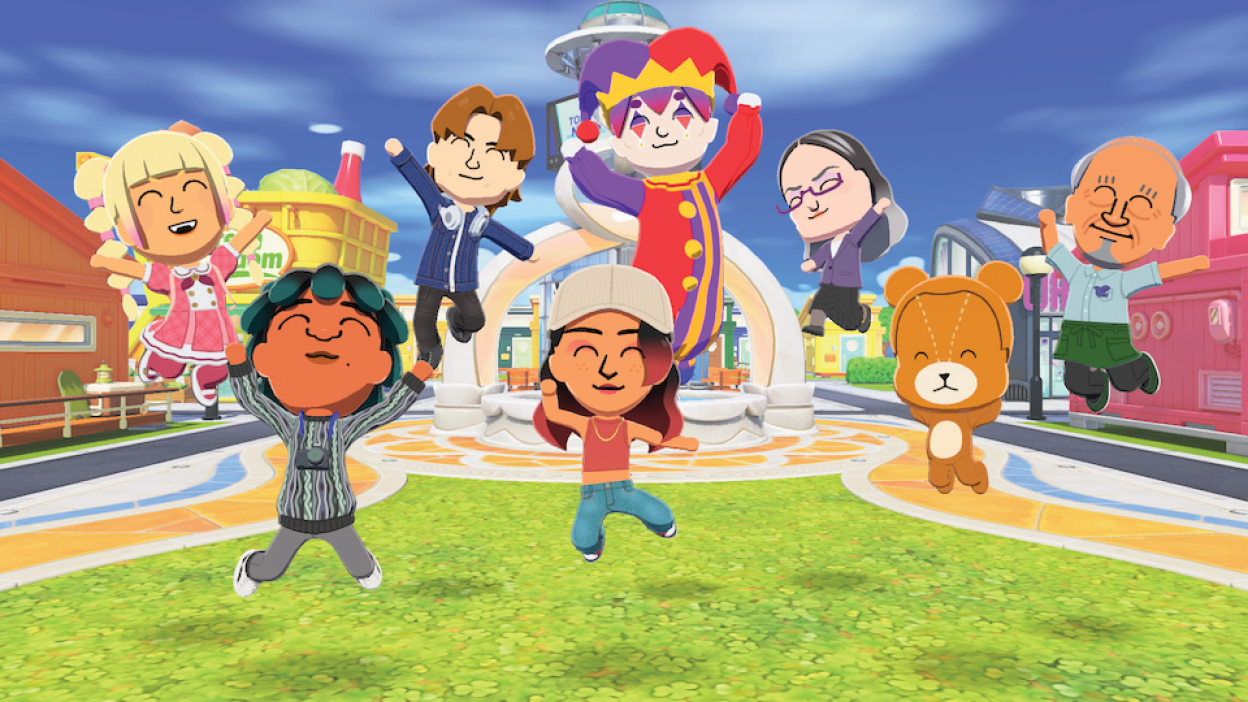
On April 16, Nintendo released “Tomodachi Life: Living the Dream,” available on the Nintendo Switch devices. The Tomodachi series consists of three games: The first one released in 2009 on the DS — only available for Japanese players — and the second game titled “Tomodachi Life” released internationally in 2013 for the 3DS. Nintendo fans have long anticipated this drop since the release of the Switch, which was first put on shelves nearly a decade ago. With many fans agreeing the Switch version has been long overdue, it makes one question if it was all worth the wait.
The Tomodachi series is a single-player, real-time life simulation game that prides itself on its unserious nature. Players are caretakers over residents of the virtual island — called “Miis” — each designed by the player from their appearance to their personalities. Much like a pet simulator, players have to feed, entertain and clothe the Miis, all while helping each Mii as they go about daily life. Miis consult the player like a god or guidance counselor, letting the player make decisions or voice their opinions about their relationships and life choices. Still, the Miis have a mind of their own and players must wait for their Mii’s requests. The game is a constant back-and-forth between waiting for Miis to seek help and spectating their nonsensical interactions.
Mii customs have gone through a major upgrade by expanding their library of options. Previous Tomodachi games had a poor history of inclusivity, with very limited dark skin tones and hair selections. This time around, the developers provided a palette with exactly 100 shades to choose from, consisting of natural and unnatural colors. Aside from the increase in hair sets, users have a selection of front and back hair pieces that they can mix-and-match instead. There is even an option to draw on the face, which many have been using to create lookalikes of their favorite fictional characters. This release also implemented a nonbinary gender option in addition to male or female. Players can also choose each character’s romantic preferences by checking off which genders they want Miis to fall in love with, with the option to select none as well. For events, such as weddings, players choose if they want their character to dress up feminine, masculine or either in the Mii designer.
However, this does not mean it is all-inclusive. The Mii customizations do not have selections for religious headwear, nor are there any mobility-aid options such as wheelchairs. It’s incredible how much inclusivity has been improved from the past of Tomodachi Life. And yet, it’s disappointing that after so many years of development, there are still gaps in representation.
Cutscenes occur randomly upon Mii’s interactions when strolling around the island, adding another layer of excitement to the gameplay. The constant anticipation of scenes makes it all the more addictive. As players interact with their Miis, they’re given opportunities to insert words that develop as the island’s slang and lingo. As a bonus for older players, the game does not have a profanity filter either. In each scene, words are interchanged based on the island’s word list. There are a limited number of potential scenes though, so they quickly get repetitive and underwhelming with time.
The price of about $60 for this game was startling for returning fans, when previous editions were sold for half this cost. However, its island builder and item-design features alone make this space into an endless canvas for daydreamers and artists. Turning the whole island into an interactive space is the biggest improvement from the other games of the series. Miis roam around the island freely and players can even drag their Miis wherever they desire. With 360 degree camera rotation, every unit of the island can be customized. Aside from decorating, players can design their own items like pets, food and infrastructures to name a few. For those with a creative itch for character and world designing, the price can easily be justified.
While the game is pouring in entertaining content, it does not feel fitted to the Switch console. A lot of this game involves precise interaction with the screen, where players are instructed to use their fingers as a pen for tasks like drawing. It’s not impossible to draw or re-design islands with the swipe of a finger but it makes these tasks tedious and frustrating with a lack of control. Ironically enough, Nintendo does not sell an official stylus internationally. It was an obvious but missed opportunity for the company to release one alongside the game’s release. Without it, designing is more so a means to an end versus a leisurely activity. It doesn’t help that the Switch’s touchscreen is delicate and feels forbidden to be touching at all. Especially for returning players from the DS games, the limitations of the console are underscored by its inability to suit the touchscreen-heavy content.
“Tomodachi Life: Living the Dream” has become a personal multiverse of friends, beloved characters and celebrities, where each player is bound to have a unique experience in their own gameplays. Much like “Animal Crossing: New Horizons” has done in the past, there are plenty of opportunities for content updates, like a new set of cut-scenes or items. Only time will tell if the excitement of the game will withstand past the stages of creative burnout and online traction.
Verdict: The long-awaited game is not flawless, but still exceeds the potential that fans have been predicting prior to the release. However, the complexity of what the game has to offer is overwhelming for the Switch format. This release only highlights the limitations of the Switch’s console design and Nintendo’s oversight for creative-based games.