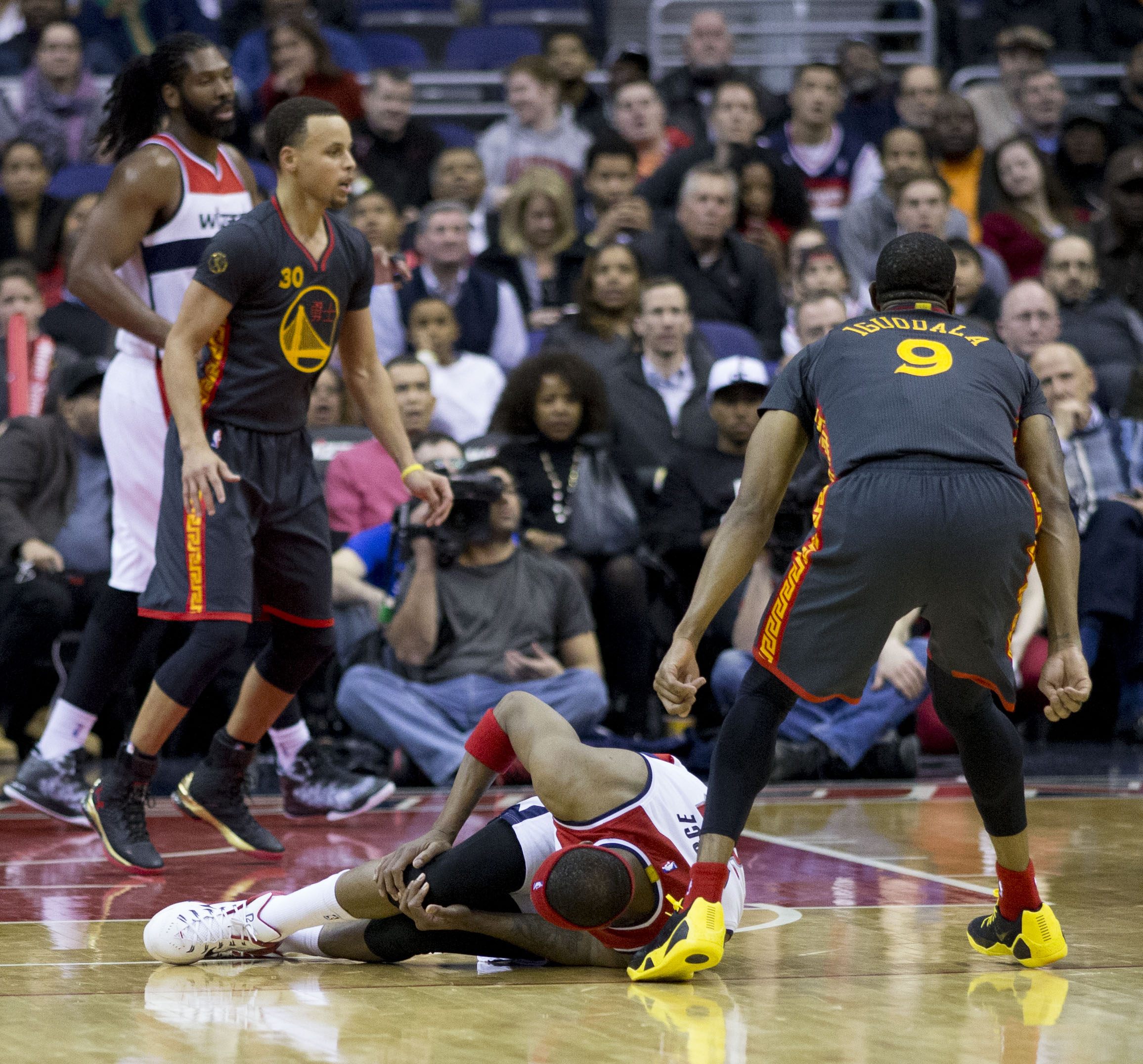
The National Basketball Association (NBA) commenced play on Oct. 20, and the stars of the game are already dropping like flies. Stars Anthony Edwards, Paolo Banchero and Kawhi Leonard have gone down early, all set to miss a month or more of time. That’s just three cases. On Nov. 3, 91 rostered players were listed on the injury report. That was just the fourteenth day in the 82-game NBA season.
Two teams have taken major hits in particular.
On Nov. 2, the Indiana Pacers were forced to take on the Atlanta Hawks with just six active players. A whole rotation of players, including Tyrese Haliburton, Pascal Siakam and Ivica Zubac were sidelined. Of the six players, four did not play on opening night. The short rotation put up a valiant effort, dropping the game 108 to 104. Jarace Walker, one of the two players that did see minutes in game one, sat on the bench for just three minutes of the 48 minute game.
Thankfully for Indiana, they’ll have their starting rotation back by the end of the month. The same cannot be said for the Oklahoma City Thunder. A championship favorite heading into the season, the team will now be down wings Jalen Williams and Cason Wallace for what is presumed to be the entire season. Both due to freak incidents during the same Oct. 25 game; Williams fractured his fibula going for a dunk and Wallace tore his labrum attempting to go over a screen. Following shortly after, All-NBA power forward Chet Holmgren went down with a torn patellar tendon, set to miss eight to ten weeks. They’ll now be forced to navigate the competitive Western Conference down three starters.
This noticeable spike in injuries has coincided with the rise of Achilles tears, along with non-contact injuries in general. There have been a total of eleven players to find tears in their Achilles since the beginning of the 2024-2025 season. In the 2025 playoffs alone, Jayson Tatum, Damian Lillard and Tyrese Haliburton caught the bug.
While older fans of the NBA love to reminisce about the fleeting physicality and tenacity of the sport, these non-contact injuries refute that claim. The truth is the faster pace and exponentially growing athleticism in the game is far more degrading to athletes’ bodies than in years past. The slow, methodical brand of basketball is far in the rearview mirror. Now, athletes are training year round to drive down hill, decelerate into a jumper or roam the paint to block shots.
Constant pressure is being put on these athletes’ tendons, ligaments and soft tissue. “Being soft” or “flopping” has nothing to do with the exponential growth of the perils that come with the evolution of the game. While shortening the 82-game season or 48-minute game have been popular solutions to the issue, it doesn’t fix the overarching problem of the build up of stress put on any athlete’s body.
This issue has permeated through every aspect of sports. Athletes are more explosive than ever. The human body isn’t fit to sustain that level of stress. It doesn’t help that kids are brought up playing their sports year-round.
The Amateur Athletic Union (AAU), flag football and travel baseball circuits are designed to get the most out of young players, but at what cost. It’s no wonder ACL and UCL tears are as frequent as ever. This unnecessary pressure is being put on athletes since their twelfth birthdays if they want to seriously pursue a professional career in sports.
It’s fortunate that technology and science is rapidly improving, especially for those under the guise of these multi-billion dollar sports leagues, but the issue is set to get worse until a better advance is made.