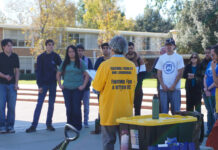

On Oct. 28, the Community Police Review Commission (CPRC) unanimously voted to send their recommendations regarding a 2025 Racial and Identity Profiling Act (RIPA) report to the City Council’s Safety, Wellness and Youth Committee (SFWYC) for further action. The initial report from the City Manager’s office, citing comparisons between 2020 census data and “stop” data submitted by the Riverside Police Department (RPD), raised concerns that Black people had accounted for a disproportionate share of police stops in the city between 2024 and 2026.
The CPRC is an oversight body that makes policy recommendations for and reviews complaints against the RPD. They initially created an AdHoc committee in June of 2025 after initial RIPA reports found that Black drivers accounted for 14.46% of police stops in 2024, 13.85% in 2025 and 15.02% in 2026 despite making up 6.6% of the city’s population as of 2020. The sub-committee was particularly established to “identify recommendations for the police and city leadership to consider for purposes of improving any identifiable concerns with the report results,” and they met twice prior to discussing the report with the entire committee.
On March 25, AdHoc committee Chair Jeffery Ward presented their first recommendations by suggesting the City Manager’s office separate nonresidents, calls for service and flag-downs from the “stop” data cited in the report. Ward described that its removal could provide the committee with a more accurate comparison between the two data sets and enable them to determine if “problematic” stops were occurring.
The CPRC met two more times before unanimously moving to send their recommendations to the SFWYC. SFWYC chair and Ward 5 Councilmember Sean Mill returned the item, requesting they meet with the RPD to further understand the data and develop more specific recommendations for the SFWYC to consider. The CPRC was made aware of this request in July and they subsequently met with RPD captains and a data analyst on Sept. 9. RPD feedback also questioned the feasibility of justly comparing census data to “stop” reports in determining instances of discriminatory stops and the feedback from their meeting was implemented in the CPRC’s final recommendations.
Ultimately CPRC feedback recommended that the City Manager’s office remove nonresidents, calls for service and flagdowns from the “stop” report dataset to provide policymakers with an accurate baseline. It also asked city leaders to create a standard to determine what data could be considered problematic and called on an audit to be conducted if findings indicated that discrimination was occurring. Their goal setting section furthered that, if concerns of discrimination were validated, “a goal target be set to bring down the rate of stops of African Americans in proportion to their percentage of the population.” The recommendations also did not ask the RPD to amend their data collection in “stop” reports but instead suggested that they could hire independent law firms or experts to guide city leadership in creating effective policy.
At the meeting, Ward described the AdHoc committee’s rationale, stating,“To me that kind of fit what we were recommending because we were suggesting that we do additional fact finding and let those facts determine what, if anything, we need to do. What issues we might have around profiling — if any— and then how we move forward.”