
Dye is a simple table game built on fast throws, quick reactions and noise. It looks casual from the outside, but it has its own culture, rules and vocabulary. Over time, it has shifted from a simple outdoor game to a game that carries meaning inside friend groups, fraternities and entire college campuses.
At its core, dye is a four-player game. Two teams stand at opposite ends of a table and try to toss a die extremely high while trying to land it on the farther half of the table. The most common way points are scored is when the die bounces off the table and the other team isn’t able to defend via catching the die before it hits the ground. There are other niche ways to score points and the variations may differ from campus to campus or fraternity to fraternity. The game moves fast but stays accessible. You don’t need athletic skill to pick up dye; you just need a table, dice and people willing to play. That simplicity is what keeps the game alive and mobile.
Dye facilitates socialization because it takes people out of their heads. It replaces awkward small talk with something physical, loud and shared. The rules force players to communicate. They call shots, argue bounces, celebrate lucky rolls and complain about misses in a way that feels natural. Even players who barely know each other get pulled into the rhythm. A good game creates momentum: Inside jokes form, teams develop chemistry and the energy around the table becomes its own environment. That’s why the game shows up at tailgates, backyard parties and late-night hangouts. It gives groups something to build around.
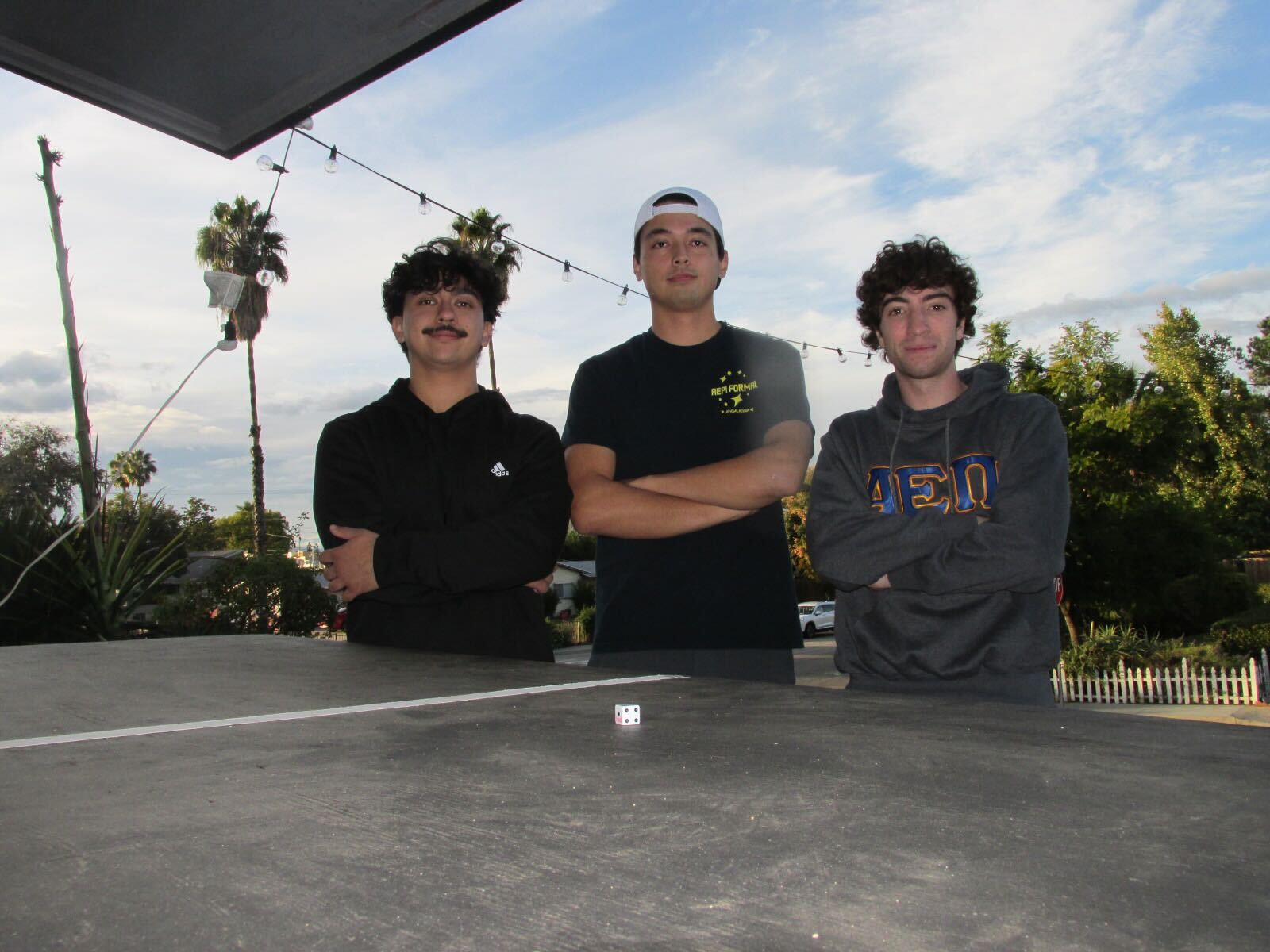
At the University of California, Riverside (UCR), the brothers of Alpha Epsilon Pi (AEPi) described dye as one of the easiest ways to get people involved without forcing anything. Dominick Chang, a third-year chemical engineering major and AEPi brother, said playing dye helps new members bond with active brothers. “We try to separate teams with an active and new member, so that way people can talk a bit and get to know each other,” Chang said.
Joshua Malka, a third-year computer science major and AEPi brother, said, “[Dye] comes up clutch during recruitment. It really gets the guys going — gets people talking and competitive.”
When people gravitate towards the dye table, it’s easy to stay longer than expected due to the energy and adrenaline that surrounds the game. “One time I was playing with Cisco who is one of our best players. He [tossed backwards] and before the opponents noticed, it was in their cup and we won. It was crazy…I’ve never seen someone [do that before]. It was magical,” described Malka.
Dye has become a signature part of social life on several campuses, particularly within fraternities. Different schools have their own custom-built tables, house rules and bragging rights. Some chapters host casual tournaments; others treat big games like unofficial traditions tied to rush weeks, fundraisers or homecoming weekends. The appeal is always the same: The game pulls in crowds and gives people something to rally around. You can tell a campus has a strong dye culture when the tables look worn and dice are chipped.
One of the more notable organizations that has extended the culture of Dye is Dyeislife. Dyeislife partnered with UCR fraternity Delta Chi and hosted a tournament at UCR in Spring of 2024. The tournament brought together various fraternities at UCR and created more memories to be celebrated on UCR’s campus. Francisco Partida, a third-year sociology major and one of AEPi’s top players, described his experience as a great bonding opportunity, recalling the thrill of playing twice in week one of the quarter and the satisfaction of mastering both offense and defense. He emphasized that new players should focus on hitting the table, playing to their strengths and not getting discouraged, noting that “once you figure out how to hit the table and practice a bit, it’s really not that hard.”
Dyeislife has also created its own platform — merch drops, traveling tournaments, custom tables, regional rivalries and house rules that get passed down like traditions. Players treat their tables like landmarks. People show up just to watch. Big games get recorded, posted and debated. In some chapters, the best players are talked about the same way schools talk about star athletes.
Most importantly, Dyeislife keeps the spirit of the game alive. It’s the idea that no matter where you go — a backyard, a basement, a rooftop, a school event — if there’s a table and a die, you can build a moment worth remembering. That mindset is what turns a casual toss into something people connect over. Dyeislife isn’t about being the best. It’s about showing up, throwing high and keeping the vibes immaculate. Good music, good friends and good weather are important factors that elevate the experience of tossing at the table.
As dye moves from house to house and campus to campus, it keeps evolving. People add new rules, new strategies or new ways to keep score. The game gets passed along because it’s easy to learn but hard to master and because it works in every setting where people want to feel connected. It isn’t about competition as much as it is about being part of the moment. That’s why dye keeps showing up in college culture. It stays simple, it stays loud and it keeps people coming back to the same table.