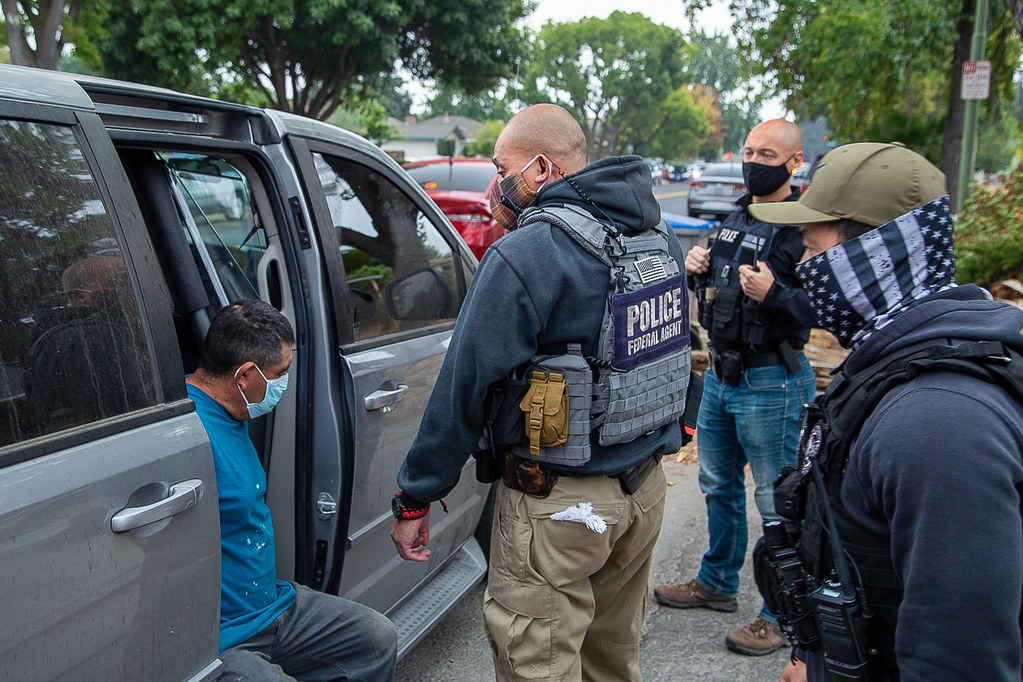
Going into the new year, California is implementing new laws approved by Governor Gavin Newsom. Among these is the “No Secret Police Act,” or SB-627, which intends to promote transparency and safety between law enforcement and the public.
The bill was authored primarily by Democrat Senators Scott Wiener, representing San Francisco, and Jesse Arreguin, representing Berkeley. It was written in an effort to respond to distrust between the public and law enforcement, specifically amidst the Trump Administration’s strict immigration enforcement policies.
Wiener’s website elaborated on his intention for authoring the bill by publicizing his statement that “the recent federal operations in California have created an environment of profound terror. If we want the public to trust law enforcement, we cannot allow them to behave like secret police … This bill will ensure that law enforcement are easily identifiable, maintaining that trust and accountability.”
According to the bill, the use of facial coverings by law enforcement officers is harmful as it increases tensions between themselves and civilians, as they conceal the identity and facial expressions of officers, which can lead to more defensive interactions and increased risk. It also addresses instances of impersonation which have increased tension. The bill calls on law enforcement agencies to hold officers accountable by mandating that they author, publicly post to their websites, and maintain a written policy upholding the bill’s mandates by July 1.
The policy calls for law enforcement agencies to state their commitment to “transparency, accountability and public trust,” as well as the specific provisions in which their agency, in compliance with the law, will implement the limited use of facial coverings and prohibit others. The implied “limited use” applies to translucent face shields or masks “that does not conceal the wearer’s facial identity and is used in compliance with the employing agency’s policy,” among others.
The bill goes on to state that violations may result in an infraction, misdemeanor or possible civil penalty for officers. If their employing agency has a posted law-abiding policy, they can not also be charged. Both law enforcement agencies and officers stationed in the state as well as those out of state and at the federal level can be charged with violating the law, as long as the violation occurs in California.
Avenues to hold law enforcement agencies and officers accountable are provided to the public. The bill also states that if a civilian, an oversight body or a local governing office finds a law enforcement agency’s policy to be non-compliant with the law, they may submit a written challenge to its legality to the agency’s head. If no response is received following 90 days of this action, they may have a local court review the policy. Along with this, the bill’s provisions remain severable, meaning that if one aspect of the bill is rendered invalid, the rest of the bill will be preserved.
With law enforcement agencies still having over 174 days to write and publish their policies, observable effects of its passing remain pending.