
It seems like book adaptations are becoming increasingly common, especially as production companies search for stories with pre-existing audiences. Where adaptations once focused on reintroducing classics such as “Do Androids Dream of Electric Sheep?” and “The Count of Monte Christo” onto the big screen, recent years have seen a shift towards popular fiction novels with established fanbases.
Romance has emerged as a genre suited for this transition because it allows for storytelling where relationships develop over long periods of time. “Heated Rivalry” is a part of this shift, adapting Rachel Reid’s popular romance series for the screen, appealing to existing readers and drawing in new fans with its slow burn story.
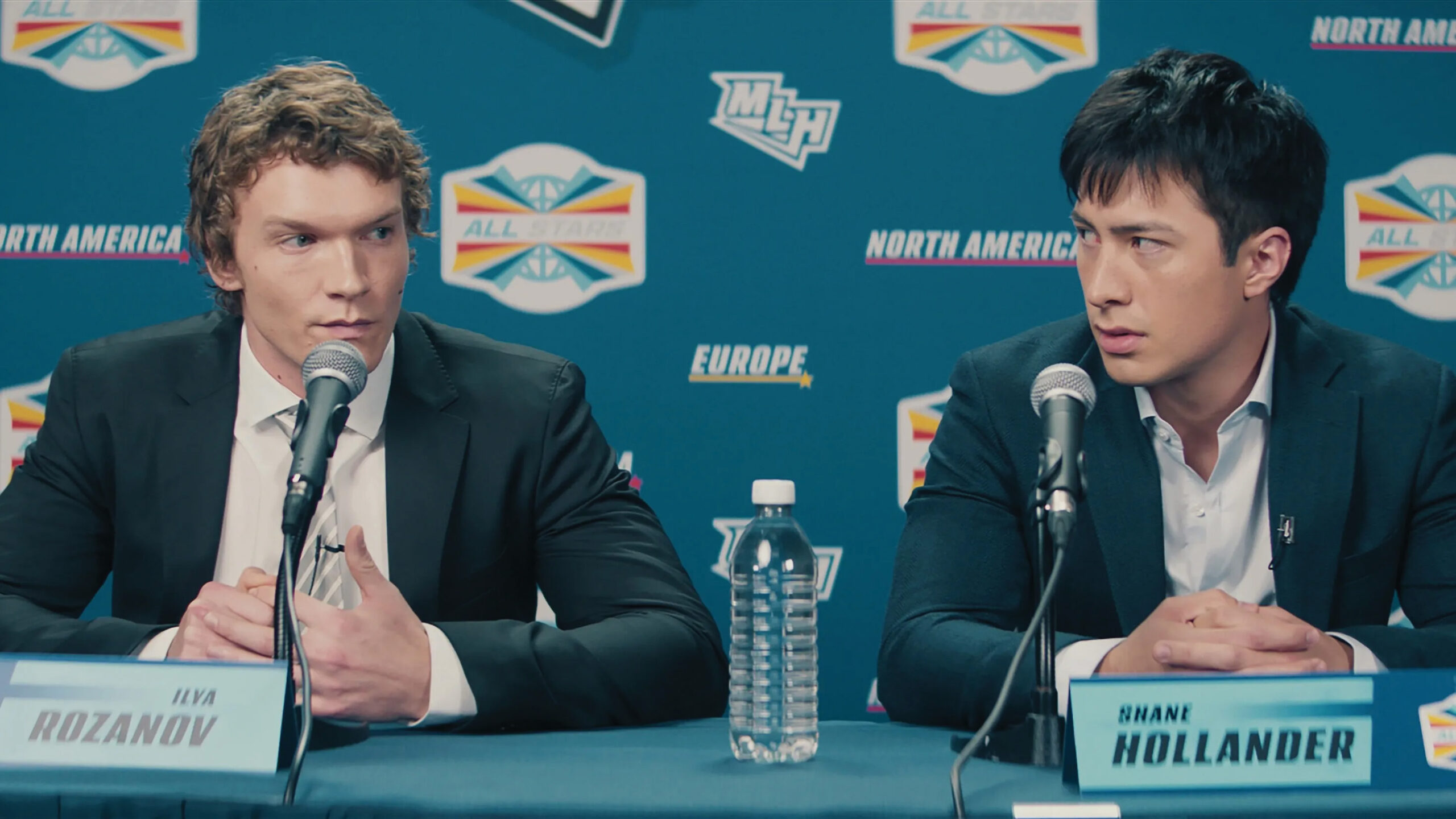
Jacob Tierney’s “Heated Rivalry” is Crave Canada’s latest series adapted from Rachel Reid’s novel of the same name. The show follows Canadian hockey player Shane Hollander, played by Hudson Williams and Russian hockey player Ilya Rozonav, played by Connor Storie. The pair meet as rivals on opposite hockey teams, but what began as animosity quickly develops into a nearly decade-long relationship hidden from the public. The series follows the evolution of their bond over time, focusing on intimacy, vulnerability, social constraints and the consequences of falling in love in a culture that discourages them from being open about their relationship.
What sets “Heated Rivalry” apart from many other romance adaptations is not just its premise, but how it handles intimacy. The series allows its male leads to be emotionally vulnerable and expressive without framing their feelings as weakness or their conflicts as struggles for control. Because of this, it challenges the frequent depictions of power imbalances typical in heterosexual romances, where the emotional labour disproportionately falls on women. Instead, “Heated Rivalry” showcases a relationship based on mutual accountability, offering an emotionally authentic depiction of love.
It’s easy to forget that this drama unfolds over nearly a decade, considering the time jumps and the show’s six-episode run. One of the most effective ways “Heated Rivalry” communicates the passage of time is through visual cues and technological and cultural markers. The series allows the audience to feel the passage of time through evolving fashion and advancements in technology.
The costuming of the character changes subtly, reflecting both personal growth as well as societal shifts. Ilya’s style, in particular, becomes less and less overtly Slavic as he abandons his v-necks in favor of more Western-assimilated clothing, while still retaining elements of his original identity. The on-screen text message exchanges also change in design to mimic real-world updates in messaging apps which helps to reinforce the specific time periods in which Shane and Ilya communicate with each other as their relationship progresses. Together, the show uses time as an active storytelling tool.
At its core, “Heated Rivalry” succeeds because of how it depicts its central relationship between Ilya and Shane. The series follows both characters as they are allowed to be emotionally expressive, flawed and accountable without positioning one as dominant or emotionally withholding. Although that might not be obvious because it’s often done with expression and gestures rather than words.
Their conflicts stem largely from societal stigma, fear and professional circumstances over artificial drama. This approach gives their relationship emotional weight and makes their romance feel natural. Watching the show, it becomes clear that its tension comes not from cruelty or power imbalance, but from timing, fear and the pressure of maintaining their public image for their careers.
One thing observable while watching “Heated Rivalry” is its balance between somberness and heartwarming moments. While many queer-centered stories in film and television are defined by inevitable tragedy, such as “Brokeback Mountain,” “Yellowjackets” and “Portrait of a Lady on Fire,” this series frequently makes space for warmth that lasts. Quiet domestic moments and lighthearted conversations are just as important as moments of personal struggles and fragility, giving the show a tone that feels emotionally generous and hopeful rather than punishing.

One of the series’ strongest elements is Connor Storie’s performance as Ilya Rozanov., particularly in his handling of the Russian accent and language. Storie’s commitment to linguistic authenticity adds credibility to his character which makes his performance that much more realistic and emotional.
His attention to detail makes Ilya feel grounded rather than clichéd. In episode five, Storie delivers a monologue entirely in Russian, and even for viewers who can’t understand what he’s saying, his expressions and delivery carried emotional weight that transcended the barriers of language.
“Heated Rivalry” succeeds as a thoughtful and carefully crafted adaptation. Its attention to character development and cultural context highlights how societal pressures shape their queer identities and the realities of love in a restrictive environment. By portraying Ilya and Shane as complex, emotionally available individuals navigating unique social circumstances and personal rivalries, the show not only offers a compelling slow-burn romance but also challenges common expectations in queer media. Moments of tenderness and domestic warmth balance the tension, making the story both emotionally resonant and ultimately hopeful.
Verdict: Overall, “Heated Rivalry” is an engaging queer story, carefully blending yearning and tenderness to keep viewers invested in every moment of the characters’ journeys.