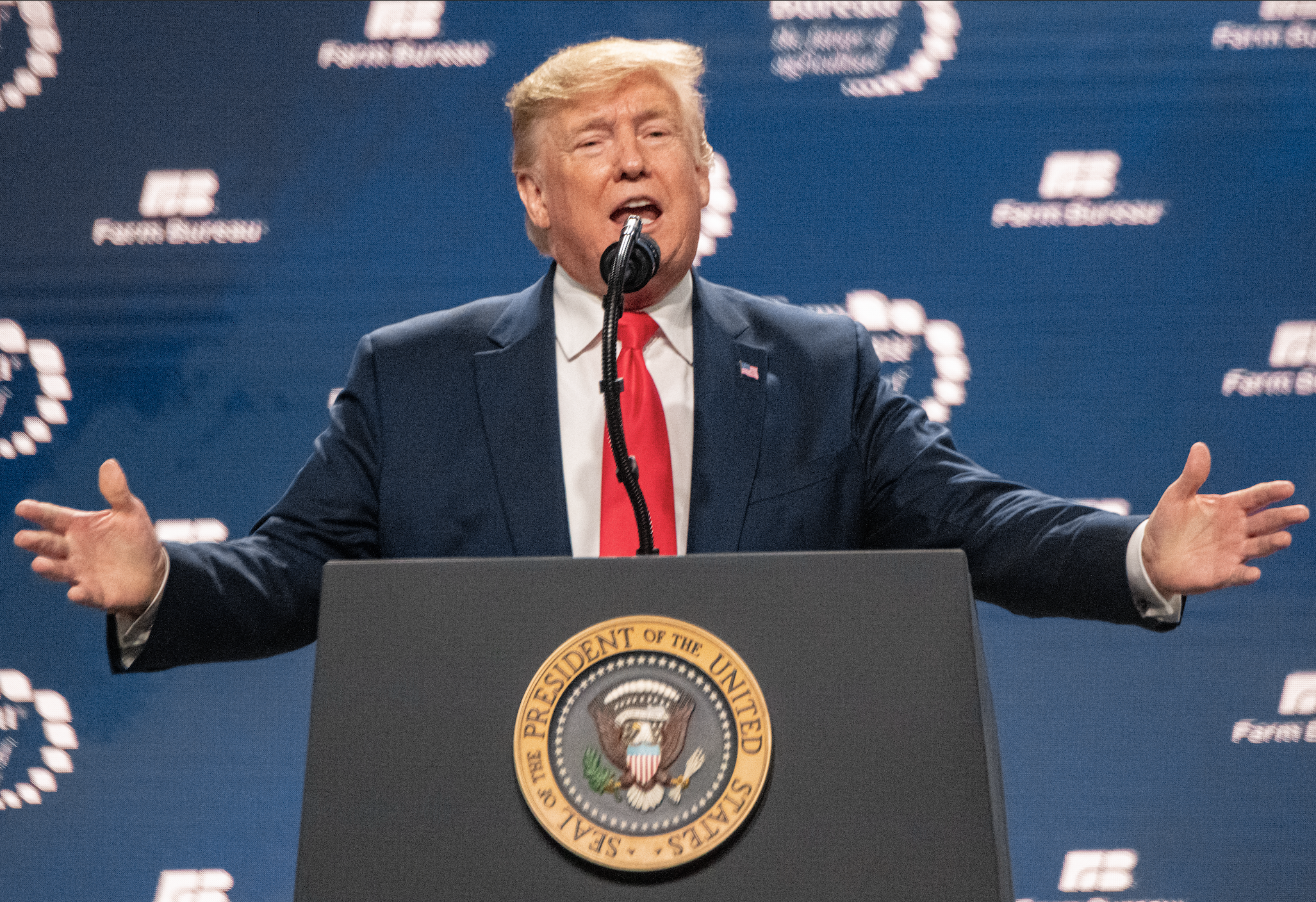
Following the US military operation in Venezuela on Jan. 3, which spirited President Nicolas Maduro swiftly out of the country in order to bring him to court for narcoterrorism charges, President Donald Trump has called for an increase in the military’s budget to $1.5 trillion, a 66% increase. Trump defended his proposition by citing the “dangerous times” facing the world at present.
Recently, after the capture of Maduro, Trump informed the public in detail about his expansionist policy around the Americas, citing his “Don-roe Doctrine,” referencing the framework President James Monroe enacted that shaped the U.S. foreign policy for nearly a century.
Trump has been considering several potential military operations which would further involve the U.S. in other countries’ affairs, including openly considering military operations in Colombia similar to the one in Venezuela and has reopened the discussion on a U.S. takeover of Greenland, a Danish territory. In addition, he has offered Cuba an ultimatum, after blockading life-preserving Venezuelan oil imports to the country, among other regions.
The Trump administration is yet to provide explanations of where the funding for the increase would come from. Trump has claimed that tariff revenue would be sufficient to cover the $600 billion required. However the U.S. government’s own estimates put total tariff revenue at greater than $200 billion.
Tariff revenue has also been promised to multiple different civil interests, such as granting US citizens $2000 rebate checks and subsidizing the domestic farming industry. With the economy down in all non-tech sectors and affordability becoming a major issue nationwide according to TIME Magazine, experts are doubtful that the American people will swallow further military investment.
The increase comes at a time when the U.S. is struggling to address its ever-ballooning debt, which according to experts cannot begin to come down until the country ceases spending in deficit. According to reports by the United States Congress Joint Economic Committee, the country is already at a 120% debt-to-Gross Domestic Product ratio.
However, the U.S. dollar’s position as the worldwide reserve currency provides itself some insulation from a global loss of confidence in its value. Experts warn that dubious spending decisions would further concern international investors, who can be further incentivized to move away from the dollar.
Congressional reactions to the suggestion were mixed. House Appropriations Chair Tom Cole, a Republican, stated, “I’ll take any request the President makes seriously and we’ll see”. Cole has previously stated he believes defense spending “needs to go up,” but has not been clear by how much.