
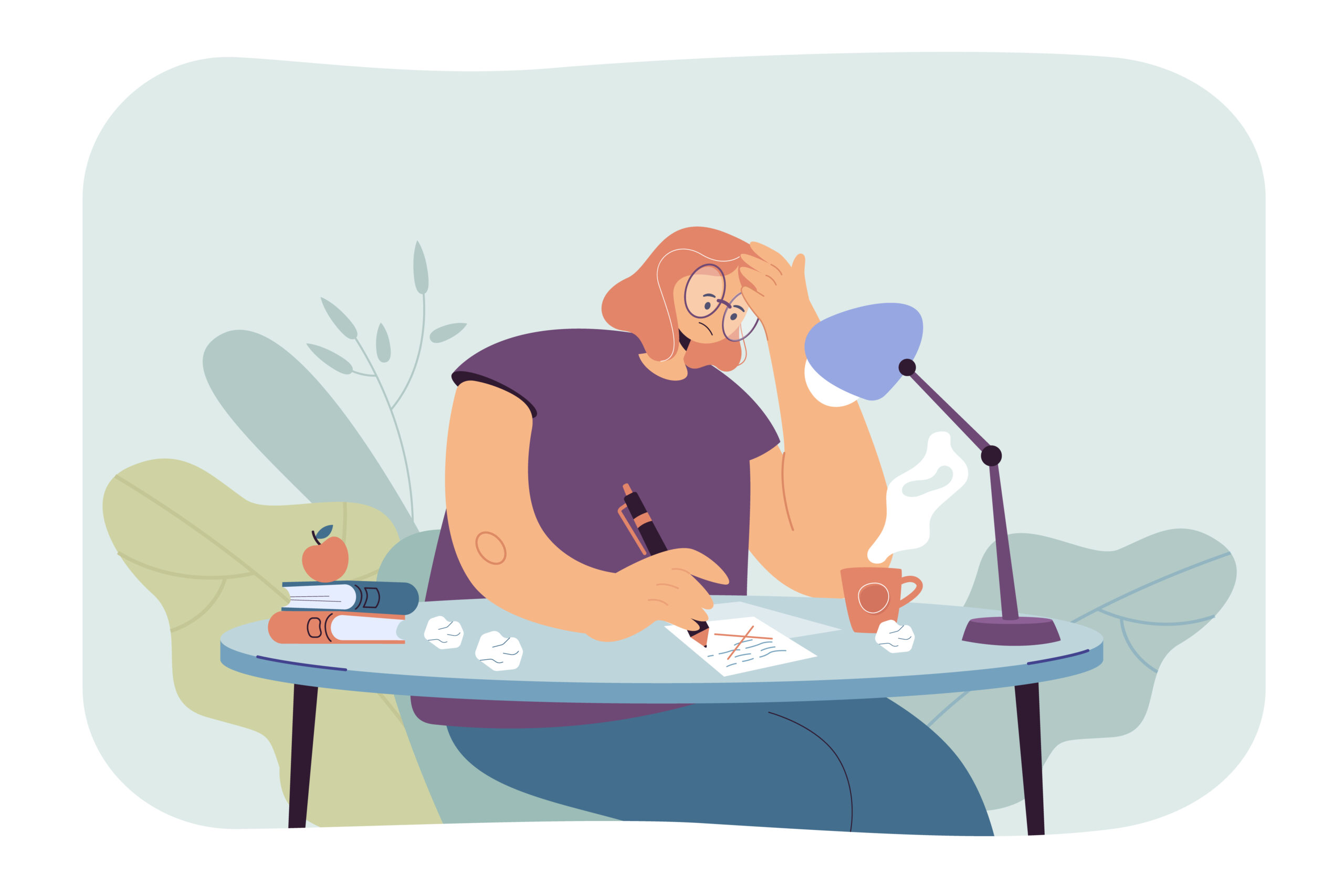
Sometimes, no matter how many things you’re juggling in your life, you can’t seem to encounter something inspirational enough to result in more than a paragraph. That is, until the storm hits. Something bad happens to you and all you can do is write. You take up countless pages going on and on about how upset and frustrated you are, what could’ve gone differently and how you think we’ll never move on. As artists, we begin to channel our creative outlets and produce stories, music and visual art to express our disdain to the best of our ability.
Although the work that comes out of our inevitable struggles in life might be authentic, detailed and unique, mental turmoil is not a requirement for great work. The notion of the “tortured artist” is full of glamorization of long-term suffering for the sake of reaching our full potential as creatives. In fact, maintaining unhealthy conditions is often the downfall of our personal lives and our craft.
The “tortured artist” theory was popularized by observing our cultural icons. Famous writer Edgar Allan Poe, who was an alcoholic throughout his entire career, is taught in almost every English curriculum. Musical icons of the 2000s, including Kurt Cobain, Amy Winehouse and Whitney Houston, were all known to struggle with substance abuse or suicidal thoughts. Even Vincent van Gogh’s art didn’t gain attention until after his tragic death.
As these individuals’ careers began to take off, many people believed that their obstacles were the fuel to their success. Since the art that they produced was like nothing others had ever seen before, people are quick to assume that without the issues they faced, they would not be able to reach the peaks that they did.
However, studies actually show that consistent trauma and suffering are an overall hindrance to our creative ability, and not to mention, quality of life. Constant negativity and hurtful experiences can lead to “increased anxiety, depression and shame amongst performing artists.” These conditions decrease both cognitive and bodily functioning. As health declines, a tortured artist will literally begin to lose their ability to practice their passion.
Furthermore, proper focus is a key component of producing one’s best work. In the initial moment of distress, we can articulate our thoughts and emotions clearly in our art. Be this as it may, focus — in a state of poor mental health — is not sustainable. Rogers Behavioral Health explains that thinking in conditions such as depression feels “slowed, as if the brain is in molasses.”
On the other hand, individuals with anxiety “feel like their brain is moving too fast and they experience rapid thoughts.” Either way, the pace and stress that stem from these mental illnesses prevent people from obtaining the focus to build something with the required attentiveness to detail. For instance, if the goal is for your writing to articulate your creative vision exactly — in terms of word choice, tone, sentence structure — your brain requires the highest level of focus in order to properly select those elements.
If we can’t remain in these states of intense agony, are we bound to only create things that are … boring? Absolutely not.
Being bored is actually a great thing for writers and every type of artist. Psychology Today expands on how boredom enhances our creative ability by giving us a chance to “reboot mental health,” “become more creative” and “reconnect with what matters to you.” Research on boredom from the Academy of Management confirms that as people are forced into performing simple, slow-paced tasks, their creativity is rediscovered. Results explain that being bored provides people with the opportunity to seek out new passions, perspectives and performance tactics.
It’s time to permanently dispose of the “tortured artist” trend that seems to be promoted among visionaries. Of course, art that expresses negativity or even trauma has a valuable place in society. The intensity that is expressed in famous rock albums or tear-jerking novels helps us understand the depth of our emotions and the overall human experience much better. It is crucial to recognize that good mental health reflects a variety of emotions, not just happiness, which is also good for your work.
With that being said, we cannot get into the habit of only writing when these intense peaks of upset arrive in our lives. If you are truly feeling uninspired, go out and find something positive to be passionate about. Beauty can be found in the connections you form or the new interests you acquire.
Work that’s based on genuine joy and positivity is “real” and authentic if that’s how you are. And for the sake of your own well-being, and the longevity of your creativity, that’s how you might want to be.