On April 1, 2026, the English Department at UC Riverside hosted a roundtable discussion on Guillermo del Toro’s “Frankenstein” with English professor andré carrington and three English doctoral students Loren Barbour, Kris Lien and Rhiannon Rogers. carrington led the discussion by asking a set of analytical questions about the film which Barbour, Lien and Rogers responded to by applying their expertise on their respective focused area.
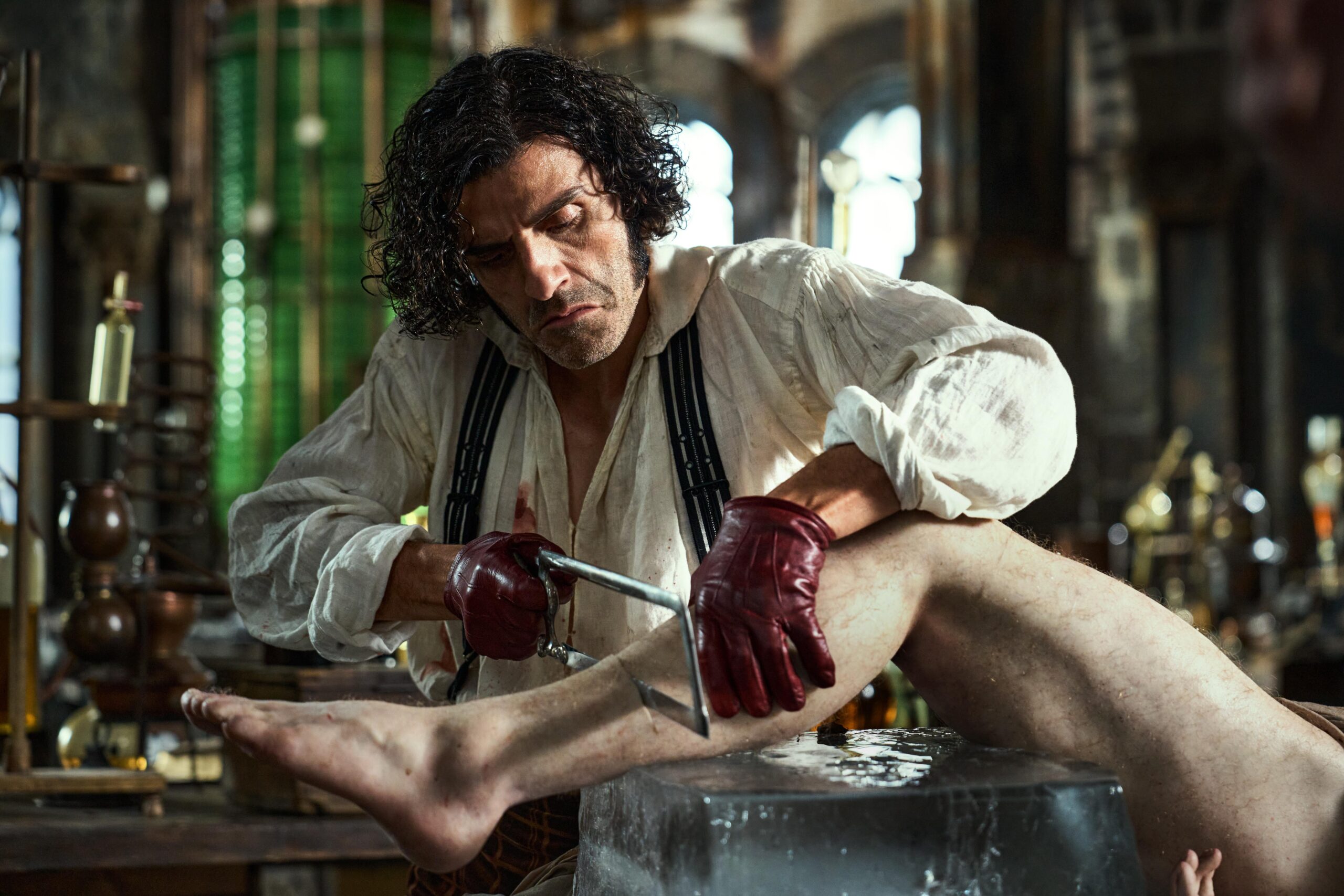
The panelists began the discussion by listing some expectations they each had going into the film. Given Del Toro’s penchant when it comes to depicting the relationship between humanity and monstrosity, the expectations for him to do justice for one of the most famous science fiction novels of all time were high. Lien also expected an exploration of father-son relationships between Victor Frankenstein and the creature.
Having watched the film, Lien confirmed that the film indeed paralleled del Toro’s previous works, most notably “Pinocchio.” They also mentioned a few things they did not expect that were in the film. One of the most notable detractions was how Victor’s relationship with his mother played somewhat of a central role, something not seen in previous iterations.
Lien, whose research areas include animation studies, was then asked about the role of animation in the film. Lien makes note of how the use of animation by Del Toro, at times awkward and rigid, heavily mimics Victor’s own experience bringing something as equally awkward as a monster to life. It makes sense given how animation usually involves manipulation and control of compositions, scale, texture and other aspects the same way that Frankenstein controls life and death.The creature is unable to live up to Victor’s standards beyond a few gestures and Victor concludes that the creature might as well be killed. Lien saw this journey of the creature as del Toro raising biological and ethical questions about what it means to be fully human.
Barbour, having studied monsters extensively, was interested specifically in the casting of the creature and the ways in which people have responded to it. She pointed out that the audience members who are familiar with del Toro’s films have become increasingly used to seeing Doug Jones playing the monster and that in various adaptations of Frankenstein in the past, the audience often focuses on how the actor embodies the movement of the creature, being characterized with superhuman strength as well as disabilities.
She also saw monsters as a portrayal of otherness such as people of color imbued with fear, but also something people that identify with the representation can connect with. Barbour notes how previous roles that actors playing the monster were involved with influence how audiences see the monster as well.
The topic of faithfulness when adapting the source material was additionally touched upon within the panel. It’s no secret that the 2025 film strays far from the original source, in which die-hard fans of the novel were not particularly fond about. Rogers tackled these criticisms head on, specifically bringing up the play “Presumption; or the Fate of Frankenstein.”
Performed in 1823, the play saw critical acclaim all the while further solidifying modern notions about “Frankenstein,” including the idea of the monster being a green, rigor mortis-afflicted creature. Mary Shelley, who also happened to be an audience member during the play’s run, was enthralled by the adaptation. In spite of all of the liberties taken, the play was successful to the point where interest in the novel was renewed.
Although the handling of certain creative choices within Del Toro’s adaptation are open to critique, it would be absurd to call the film out on the simple basis in which it doesn’t follow source material, especially when many adaptations have also strayed to varying successes.
Along with Del Toro’s adaptation, “The Bride!” was given ample attention during the discussion. There is mention about how Shelley, who has a prominent role within the film, is given various asides akin to play, which could be a subtle nod to “Presumption; or the Fate of Frankenstein.” Panelists noted the film’s boldness when it comes to running with the legacy of “Frankenstein” as well as Mary Shelley herself, albeit with respect to both.

The panelists gave audience members a chance to ask questions such as Elizabeth’s role within the 2025 film and whether the monster would be given more grace if it were given feminine traits. All in all, the discourse on what is arguably the most influential science fiction novel of all time is alive and well, and it proves to grow stronger as another adaptation gets made.