In March 2026, Oscar nominee Timothee Chalamet faced criticism over his take on the arts during his live conversation with Variety Magazine. Riding a wave of success from his recent role in “Marty Supreme,” his rapid ascent seemed unstoppable until, in the space of a few seconds, the narrative shifted.
“I don’t wanna be working in ballet or opera” he joked, “it’s like, no one cares about this anymore.” The statement spread online and across social media, sparking backlash. Critics accused Chalamet of scorning artistic traditions. Among the responses, the LA Opera posted a playful rebuttal on their Instagram page: “Sorry, @tchalamet. We’d offer you complimentary tickets to Akhnaten, but it’s selling out.”
The LA Opera shines a light on a sold-out performance, yet many opera houses around the globe face continual challenges in maintaining full audiences. Whether the caption reflects reality or simply aims to provoke, the response itself invites scrutiny. To understand why Chalamet’s claim resonates in the cultural world, one needs to step back to a time when ballet was not being “kept alive,” but was instead at the forefront of modern culture.
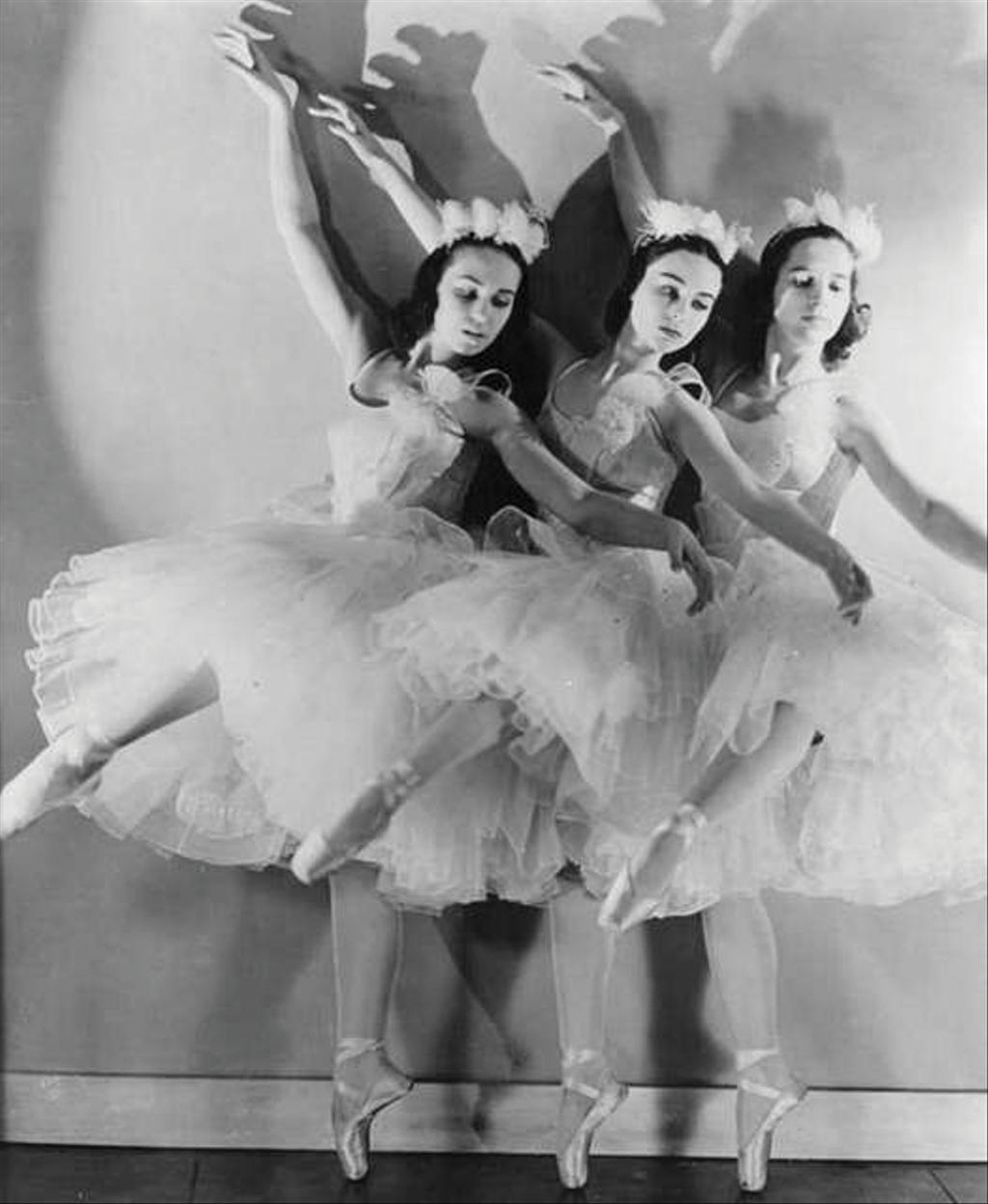
In early 20th century Paris, the Ballets Russes redefined what ballet could be. Founded by the visionary impresario Sergei Diaghilev, the dance company, despite its name, never performed in Russia. Instead, they captivated fastidious Parisian audiences before touring internationally in Spain, London, Monte Carlo and the Americas. Between 1909 and 1929, the Ballets Russes revivified Paris’s already flourishing cultural scene, stretching it towards new forms of innovation, entertainment and avant-garde performance. The company merged composers, dancers, choreographers and visual artists in a way that felt new. This was the moment when artistic movements like Impressionism, Expressionism and Symbolism moved away from Realism to embrace subjectivity, emotion and abstraction. The Ballets Russes carried that same energy onto the stage.
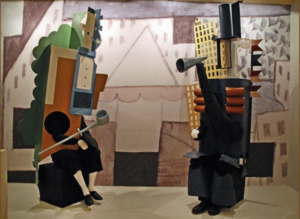
Diaghilev commissioned fresh scores from disruptively innovative composers like Claude Debussy, Igor Stravinsky and Maurice Ravel, which rendered his productions recklessly modern. These composers worked with unresolved dissonance, irregular rhythms and ambiguous tonalities. Claude Debussy, for instance, drew inspiration from non-western sounds such as the Javanese Gamelan. Debussy had the willingness to explore new sounds that felt fluid and elusive rather than structured and familiar. Equally revolutionary was the visual dimension of these performances. Diaghilev hired visual artists, including Léon Bakst, whose richly coloured palette and design transported audiences to exotic worlds and Pablo Picasso, who brought the fragmented geometry of Cubism onto the stage through sets and costumes.
Each production was an experiment, executed at a very high level of artistry. Ballet was not ignored, on the contrary, people could not stop talking about it. This energy reached a climax with Stravinsky’s ballet Rite of the Spring. It staged an ancient ritual celebrating the arrival of Spring, concluding with a young girl dancing to death as a sacrifice to the Earth. Its premiere unsettled audiences. The music was aggressive and the choreography was heavy. Shouting filled the theater as the audience teetered on the brink of a riot.
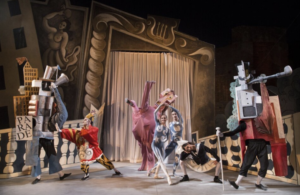
Hence, ballet was not always a subdued and distant form of art. It once embraced unpredictability and compelled attention rather than struggled to hold it. While Chalamet’s comment may sound dismissive, it also puts forward a shift: bold innovation no longer occupies the same place in the cultural mainstream. The issue is not simply whether people “care,” nor is it the value of ballet, but rather the distance that now separates it from the audiences it once unsettled.