
A dozen middle-aged men in bucket hats crowd around a chain link fence equipped with a radar gun, stopwatch and notebook, taking in a game of amateur baseball. What are they keying in on, and what makes a player standout?
In player evaluation, there are two methods of assessment that eventually coincide with each other when crafting a board or list of players: in-person looks and data analysis.
The former is simple enough; taking a look at how players move in the batters box, mound and/or position. Video analysis has its place in scouting, but actually seeing a complete game is a more sufficient practice. Not only can one see the player just a few yards away, but also how they interact with their teammates and coaches, their body language and overall makeup, which is almost equally as important when selecting players to build a team around.
A key component of evaluation is a player’s outlook within the next three to five years for college coaches, and into their mid-to-late twenties for pro scouts. Gauging if a player’s frame or movement patterns are effectively maxed out, if there’s muscle to build or mechanical tweaks to unlock more bat speed and so on.
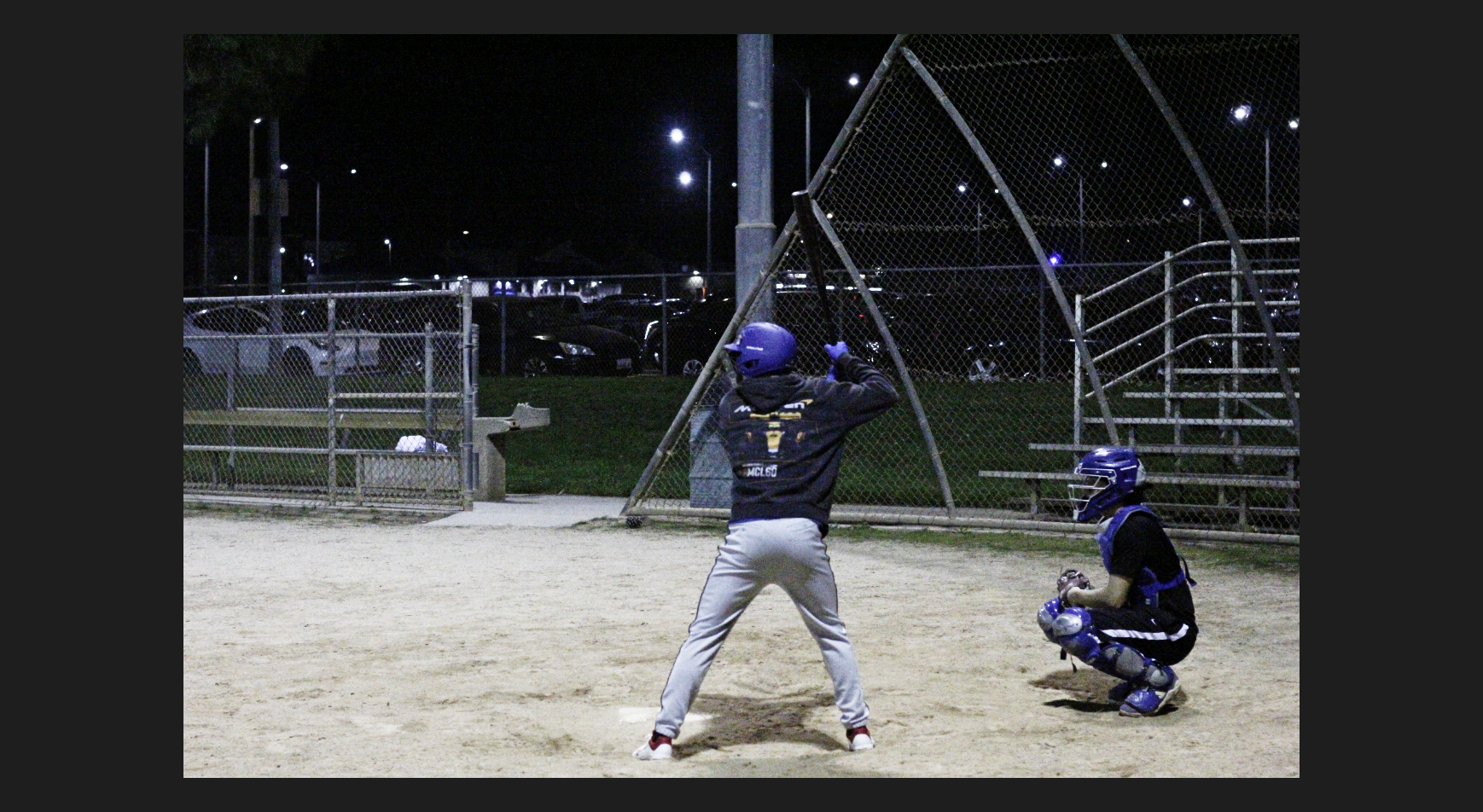
Overall, a player profile is a major factor as well. In many cases, a large-framed power-hitting first baseman will be passed over for a leaner, athletic shortstop because the latter plays an inherently more valuable position. Or a 6-foot-4-inch left-handed pitcher operating in the high-80s will be picked over a 5-foot-11-inch right-handed pitcher up to 95 miles per hour, because the lefty offers more projectability. Evaluators have to envision how a player will provide value in the future, not just looking at the raw home run total or number on the radar gun.
It also pays off to be unique. Standing out from the rest of the pack visually is almost as important as on-field results. Outlier athleticism or a weird arm slot, because being stock is as much of a death sentence as just being below-average.
That said, the rise of analytics has thwarted much of the in-person scouting process. For the most part, these future big leaguers are just names on a spreadsheet, especially in the MLB draft.
Numbers help to take some of the guesswork out of player evaluation. The “eye-test” has become increasingly taboo in the scouting space. That’s what the summer showcase circuit is for in high school ball. These events will typically utilize Trackman or Hawk-Eye to track near-exact contact rates, exit velocities, spin rates and more. Most Division I stadiums will have this technology, making it easier to evaluate all the players on the 304 teams of high level colleges. This luxury is typically reserved for MLB teams and powerhouse schools, though it’s relevant nonetheless.
Data analysis is much simpler for position players. The pillars being some assortment of whiff rate, exit velocity and batted ball distribution. This quickly gauges a batter’s ability to cover the zone, their high-end raw power grade, and ability to convert their contact into extra-base hits. Of course, a deeper dive would require more metrics.
Evaluating pitchers requires a knowledge of pitch shaping, how a pitch moves and some sense of biomechanics. Put simply, it’s how an arsenal interacts off each other and out of the pitchers’ hand. This ties back to being different, as it’s much tougher for a hitter to adjust when the pitcher offers a unique look from the mound. Velocity and spin rates tie in as well.
When done with their rounds, college coaches will discern which players they’ll offer a scholarship to, and MLB evaluators will grade players on the “20 to 80 scale.” In short, players’ tools are put on a scale, with 50 being league-average, separated in intervals of five.
Hit, power, run and field tools for position players. Individual pitches and command for pitchers. They’ll be separated into present and future, and an overall future value grade will be assigned. Top draft picks will typically be graded in the 50-to-60 range. Then finally, evaluators for teams or media publications will get together and craft a board of players based on their collective future value grades.
It’s a long, drawn out process that tends to be dead wrong within five years because it’s nearly impossible to predict how a high school senior or college junior will perform in MLB. But it’s nice to take a victory lap when a player they advocated for becomes a successful big leaguer.