
**Contains Spoilers**
Nathan Fielder is, without a doubt, the last person anyone would ever want to be interviewed by. As he has demonstrated time and time again with shows such as “Nathan For You” and “The Rehearsal,” almost every interaction with Fielder has concluded with subjects either feeling baffled, irritated, amused or a weird combination of the three. Despite venturing into sterner territory with “The Rehearsal,” his debut feature film, “You Can See Everything” indubitably has to be one of his most serious and consequential works yet.
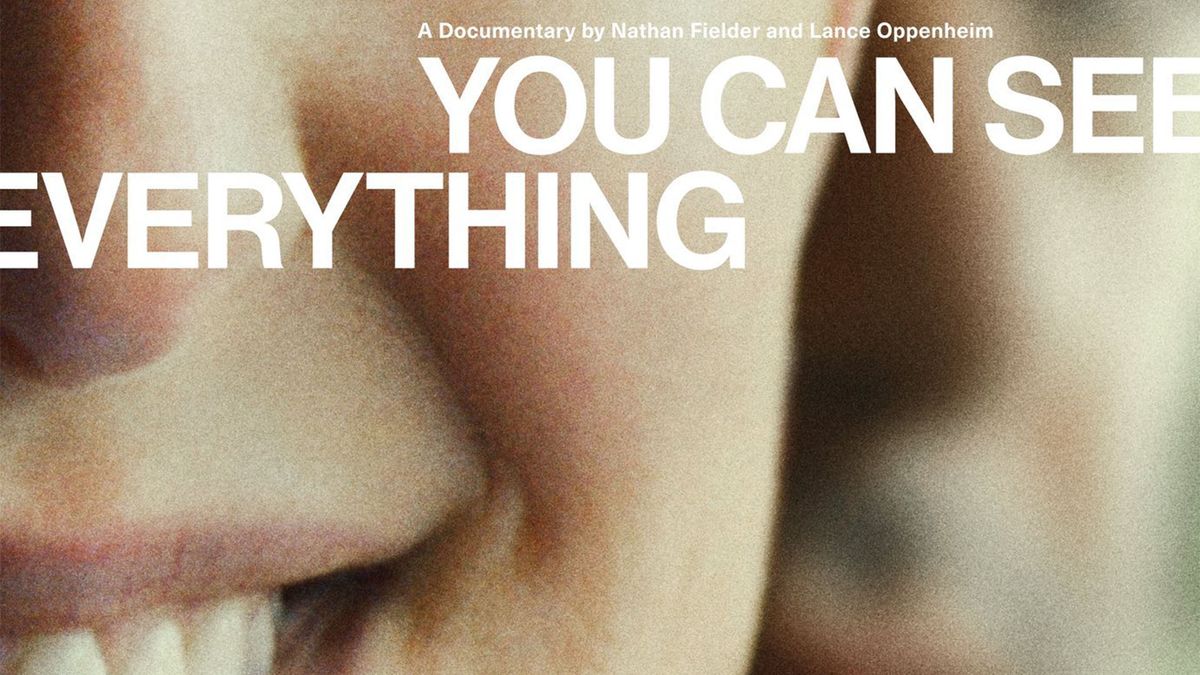
Along with the help of co-director Lance Oppenheim, Fielder documents the final days of disgraced Theranos CEO Elizabeth Holmes days before the start of her 11-year prison sentence. What starts as a simple spotlight on Holmes eventually takes a turn for the worse as awkward truths are revealed, especially in regards to the amount of freedom Holmes has under her husband Billy Evans. Additionally, Fielder’s own neutrality as a documentarian is called into question as he becomes engrossed and protective of Holmes. With the amount of shocking revelations pertaining to her personal life being divulged throughout the documentary, “You Can See Everything” goes beyond simply questioning Holmes about her time with Theranos and its eventual downfall.
The first act of the film, while somewhat slow, provides ample context for what would eventually come. Within ten to fifteen minutes of the film, Fielder already finds himself locked in a battle of wits with both Holmes and Evans as he tries to force a confession regarding her misdeeds. Most of the time, it feels as if the two are trying to figure out how long it takes until one of them ends up cringing. As with many of his other works, Fielder brings in his usual, confrontational approach of questioning. Holmes, to the surprise of both Fielder and the audience, is unwavering when it comes to her innocence. Not only does she use semantic gymnastics to justify her actions, but both herself and Evans have additionally implied that there are more projects akin to Theranos that are yet to come.
It is also within this first segment that the audience can already see Evans trying to control the narrative, often interrupting Fielder’s interviews while implicating him and the film crew every time an issue arises. Scenes such as Holmes not understanding the famous “who’s on first” joke and how it relates to how her supposed miscommunication of Theranos’ blood-testing device reinforce the two possibilities in which she is either the most steadfast person of all time, or the most oblivious.
While it’s easy to dismiss Holmes as both eccentric and a fraud within the first hour of the film, the second act attempts to humanize her all while disclosing that she doesn’t have as much autonomy as one might think. A few years after Holmes’ imprisonment, Fielder finds evidence from their interview showing that Evans is possibly trying to profit from the documentary by himself. The rabbit hole in which Evans might be controlling her finances and other aspects of her life goes deep to the point in which Fielder enlists Amanda Seyfried, the actress of the Holmes-centered miniseries “The Dropout,” to reenact and even confront Evans about his domineering behavior. Despite making some questionable choices as a documentary filmmaker, Fielder manages to get shocking results.
The film particularly does a superb job of highlighting the dilemma Nathan faces when it comes to either remain on the sidelines of the issue as would a normal documentary director would typically try to do, or to try and help out Holmes. The film, as well as Seyfried herself, makes it clear that Elizabeth Holmes is still a human being who should still be entitled to agency of her own finances and public image. The second half arguably does a better job of highlighting Elizabeth Holmes not as the CEO of Theranos, but as a mother and individual.
Additionally, Fielder himself rightfully challenges the one unspoken rule of all documentaries: never get too close to the subject. While it’s important to remain impartial when documenting the lives of others, one can’t help but believe Nathan to be in the right when it comes to being concerned about Holmes’ freedom. It’s only a shame that the film gives an inconclusive answer when it comes to the true relationship between Holmes and Evans.
One can’t forget to mention the spectacular cinematography that’s more than likely attributed to Lance Oppenheim. The visuals and tone boldly present an ‘80s thriller tone, albeit with a modern touch, that Oppenheim is starting to be recognized for. It is especially stylistically reminiscent of Oppenheim’s other recent film, “Primetime.” While most documentary filmmakers would rather shoot everything in its rawest form, his auteurship ultimately makes the film visually delightful just as it is informative.
Verdict: Nathan “The Wizard of Loneliness” Fielder has struck gold with his directorial debut, churning out a documentary on par with the engaging works of Werner Herzog. “You Can See Everything” is — in the least overpraising way possible — a bold contender for the best documentary feature film of the year.