
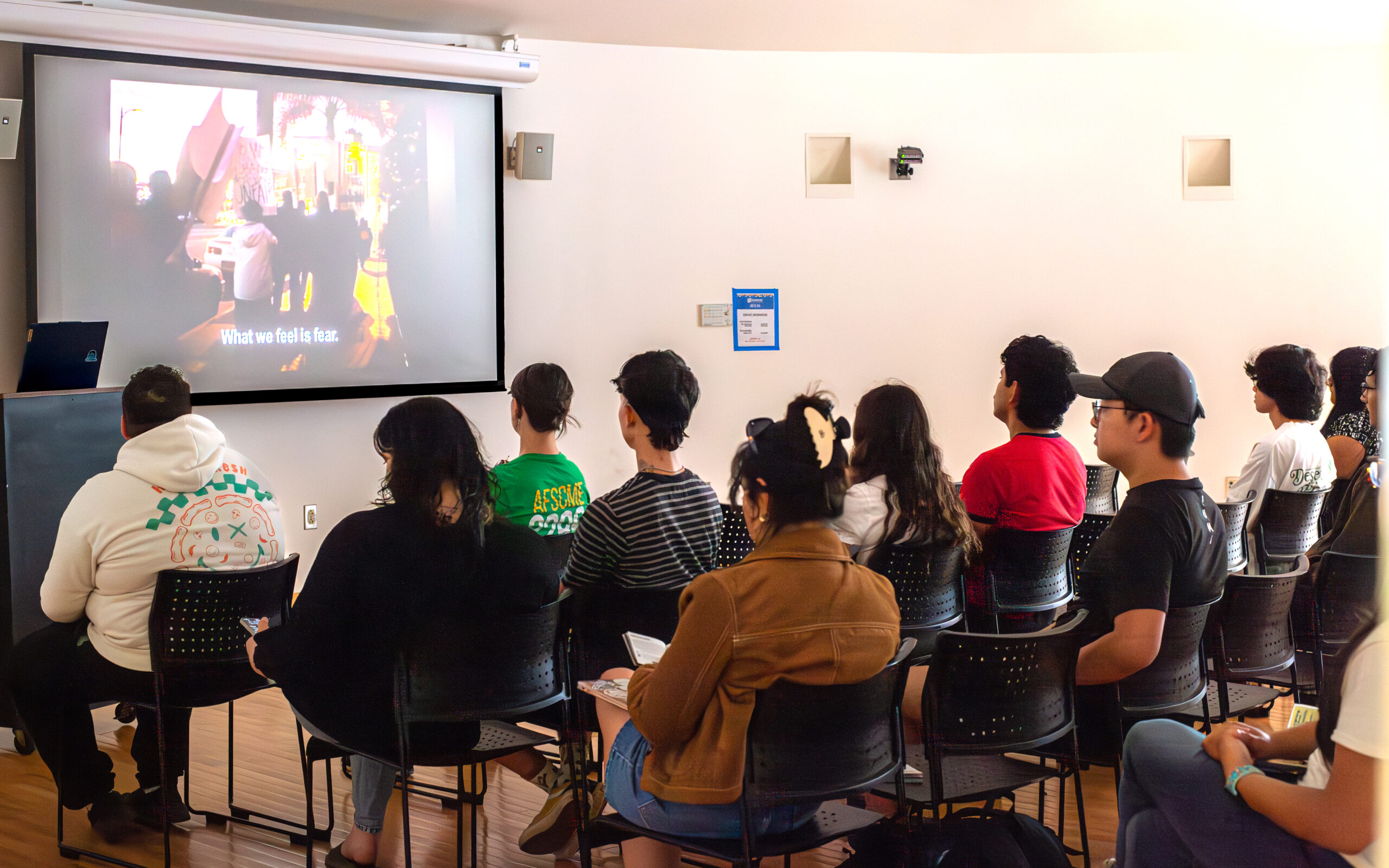
The Inland Empire Labor Council brought students, labor organizers and community members together for a screening of “Made in L.A.” at the University of California, Riverside (UCR) using the documentary as a launching point for a larger discussion on immigrant labor, organizing and solidarity movements in the Inland Empire.
The documentary, which follows immigrant garment workers fighting for labor protections against fashion retailers Forever 21, resonated deeply with audience members during both the screening and the panel discussion that followed. Throughout the film, workers described unsafe conditions, wage theft and exploitation in Los Angeles garment factories while organizers worked to hold corporations accountable for labor violations within subcontracted workplaces.
Audience members watched quietly as the film detailed the workers’ years-long legal battle against Forever 21 and the emotional toll organizing efforts took on immigrant families. The documentary highlighted how labor organizers connected workplace abuses to larger immigrant struggles, a theme that panelists repeatedly returned to during the forum afterward.
One organizer in the documentary explained that “the only way clothes can be produced” under the existing system was “by exploiting workers,” while another emphasized that the campaign represented a groundbreaking challenge to retailers attempting to avoid responsibility for conditions in contracted factories.
The emotional climax of the documentary came when the workers eventually secured a settlement after years of organizing, protests and appeals. The victory drew visible reactions from attendees, particularly students involved in labor and immigrant advocacy organizations on campus.
The forum following the screening featured labor organizers, students activists and community advocates discussing how the film’s theme continues to reflect ongoing labor struggles throughout California and the Inland Empire. Moderated by labor organizer Celine Perez, the panel connected the experiences shown in the documentary to present-day campaigns involving university workers, undocumented students and immigrant communities.
Perez reflected on her own history organizing at UCR during the same period the Forever 21 campaign was unfolding. She described participating in boycott efforts and helping mobilize students in support of garment workers.
“We were going to the malls and getting kicked out,” Perez reminisced. “But then also going inside the stores, trying to close stores, putting flyers in all the pockets of the different clothes.”
Perez said revisiting the documentary years later remains emotional because of how strongly it reflects the experience of immigrant families and workers. “I see the story of my own family,” she said.
Several student speakers discussed how labor organizing and immigrant rights remain interconnected. Representatives from undocumented students organizations explained ongoing efforts to expand employment opportunities for undocumented students within California public universities.
“Immigrant rights are labor rights,” one panelist stated. “Workers’ rights don’t exist independently because people are attached to their identity.”
Speakers emphasized that organizing requires building relationships within communities rather than only advocating for workplace issues in isolation. Panelists repeatedly stressed that labor organizing must include support for immigrants, LGBTQ+ students and other marginalized communities.
“People are more than just workers,” one speaker said. “Labor is a big part of our lives whether we want to believe it or not.”
The discussion also connected the documentary themes to ongoing labor disputes involving University of California workers. Panelists referenced current organizing efforts among campus employees, describing strikes and collective action as necessary responses to rising healthcare costs, housing insecurity and stalled bargaining negotiations.
The event also served as an educational experience for students unfamiliar with labor history in the Inland Empire and Southern California. Organizers discussed the region’s long history of immigrant labor including exploitation in agricultural and industrial sectors while encouraging students to view labor advocacy as part of broader social justice work.
By the end of the evening, the screening had evolved beyond the documentary presentation into a broader conversation about activism, organizing and community responsibility. For many attendees, the combination of the film’s emotional story telling and the personal experience shared during the panel reinforced the continuing relevance of labor organizing in California today.
“This was about seeing possibility,” Perez said while reflecting on her own journey from student organizer to labor leader. “It showed us there were other paths and other ways to create change.”