During the historic 2024 spring pro-Palestinian encampments at the University of California, Riverside (UCR), many students felt the impact of collective student activism. The weeklong protest, led by the Students for Justice in Palestine (SJP), called for a ceasefire in Gaza and pushed university administration to divest from companies doing business with Israel. UCR student protestors became the first in the UC system to negotiate an agreement with upper administration.
Other student organizations, including the Young Democratic Socialists of America (YDSA) and Providing Opportunities, Dreams and Education in Riverside (PODER), also held significant demonstrations during the 2023-2024 academic year. It seemed like UCR was at its strongest in the impact its students could make.
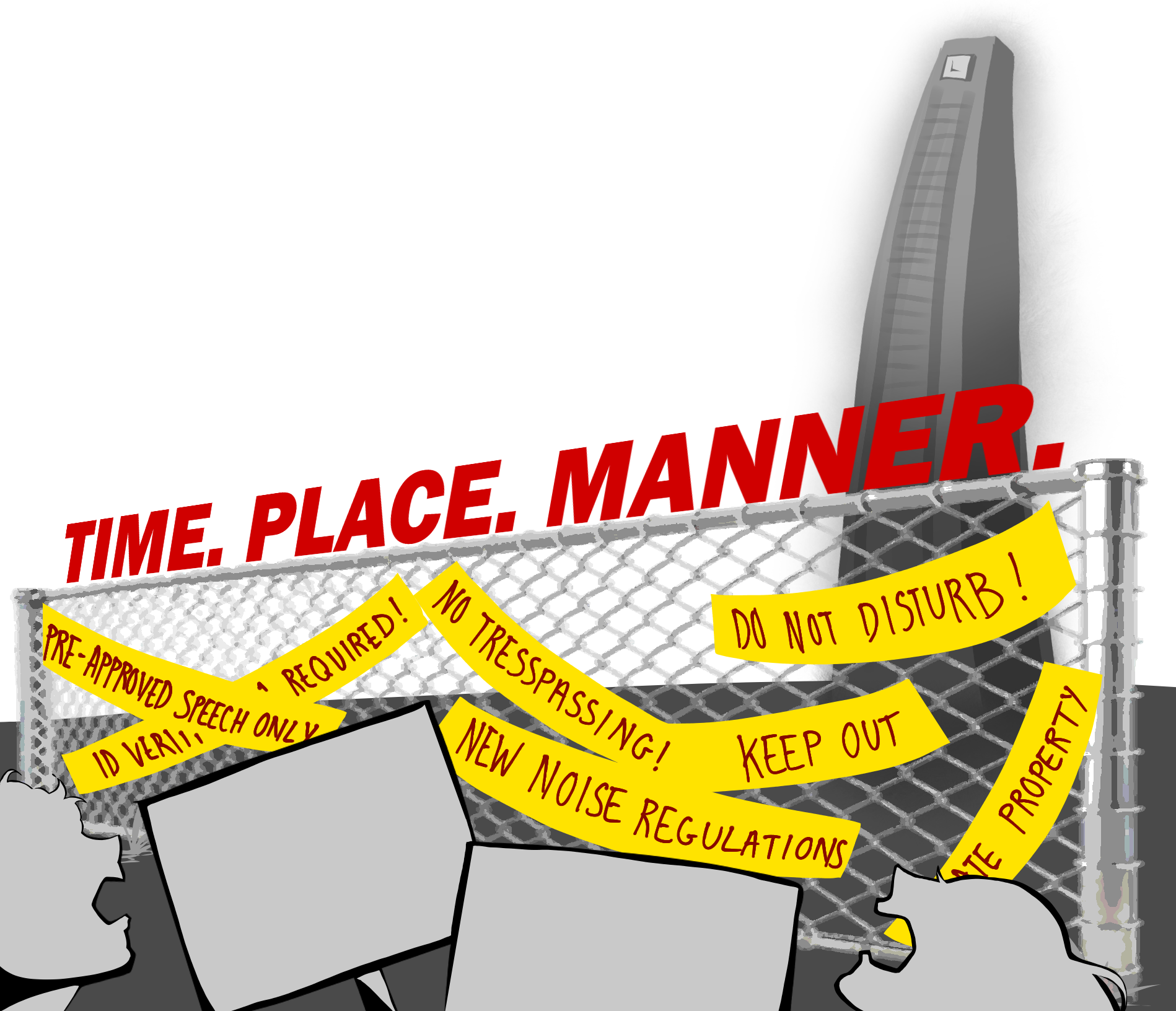
However, when student organizations returned to campus the following fall, they were met with the university’s new policy regulating student demonstrations: the Expressive Activities: Time, Place and Manner (TPM) Regulations.
According to the Chancellor’s Office, the TPM Policy is a framework governing “the conduct of demonstrations and other expressive activities that protects the rights of members of the campus community as well as campus operations.”
It defines expressive activities and imposes time, place and manner restrictions on student demonstrations. For example, student activities can only occur between 8 a.m. through 8 p.m.; erecting structures like tents is not allowed; amplified sound, such as bullhorns, is banned; and blocking “access or free movement” through roads, buildings and campus entrances and exits is prohibited.
The policy also states it is enforced on a “content-neutral basis” and that anyone who violates it is subject to “disciplinary proceedings under applicable policies.” These consequences include sanctions under the UCR Standard of Conduct for students, possible termination for unrepresented staff, dismissal for academic employees and the Collective Bargaining Agreement for represented staff and academic employees.
Over the past two academic years, student protests have quietly declined since the adoption of this policy, as on-campus demonstrations have become increasingly difficult to organize. Many of the provisions in the TPM Policy are specifically designed to limit students’ freedom of speech and right to assemble.
One major restriction on student activism is the provision stating that “some locations are available only with prior authorization,” which requires student organizations to obtain approval or schedule demonstrations with the university. The Vice Chancellor for Planning, Budget & Administration or the Vice Chancellor for Student Affairs is responsible for processing these requests.
There are several issues with this policy. First, protests often occur spontaneously or in response to unjust events and actions that demonstrators oppose. It is unreasonable to expect students to know weeks in advance whether they want or need to protest, especially under the current federal administration.
Second, the fact that university administrators ultimately decide which protests can or cannot occur on campus is deeply concerning. By concentrating this power in the hands of a few individuals, university officials can shut down or restrict protests on issues they do not want to see on campus.
In addition, the policy contains many inconsistencies between student and third-party organizations. It prohibits “temporary signage posted in the open-air environment of the main campus announcing events, activities, services or products by any entity that has not requested and received approval,” and states that such signage is subject to immediate removal. Yet third-party organizations have displayed signs around campus during their events, including pro-life demonstrations with pro-life visuals of fetuses.
A statement from Student Affairs explains that 700-52: Temporary Signage and Banners is “being updated to include references to the new TPM and student posting policies … When third parties arrive anywhere on campus and are in violation of any TPM policies, they can be reported to university police.”
According to Student Affairs, student reports of third-party entities “posting signage in violation of university policy” are redirected to the UC Police Department (UCPD), which then informs these “groups about what needs prior approval.” However, similar to the enforcement of on-campus petitioners, student complaints are the primary way the university enforces policies for outside organizations.
Although enforcement may be consistent with these outside groups, the policy disproportionately penalizes students and student organizations directly overseen by the university. Outside organizations frequently get away with displaying disturbing visuals or signage on-campus without university intervention.
This highlights a growing issue over the past year: third-party organizations increasingly using UCR as a stage to spread hate speech. During the last two academic years, UCR has hosted several ultra-conservative external organizations, from Charlie Kirk’s tour to pro-life tabling events, with minimal representation of alternative viewpoints. As a minority-serving institution, these demonstrators threaten the physical and mental safety of students. While UCR might want to limit student protests through its TPM policy, allowing outside organizations to repeatedly target vulnerable students with offensive rhetoric is unacceptable.
From international student visa revocations to federal immigration directives and cuts to research and Diversity, Equity and Inclusion (DEI) programs, UCR students are understandably scared right now because they are a direct target of the federal administration. Since President Trump returned to office, the chilling effect on participation in student activism has become increasingly evident.
But it is especially disappointing that the university that prides itself on serving, educating and uplifting minority and low-income students has adopted policies that stifle its student body. The university should empower its students to speak up for what they believe in, not discouraging them.
Based on observations of changes among student leaders and organizations, as well as the leadership shifts on-campus and at the federal level, The Highlander Editorial Board believes that student activism at UCR may decline. If these problems continue, future students will not recognize the importance of protests, collective action and civic engagement — skills that past generations of UCR students have developed during their time here.
UCR needs to update its strategies to foster an environment that encourages the expression of diverse viewpoints.