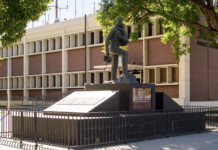
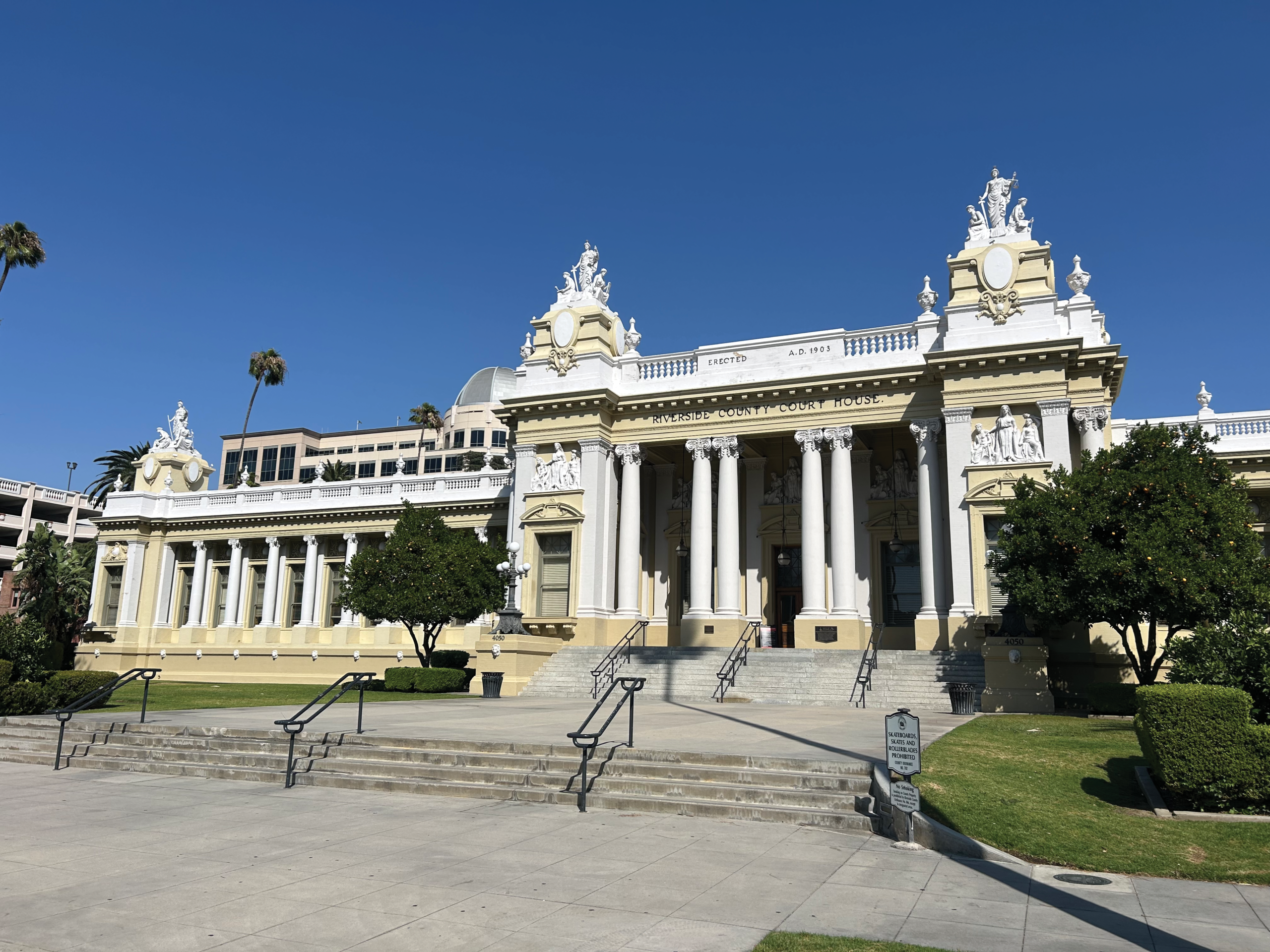
A Riverside Superior Court judge, Harold Hopp, ruled in April 2026 that the City of Riverside’s decades-long practice of transferring 11.5% of water utility revenue to the city’s general fund (GTF) violates the California Constitution, ordering the city to address millions in unauthorized charges collected from ratepayers since approximately 1968.
The unlawful practice rose to light following the ruling of phase one of the Simpson v. City of Riverside case in August 2023, which sought to prove the City was guilty of charging rates exceeding “the proportional cost of providing the service … [and] the rate revenues are being spent for purposes other than that for which the charge was imposed.”
Proposition 218 prohibits the local government from charging more than the cost of providing a utility service, as well as spending said revenues on unrelated costs.
Hopp stated on April 20 that plaintiffs are entitled to a refund, and mentioned the possibility of a common fund of approximately $46 million. Although the exact amount has yet to be confirmed, it is expected to be finalized in the next few weeks.
He has also stated that the city cannot solve the issue by simply promising future bill credits, as that would leave former customers without just compensation for the money they have already paid.
However, Hopp noted that the four-year-look-back period — a designated timeframe preceding a legal action where the court will review past behavior, financial transactions or records — may limit the total of the fund.
Hopp also granted the case’s plaintiffs’ request to cover attorneys’ fees from the common fund that was created by the case, which has been interpreted as being “another sign the court sees a refund remedy as likely.”
Returning to Simpson v. City of Riverside, the city’s unlawful actions were first brought to light in 2010 by a group of Riverside residents while reviewing bond documents tied to the City’s Riverside Renaissance program, a massive, multi-year $1.8 billion civic improvement program launched by the City of Riverside in 2006.
This case has not been the first occurrence where the city has faced legal challenges over its 11.5% GFT practice, as seen in Parada v. City of Riverside (2018), where a nearly-identical issue arose, only that this case dealt with electrical services rather than water services. The city ultimately settled for $24 million in refunds.
At this moment in time, the city has to release an official press release statement regarding the issue of the illegal overcharging of water rates: “A city spokesperson told the Gazette on April 27 that it is aware of the ruling and plans to appeal.”
Ultimately, those who may be entitled to compensation include those who have paid a water bill in Riverside in the past four years, but the official refund total remains to be determined in the next few weeks. Prior lawsuits similar, if not identical, in nature to the ongoing one have resulted in plaintiffs receiving millions in compensation.