
The Riverside County Department of Animal Services (RCDAS) has reported overcrowding in their four locations since before COVID-19. Despite efforts to curtail the congestion, the RCDAS reported that the summer months brought on an influx of animals, causing them to announce that they were at a “critically overcrowded” status. Although recent initiatives have begun to reduce that number, the RCDAS is continuing to strain their resources to support the animals currently under their care while avoiding the use of euthanasia.
July saw a particularly sharp increase in intakes across the four RCDAS shelters including the Western Riverside City Animal Shelter, the San Jacinto Valley Animal Campus, the Coachella Valley Animal Campus and the Blythe Animal Shelter due to the summer months having the highest birth rates for puppies and kittens. During this time there was a recorded rise in overcrowding from 216% capacity in dogs and 154% in cats across all RCDAS shelters at the beginning of June, to 241% in dogs and 173% in cats in mid July.
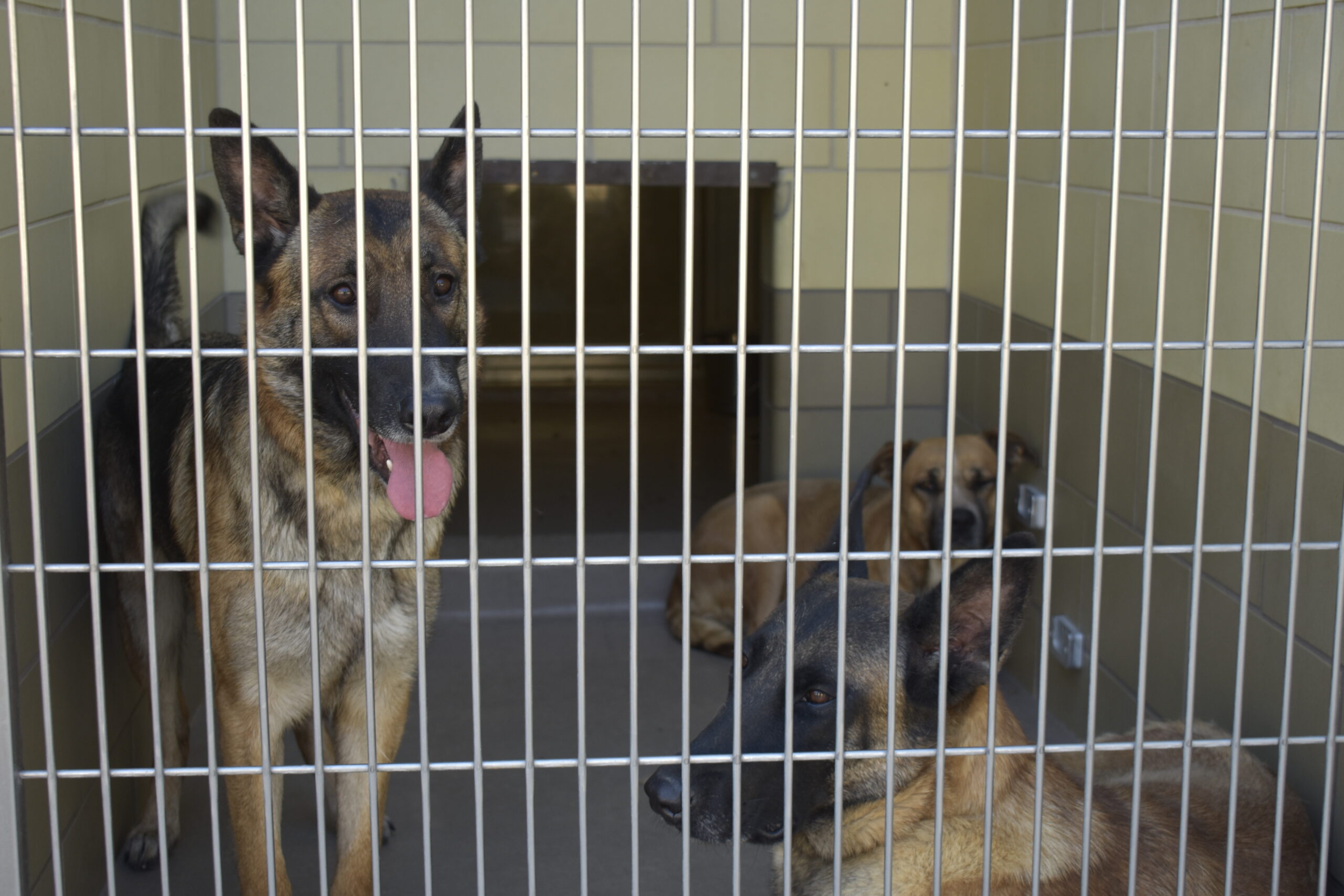
The RCDAS has set the capacity threshold to be labeled as critically overcrowded at 220%. Although the rate has since decreased across the four locations to 217% overcapacity for dogs and 100% for cats as of Oct. 9, there remains a strain on space for residing animals. There are currently 1014 dogs being housed across the shelters’ 501 dog kennels and 242 cats being housed across the shelters’ 437 cat kennels, causing them to take measures such as housing three to four dogs in a kennel meant to hold two.
RCDAS Assistant Director Kimberly Youngberg expanded on the current level of congestion across the shelters, stating, “It’s really symptoms of different issues that are out there, you know, starting with what’s happening in our communities.” Youngberg also discussed that, with there currently being over 30,000 live animals impounded across the shelters, “Serving the population that we do is a big demand on our system.”
The influx of animals being taken into the shelters is credited to the economic struggles by pet owners, a lack of access to spay and neutering services increasing the birth of unwanted litters and emergencies or natural disasters displacing animals among others. All of the RCDAS shelters are also open admissions shelter systems, meaning they are required to accept all animals brought to them.
In May of 2025, the Riverside County Board of Supervisors passed the RivCo Rise resolution to address the department’s demand for further resources and affirm a department-wide commitment to becoming a no-kill community. It effectively added 38 new positions department-wide and increased their budget. Despite the additions, supervisor and co-author of the resolution Yxstian Gutierrez stated “I do feel strongly that we will need a larger budget when it comes to animal services in order for us to meet the demands, the concerns, the needs, of our pets and communities.”
The “no-kill community” stipulation of the resolutions aims to reflect the will of the RCDAS and community to move away from the use of euthanasia. It doesn’t completely ban euthanasia but instead aims to limit its use and support a 90% overall live release rate.
Youngberg addressedthe use of euthanasia across RCDAS shelters by stating, “We always look at an animal as an individual,” and further adding that “We are trying to hold onto as many animals as we can and give them as much as we can before, you know, we say, have to make a euthanasia decision.”
The Oct. 9 data demonstrated that the shelters had a 89.2% live release rate for dogs and 84.21% for cats, putting the shelters just below no kill status and reflecting the result of their efforts to balance avoiding the use of euthanasia while combatting continued overcrowding.
Public Information Officer Veronica Perez explained that through this sustained period of overcrowding, the RCDAS shelters have been reaching out to local non-profit organizations and national partners to access grant funding and investing in their outreach efforts. Alongside this the shelters periodically waive adoption fees to promote fostering and volunteering opportunities. Perez emphasized that their goal is to maximize positive outcomes for their animals and that communal support can uplift their efforts, stating, “[We have been] really seeing the investment, right, and seeing that the adoption rates are going up and that the word is getting out to pet owners and non pet-owners alike to support RCDAS in whatever capacity they can, I think is huge.”