Homeland Security Investigations, a division of U.S. Immigration and Customs Enforcement (ICE), searched Congresswoman Ilhan Omar’s residence in D.C last Monday for proof of her committing immigration fraud, seizing her phone in the process. The raid followed Omar’s family being subpoenaed days before by the Justice Department.
Typically, in the 60-days before an election, the Justice Department enters a “blackout period” where it avoids actions in politically related cases, such as conducting a search warrant, that could be seen as politically motivated. This action by the Trump administration, following years of deportation threats, completely disregards this unwritten rule, being a blatant act of political persecution. It needs to be said that actions like this aren’t isolated cases, but reflect a broader trend of political persecution from the Trump administration.
From banning news organizations for supposed bias against him to troop deployment in blue cities, it’s clear that opponents to the administration’s agenda are targeted in these acts of political theater. Ilhan Omar is one of these opponents, being one of the most fierce and vocal opponents of Trump
The house representative has called for the complete abolition of ICE along with being outspoken against the genocide in Gaza, being completely at odds with Trump’s pro-ICE and pro-Israel position. In response, The Trump Administration has attacked her status as a naturalized citizen, with Vice President JD Vance, claiming she committed immigration fraud by marrying her brother to become a US citizen back in March. Trump, who made similar statements at a Pennsylvania rally, has yet to provide any evidence to corroborate those claims. According to alleged sources close to the investigation, there was potential criminal fraud on immigration paperwork that was filled out by her late father when she was a child which wouldn’t make her personally an immigration fraudster like they claimed if this is even true.
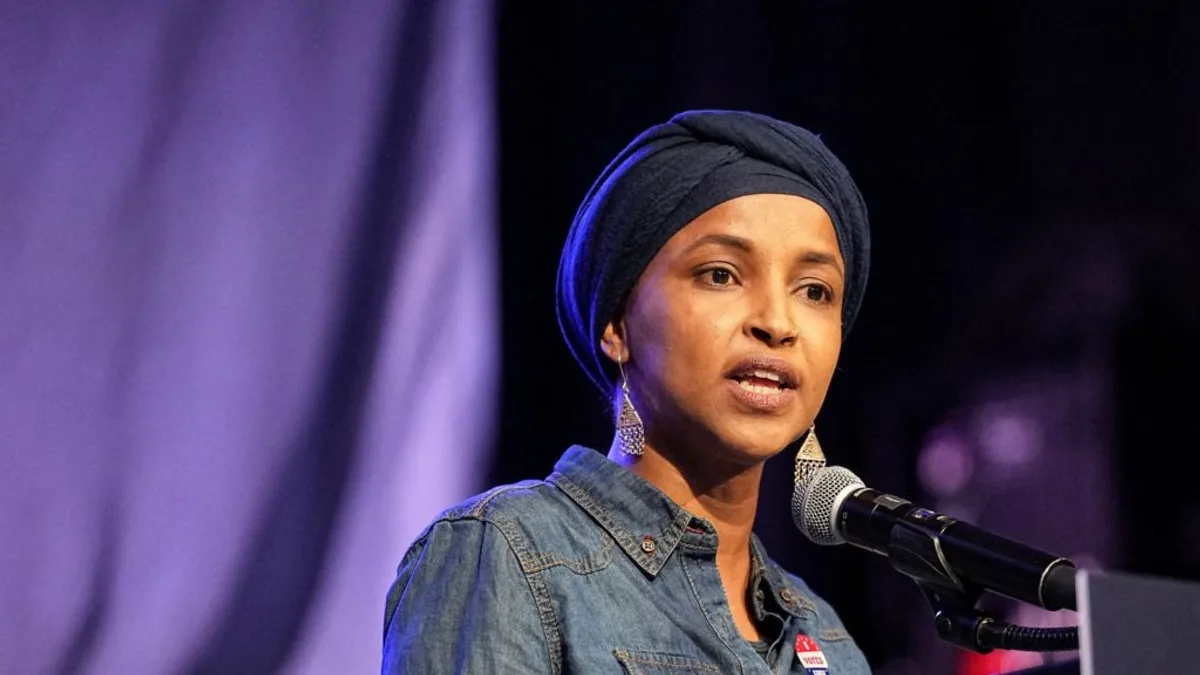
A Congressperson, one of the most powerful people in the nation, is being openly targeted by the government. This could easily extend to more vulnerable groups, like students and activists, who lack the additional protections that come with public office. Americans have seen this scenario play out multiple times.
ICE used a customs enforcement law to gather information on anti-ICE organizations and protestors during Operation Metro Surge in Minneapolis. Meanwhile, the State Department revoked 6000 student visas from students who participated in pro-Palestine protests in 2025 along with attempting to deport pro-Palestine student protestors before being struck down by a federal judge on First Amendment grounds.
Moreover, Stanford University’s student newspaper, The Stanford Daily, filed a lawsuit against the Trump Administration in 2025 after their attempted deportation of Columbia student Mahmoud Khalil and Tufts student Rümeysa Öztürk. Khalil was a negotiator for his school’s Gaza Encampment Protests and Öztürk co-authored a Pro-Palestine op-ed. US District Judge Noel Wise ruled in favor of The Stanford Daily this August, expressing that the government’s actions had “specifically impacted Stanford Daily by affecting the quality of pieces The Stanford Daily is able to publish.”
These retaliatory actions silence and suppress anti-government opposition. Students, a group largely populated by teenagers and young adults, are targeted in these vile acts of political persecution. Educational institutions are a catalyst for political organization and debate; if the government inhibits students’ ability to speak out in these spaces, they minimize the potential for opposition.
Political persecution is rampant, and the supposed rule of law in this country is not enough to stop it..The first step in this process is being able to identify political persecution, to call a spade a spade. Rhetoric from politicians about deporting politicians over their political beliefs cannot be seen as normal political banter and should be called out as political persecution. The next step is actually being vocal about political persecution when it occurs. Specific cases, from Ilhan Omar to Mahmoud Khalil to Rümeysa Öztürk, should not be buried in the news cycle and should be an insistent part of the political discourse. Protesting, writing articles, organizing groups in opposition and having conversations should all be done to achieve this end. Students, in particular, need to be at the forefront in this cultural shift since we would be uniquely targeted if the normalization and rise of political persecution persists.