Starting Sept. 21, 2026, the University of California, Riverside’s (UCR) Highlander Union Building (HUB) dining service has been providing reusable containers instead of disposable packaging, which will be charged an additional $1, to cut down on single-use waste and make their operation more sustainable.
The HUB has restaurants like Panda Express, Hibachi-San, The Halal Shack, Scoops and Chronic Tacos. UCR produces 1641 tons of landfill waste per year, with a significant portion collected from HUB. Single-use take-out boxes have been recorded to be a primary contributor, prompting the UCR Dining and Hospitality Service Department to cut waste by implementing reusable containers at the HUB as well. Prior to this, the Barn, Market at North District and Scotty’s Grill and Market have all been offering the option to use reusable containers.
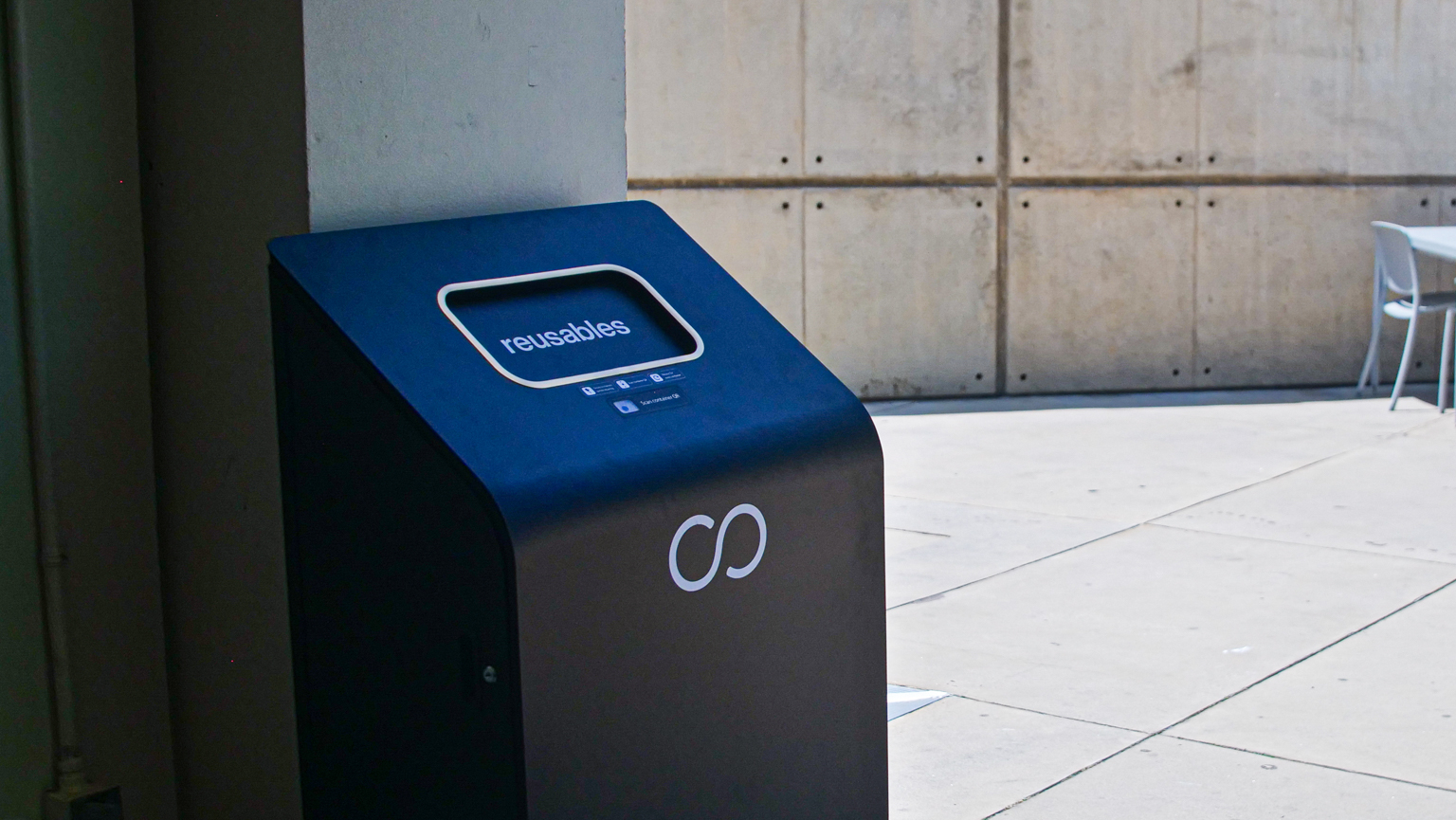
The plastic containers are available in diverse sizes and colors and each have a unique QR code attached to their sides that allows UCR Dining Services to keep track of them. Customers are given five days to return containers to one of the black bins around campus which can be found at the Barn, the Student Success Center, the Bookstore, the Habit and the HUB. Failure to do so can result in a $5 fee, but a refund will be issued if the containers are returned within 30 days.
According to the UCR Dining and Hospitality Services Department, about half of all customers choose reusables over disposables and around 95% of the containers are returned to the department. Their research also found that the HUB averages at around 3,900 to 4,500 customers per day, and with a 50% check out rate, thousands of single-use containers can be diverted from the landfill weekly through the initiative.
Director of retail and restaurants for UCR Dining Services Kurt Duffner discussed that the program is designed with the intention of encouraging customers to select reusable containers and reducing the amount of waste produced, stating, “We want them to be sustainable, we want the container back so we can continue to be sustainable.”
Other campuses such as UCLA and UC Davis have also been pushing similar programs. UCLA’s program specifically has already seen an approximately 80% participation rate.