
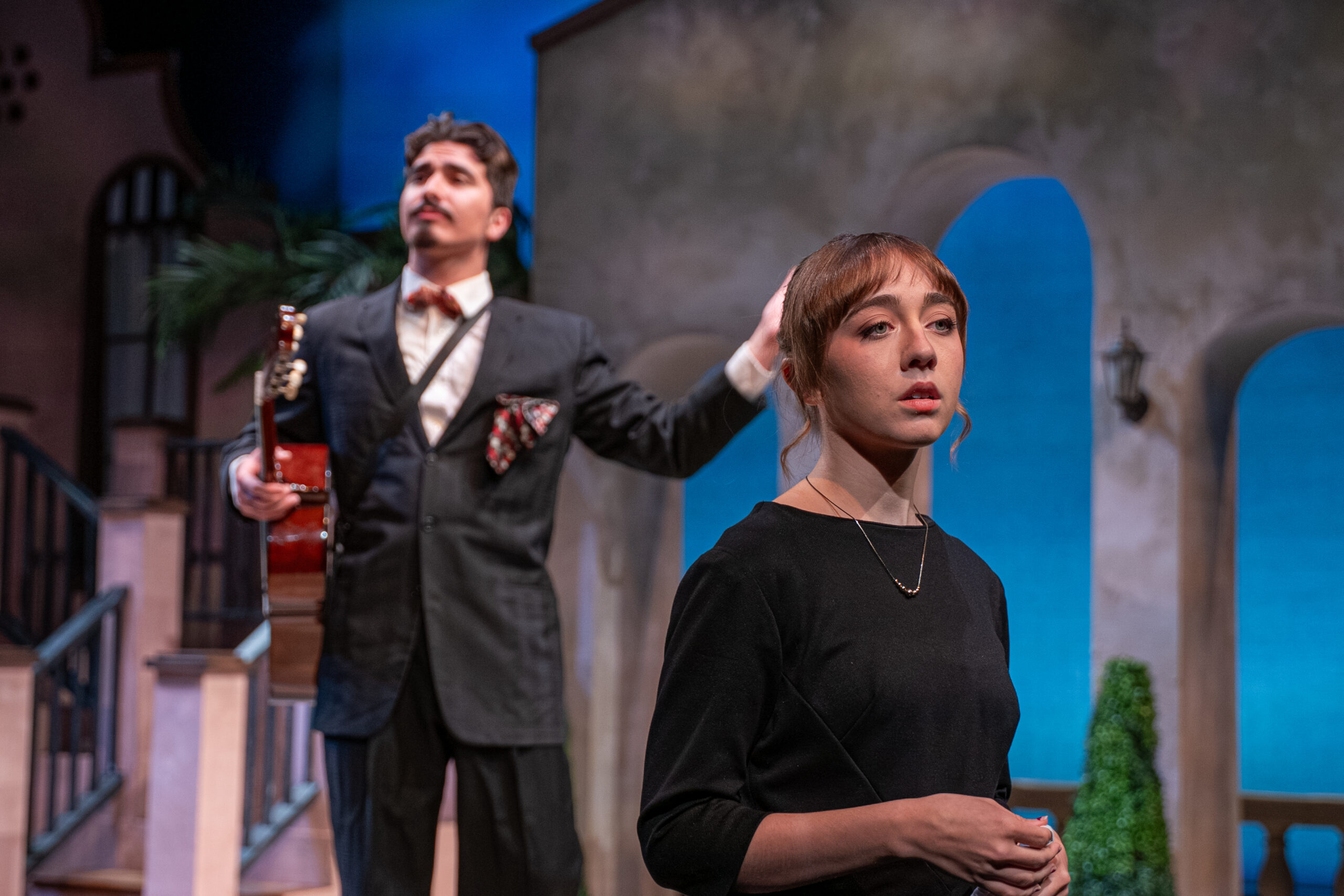
Running for two weekends, from Nov. 5-14, “Twelfth Night” directed by Melanie Queponds made a splash on campus through innovative ideas that helped enhance the story within.
“Twelfth Night” by William Shakespeare tells the story of a love triangle gone wrong, complete with dramatic twists and wacky shenanigans. Opening with a devastating shipwreck Viola, portrayed by Carmen Barthe, quickly realizes she must adapt to her surroundings as well as to Illyria, otherwise known as La Jolla, California in UCR’s adaptation. Transforming herself into her thought to be dead twin Sebastian, she works under the alias “Cesario” for Duke Orsino, performed by Eric Ortiz. She quickly falls in love, only for her duties to primarily consist of confessing Orsino’s love for Countess Olivia, depicted by Juliette Lazard. However, the conflict arises once Olivia falls head over heels for a disguised Viola, completely buying that “Cesario” is who he says he is.
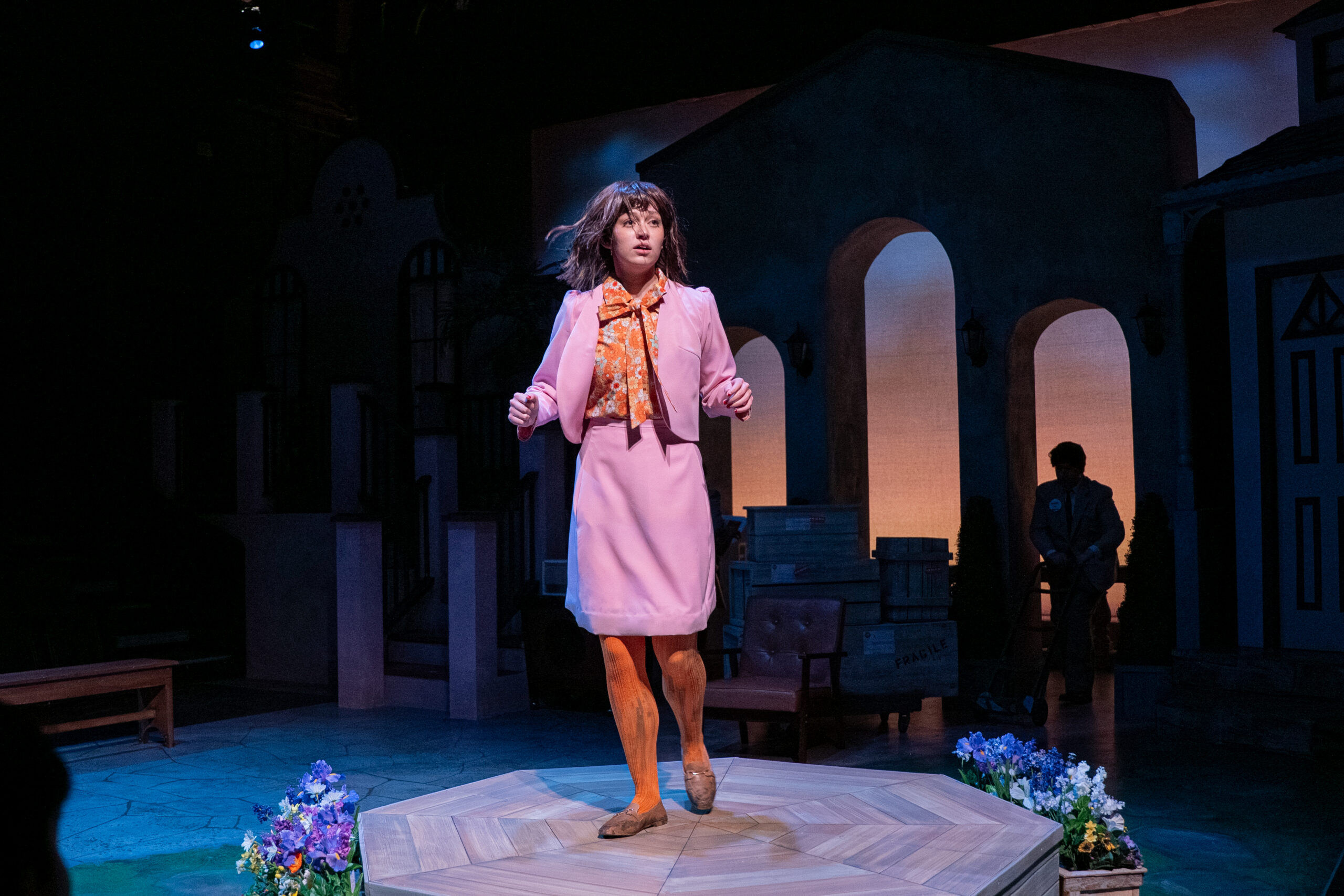
William Shakepeare, play, theatre, costumes, love, acting, Twelfth Night, gender, makeup, love storyThe triangle persists for the entirety of the play, including an absolutely hilarious confession scene between Olivia and Cesario that continued to push boundaries and get even more ridiculous as the scene continued. “We could really explore a lot on how to play it, and it’s always fun to hear the audience’s reactions to that scene,” Barthe explained. “We always try to do something different every night.” The audience couldn’t agree more, absolutely roaring with laughter and excitement as Olivia continued to grow her antics to gain Cesario’s favor, who simply doesn’t know what to do with all of that.
The intensity of everyone’s feelings for each other, including Orsino who often catches himself in compromising positions with “Cesario,” comes to a head right as Viola’s twin, Sebastian, played by Diego Caraves Galindo, appears in Illyria and finds himself in the middle of the chaos. Immediately confronted with Olivia’s proposal to him under the assumption he is Cesario, he throws caution to the wind and accepts, only furthering the mess the quartet has found themselves in. This leads the audience straight into the climax once all four of them finally see each other for the first time. The queer undertones throughout the show are no more apparent than in the final scene, in which Olivia is still clearly interested in Viola despite her status as a woman rather than a man, and in Orsino’s acceptance that he has been falling in love with Viola even when he thought of her as a man. The show ends with the two happy couples and the rest of the characters onstage as they sing the last of three ballads sung entirely in Spanish and originally composed for this production.
Director Queponds made her influence clear throughout the play, touching upon her own childhood and the romantic stories she witnessed as she grew up. Setting the show within her hometown of La Jolla, the show was intricately and personally tied to her as she combined the home she grew up in with the world the audience entered when watching the play. With high, white arches and sprawling greenery all around the set, Queponds, scenic designer Tyler Yaish and stage manager Ren Nguyen helped set the stage for the show and modernize the play without taking away from the Shakespearean world.
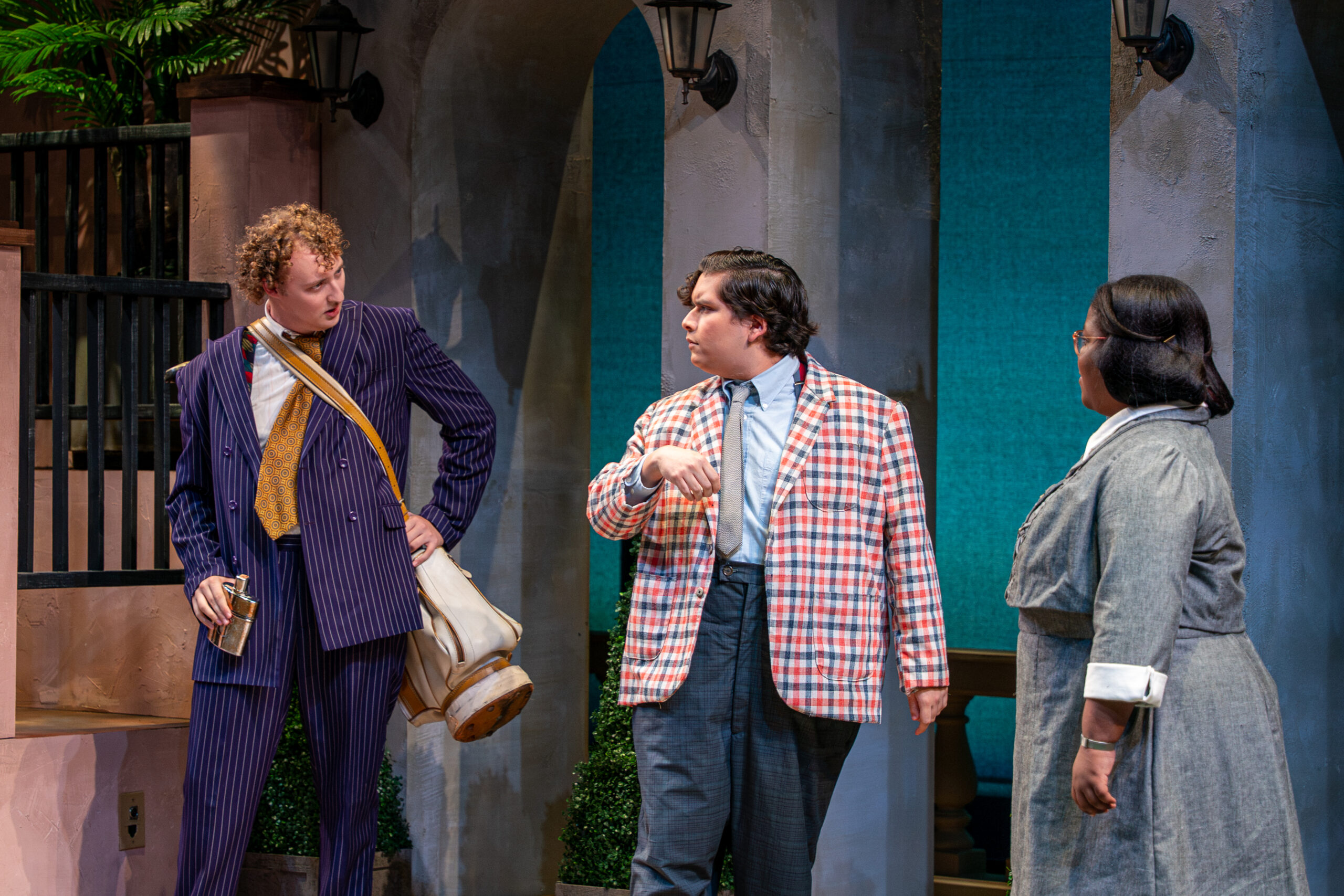
In addition, the attention to detail was impeccable, and the level of care could also be seen through the set design. “I really loved that Orsino’s house was pink and Olivia’s house was baby blue, so we have these gendered colors but they are in the opposite gender’s house” Quesponds remarked. Ngyuen immediately agreed, mentioning how within the costume design these broken gender binaries appear. Olivia, he mentions, begins the show in an extremely restricting and form-fitting dress that continues to get looser as the show progresses and Olivia falls in love with Viola. Orsino, on the other hand, has varying shades of pink throughout the show, matching the initial outfit we see Viola in before she completes her transformation into Cesario. Visually, these details not only lets the audience understand the impacts Cesario’s arrival has on the characters, but also gives a glimpse into how much care the crew of “Twelfth Night” really put into the show.
“Love is the center of the universe,” Ortiz passionately explained. “It influences every single thing we do … Love is so important in everything we do and we can’t do anything without love.” The love was definitely felt all throughout, both within and outside of the story being told onstage. The show was joyous, and the care shown throughout both the actors and crew created a special environment that made the audience helpless but captivated by the performance onstage.
Overall, UCR’s production of “Twelfth Night” was a joyous occasion, celebrating love in all forms while bringing an excellent performance to Riverside’s main stage.