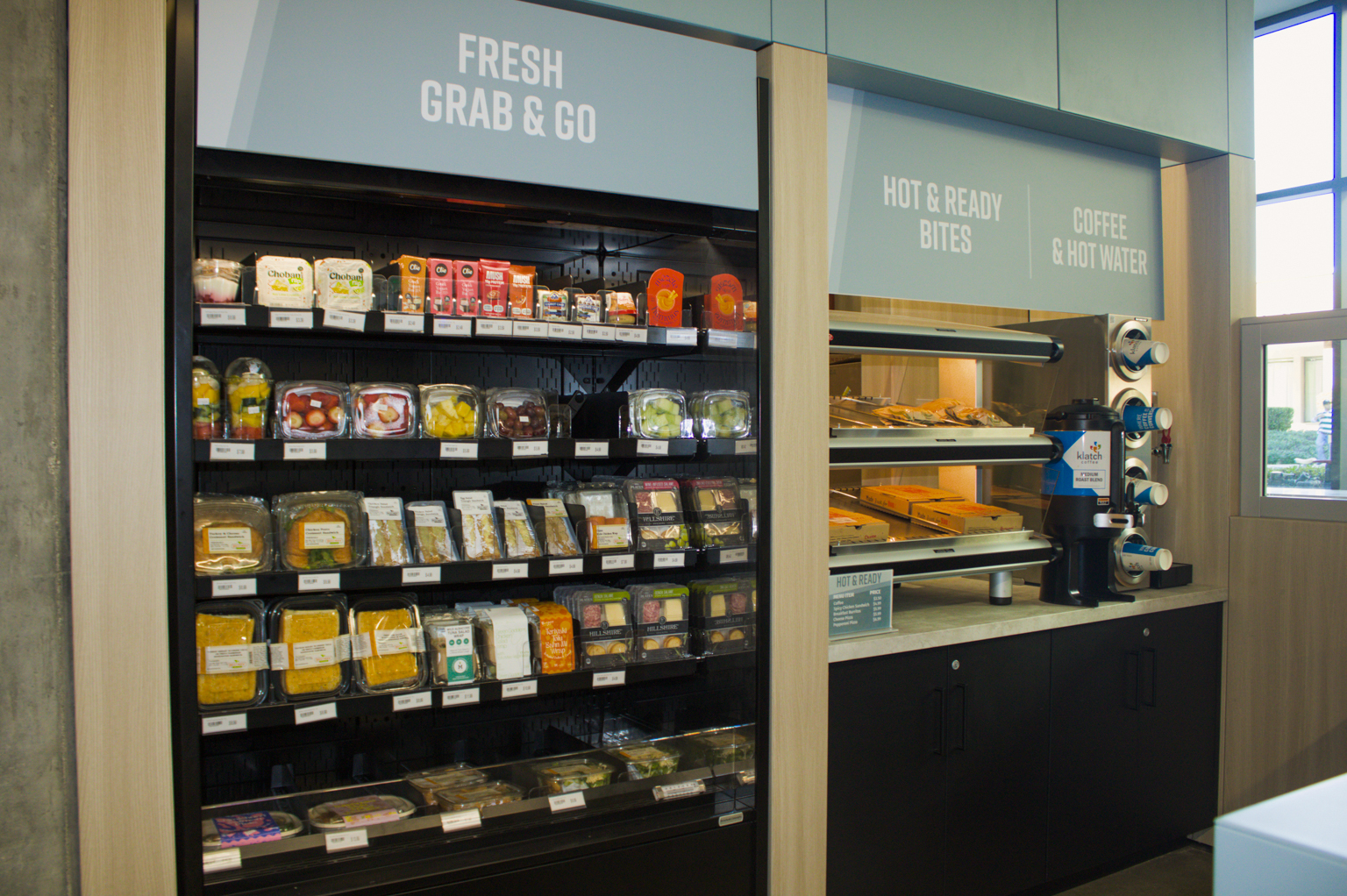
In October, the University of California, Riverside (UCR) opened the Scotty Go convenience store in the Student Success Center (SSC). The store utilizes Amazon’s Walk Out technology and its implementation has garnered criticism from multiple campus organizations.
Located on the first floor of the SSC, Scotty’s Go stands directly in front of the main entrance of the building, surrounded by multi-purpose student seating. The SSC’s high quantity of informal seating, lecture halls and meeting rooms make it a heavily frequented location and prominent study spot on campus.
Director of Retail and Restaurants for UCR Dining Services Kurt Duffner expanded on why the SCC was picked for the stores placement, stating, “This has turned out to be a building that gets a lot of student traffic, so it certainly makes sense to have something that’s very convenient for them nearby.”
The Walk Out technology used at Scotty’s Go is being licensed by UCR Dining Services from Amazon. The company had formerly used it in its Amazon Go convenience stores nationwide, all of which were shut down earlier this year. The mechanics use a combination of computer vision, artificial intelligence (AI) and sensor fusion through an array of cameras that track and sense when customers pick up or return items off the shelves to charge them once they leave the store.
This store’s launch comes at a time where UCR and the overall University of California administration are seeking to further implement AI in the higher education environment. Duffner added that depending on the success of this model, UCR Dining Services could expand this prototype model to other parts of the campus that see high student traffic.
Some UCR students have spoken against the store’s implementation, citing concerns regarding UCR’s affiliation with Amazon, the store’s use of AI technology and the loss of seating within the SSC.
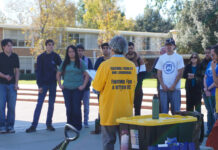
The Young Democratic Socialists of America’s chapter at UCR expanded on these concerns, claiming that the use of technology lowers job opportunities for students and expressing
skepticism surrounding the security of the collected biometric information. YDSA Co-Chair Bryana Velasquez stated, “[it takes] away jobs from students, and the fact that you’re on camera a lot of people aren’t comfortable with that. It’s recording you, has your credit card information and it has your biometrics too. They claim it’s not saved, but we don’t really know.”
Associated Students of UCR labor relations director and student organizing committee member Priscilla Esparza also elaborated on student concerns, calling the store’s installation “innately anti-social.” Esparza further stated in an interview, “A lot of students have raised concerns that the space was just not necessary because before then, there used to be vending machines with the same exact items … It used to be a space for studying, for groups to come together.”
Executive Director of UCR’s Dining and Hospitality Services Marcus Van Vleet, who oversees UCR Dining Services as a whole, could not be reached for further comment.