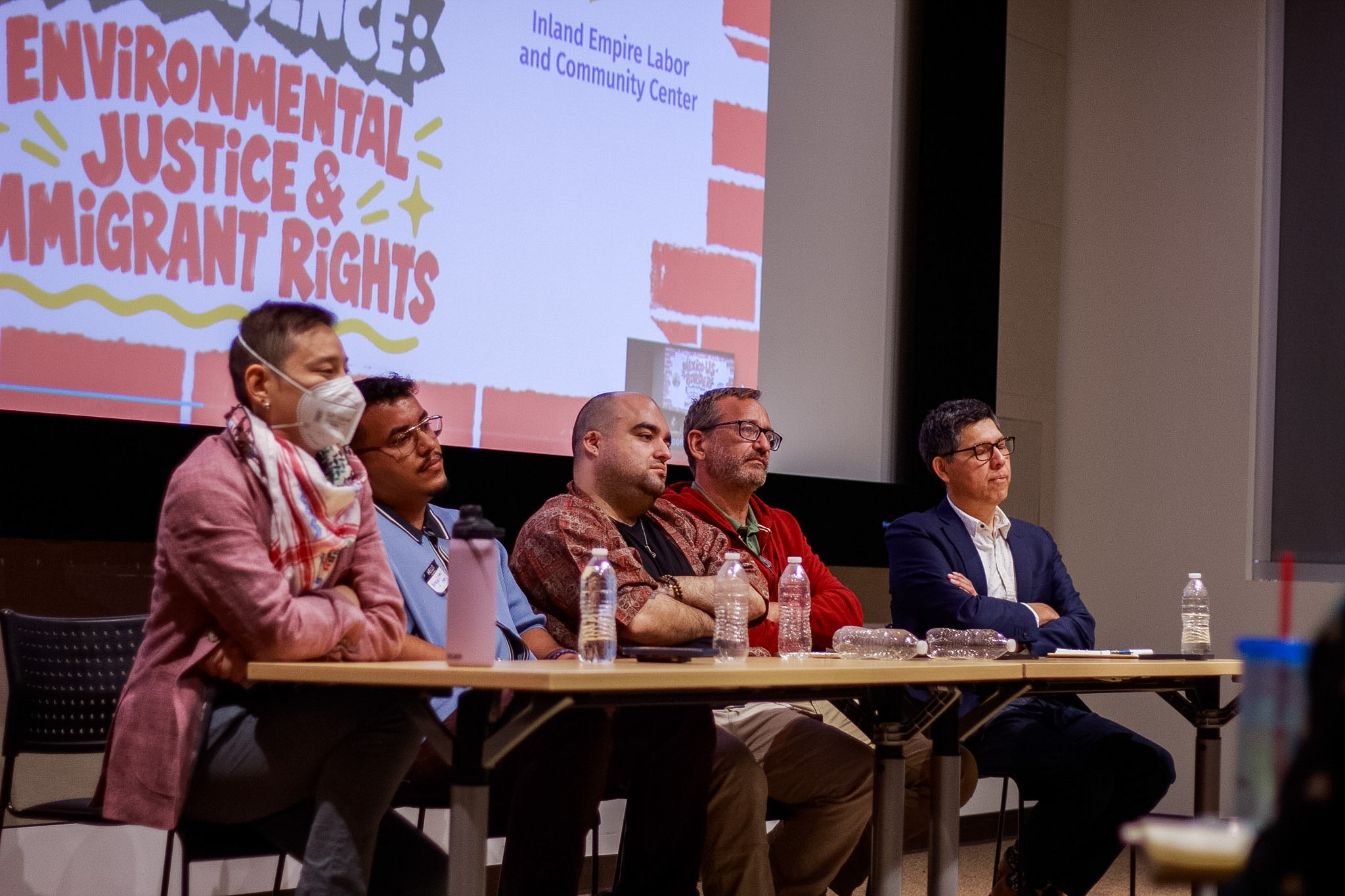
On Nov. 13, the Comité de Justicia Ambiental de la Frontera (CJAF), a community group dedicated to environmental justice in the region surrounding the U.S. Mexico border, partnered with the University of California Riverside Inland Empire Labor & Community Center (IELCC) to hold “The U.S. Mexico Border Conference: Environmental Justice and Immigrant Rights.” The event featured speakers including alumni and advocates for environmental justice and immigrant rights to discuss protections for workers and immigrants. Panelists also discussed environmental issues affecting the border region, namely Mexicali and Imperial County.
After a brief introduction from Dr. Fernando Marquez Duarte, co-founder and co-director of CJAF, the event opened with a presentation from the Imperial Valley Equity and Justice’s (IVEJ) Senior Community Organizer Isamay Pasillas and their Director of Community and Cultural Impact Fernanda Vega.
IVEJ, a volunteer mutual aid and advocacy group founded six years ago in the early months of the COVID-19 pandemic, has mobilized across a range of campaigns for social, economic and environmental justice along the U.S.-Mexico border. Pasillas and Vega spoke on various IVEJ initiatives including the Cultural Hotspot by the Border program, focused on renovating the downtown area of Calexico with murals related to Chicano history, and the protect Kw’tsán proposal, a movement sponsored by IVEJ to protect the homelands of the Fort Yuma Quechan Indian Tribe.
Duarte then discussed his research on heavy vehicle emissions in Mexicali and the effects it has had on the community throughout the border area. His research documented that vehicle emissions are extremely high in both Mexicali and Imperial Valley, generating particulate matter, nitrous oxides, carbon dioxide and other pollutants which produce a substantial negative impact on the health of residents. This traffic often occurs along roads that travel directly through residential areas, caused by commercial vehicles transporting goods across the border into the United States.
Duarte then cited the CJAF’s main policy recommendations to reduce emissions in Mexicali as the enactment of a framework guiding compliance on licenses and operating permits for heavy duty vehicles, binding regulations for a reduction in emissions and designated truck routes in affected areas.
In addition to environmental justice, the conference also featured a discussion on immigrant rights and labor advocacy. The panel included Astrid Calderas, a research coordinator of CJAF and director of the Odyssey Research Institute, an environmental health research group, as well as Jennifer Reynoso Galvan, a legal assistant with the Immigrant Defenders Law Center, California’s largest nonprofit deportation defense law firm.
Calderas delivered a presentation on the rights of farm laborers, raising awareness on state and federal standards protecting workers from harm caused by exposure to hazardous materials like pesticides and carbon emissions, as well as ensuring access to rest breaks, water and shade. Calderas emphasized the importance of promoting awareness of protections for immigrants especially, as many workers have limited knowledge of and receive limited access to these protections.
Reynoso Galvan, who graduated from UCR with a degree in Public Policy in 2022, spoke on the protections of immigrants against immigration enforcement agencies like Immigration and Customs Enforcement (ICE), as well as legal and informational resources available to immigrant families. Reynoso Galvan emphasized protections like the right to record and document ICE encounters, stating, “If we know what we are able to do, then maybe we’re able to act a little bit more responsibly, because we serve more out here than behind bars.”