
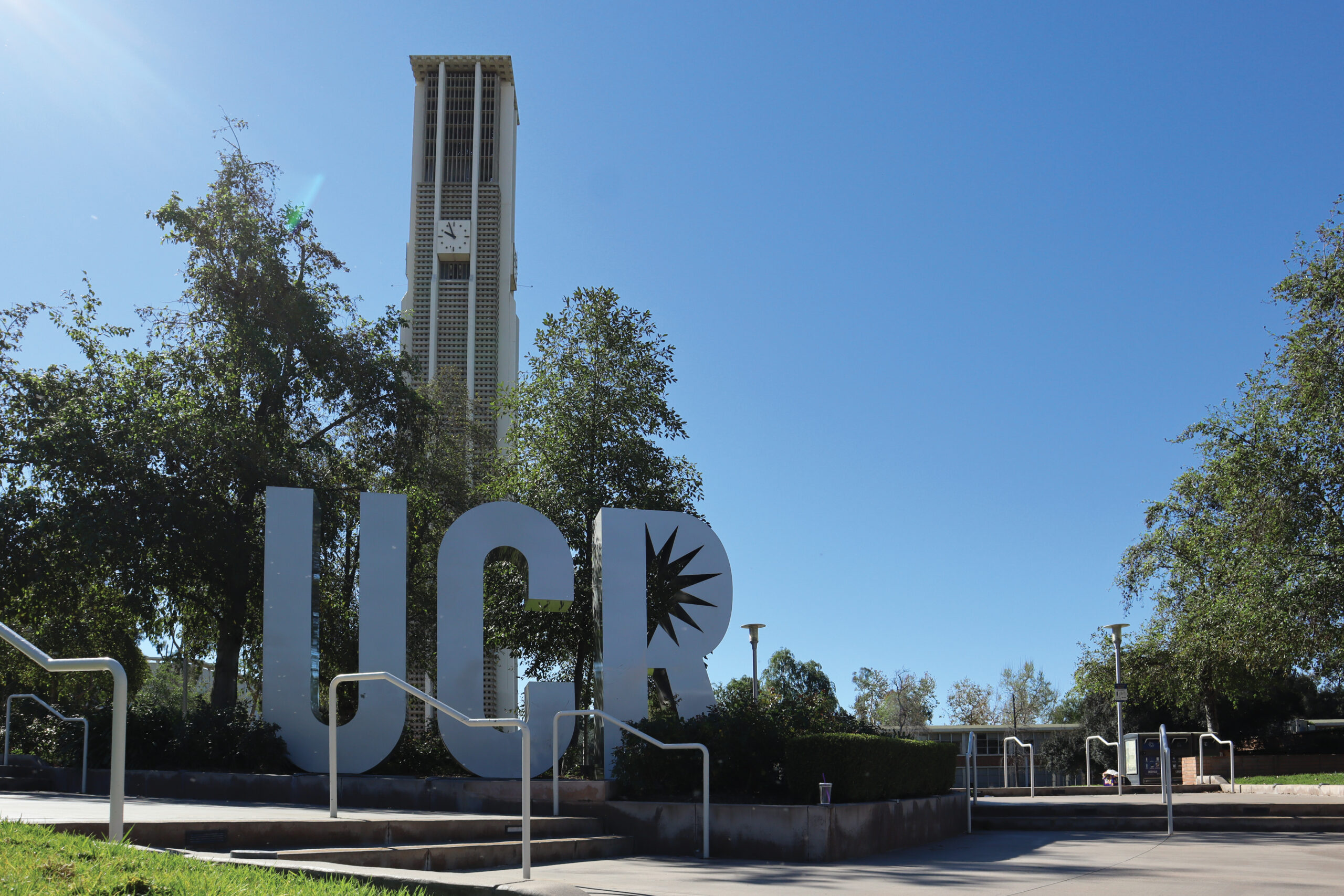
Amid rising tuition prices and rapidly expanding class sizes, the University of California, Riverside’s (UCR) campus has remained largely unchanged despite new housing developments. UCR administration, however, has ignored the increasing demand for the development of its own law school.
This past year, UCR’s School of Medicine (SOM) experienced the highest levels of enrollment since its opening. The university also opened its doors to the School of Business in 2024, but has not spoken about any intentions of constructing a law school. UCR’s silence is simply not enough anymore.
In recent years, UCR has been ranked in the top 10 percent of the nation’s political science majors. But a school that prides itself on social mobility should reconsider just how supportive it is of its students if there hasn’t been any effective action to build a law school in the region.
In fact, the Law School Admissions Council found that in 2023, law schools experienced the highest percentage of first-generation students ever admitted, reaching a solid 24.4% of law school students. While this number seems rather insignificant, it remains proof that more students of diverse backgrounds are attending law schools.
Law schools help socially mobilize students by providing them with the opportunity to earn high wages, maintain job security and serve the communities they grew up in. By developing a law school at UCR, students have more opportunities in the region to serve their communities and work towards upward social mobility.
In 2023, Senator Sabrina Cervantes, D-Riverside, pushed Bill AB 951, a bill that seeks to address this very issue. Beginning in 2024, the bill would have appropriated money from the General Fund to the UC Regents each fiscal year to establish a law school at UCR. However, the bill died in committee due to a lack of support.
Currently, there are merely 3,306 actively practicing attorneys in Riverside County and 2,403 in San Bernardino County, which greatly contrasts the 18,529 attorneys practicing in Orange County, where the closest law school resides at UC Irvine (UCI). A law school at UCR would allow students to remain in the Inland Empire, which benefits both students in their career paths and residents seeking legal help.
Because Riverside and San Bernardino counties are considered to be “attorney deserts,” meaning there is a low number of practicing attorneys in the region compared with the high volumes seen in other sectors, the Inland Empire needs a law school at UCR. By training the next generation of lawyers, the region’s legal system would be strengthened and provide resources to residents seeking legal support.
It goes without saying that law school tuition is by far one of the most expensive fields of study, as noted by UCI’s approximately $60,000 annual tuition for California residents. Students who struggle to afford the high costs of law school and seek to save as much money as possible by living at home with their families would find this option difficult to manage. It forces students to move or to commute at least two to three hours daily to Irvine or Los Angeles. This could discourage students from even considering attending law school in the first place.
The Inland Empire undoubtedly both deserves and should train the next generation of lawyers to serve the area, just as UCR’s SOM is doing with healthcare needs. Without the opportunity for law students to study and train in the Inland Empire, they will leave the region to pursue legal opportunities elsewhere.
SOM was created in an effort to combat the scarcity of healthcare workers in the region, and with UCR’s administration working closely with legislators to push state funding, it was ultimately implemented. In order for a law school to be added to the campus, the UCR administration must work closely with Senator Cervantes or other local representatives to deliver state funding for a law school.
Pre-law students and those in the political science department should more strongly advocate for UCR administration to take action. A law school is a necessary addition to the campus. In the end, a law school would benefit all residents in the Inland Empire.