
For the majority of the Supreme Court’s history, it has reflected the ideological tensions and questions of the nation. Justices are nominated by the president, confirmed by a majority in the Senate and operate by their own judicial philosophies and interpretations when hearing cases. Yet, traditionally, there has been a clear distinction between ideology and overt partisanship.
For example, past landmark cases like Brown v. Board of Education (1954) were issued unanimously despite a politically divided country, reinforcing the Court’s image as an institution above partisan politics. More recently, however, rulings such as Shelby County v. Holder (2013), which weakened key provisions of the Voting Rights Act, and Dobbs v. Jackson Women’s Health Organization (2022), which overturned Roe v. Wade, have split sharply along ideological lines that mirror the parties of the appointing presidents.
Today, that boundary is thinning quickly, and the consequences for democratic legitimacy are becoming severe.
The recent 6-3 ruling in Louisiana v. Callais is highly significant in illustrating this shift. The case focused on Louisiana’s congressional map, which had been redrawn to include a second Black-majority district after earlier legal challenges argued that the original map diluted Black voting strength in violation of Section 2 of the Voting Rights Act.
The Supreme Court ultimately invalidated this redrawn district, ruling that it constituted an unconstitutional racial gerrymander. In doing so, the Court also raised the standard for proving violations of Section 2, suggesting that plaintiffs must demonstrate clearer evidence of intentional discrimination as opposed to relying on the effects of a map alone.
This marks a major transformation from previous interpretations of the Voting Rights Act which allowed challenges based on discriminatory results. Ultimately, the decision makes it significantly more difficult to contest maps that weaken minority voting power, reinforcing concerns that the Court’s rulings are aligning more closely with partisan efforts to redraw district lines to benefit their electoral outcomes.
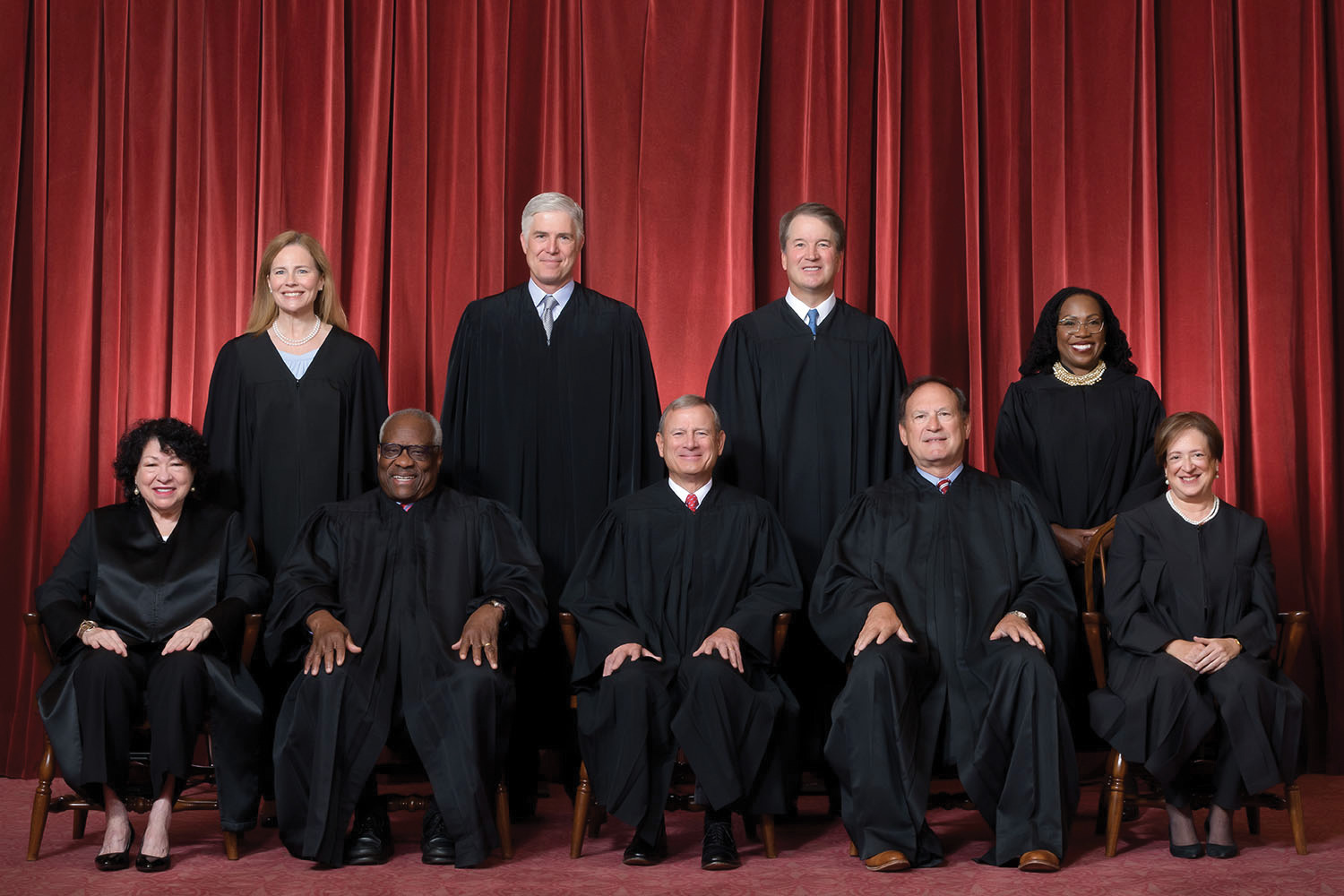
This decision isn’t sudden. It aligns with a pattern where the conservative majority of the court has stunted Voting Rights Act enforcement, giving way for Republican-led redistricting that could decrease Black representation in Congress ahead of the pivotal 2026 midterms that will shape the remainder of the Trump administration’s term in office.
The court’s appointment process itself has grown more controversial and strategic. Senate processes have eroded, most notably in 2016 when President Barack Obama nominated Merrick Garland to fill the vacancy left by former Supreme Court Justice Antonin Scalia. Senate Republicans, led by Mitch McConnell, refused to hold hearings or a vote, arguing that the seat should be filled by the next president in an election year, which became an unprecedented move that left the Court with a vacancy for nearly a year.
However, in 2020, after the death of Justice Ruth Bader Ginsburg, President Donald Trump nominated Amy Coney Barrett, who was confirmed by the Senate in mere weeks, despite the election being imminent. The efficiency of Barrett’s confirmation hearing, compared to the complete restriction of Garland’s nomination under similar circumstances, highlights how control of the Court has become a strategic political objective rather than a constitutional responsibility.
Complete neutrality was never realistic. Judges interpret the law and the Constitution through their own philosophical frameworks, and those frameworks often have political elements. However, about a decade ago, those views did not always lead to predictable partisan outcomes. In cases like Obergefell v. Hodges (2015) and NFIB v. Sebelius (2012), justices sometimes ruled in ways that did not clearly match the political party of the president who appointed them.
More recently, though, decisions have followed clearer ideological lines. Cases such as Dobbs v. Jackson Women’s Health Organization (2022) and Shelby County v. Holder (2013) were decided in ways that closely reflect the positions of the parties tied to the justices who made those rulings. However, there is still a difference between interpretation and alignment; this transformation over the past decade highlights growing concerns about genuine judicial independence.
If the court is to maintain its credibility, large-scale reforms need to be enacted. Proposals such as term limits for justices, reforms in the confirmation process or even changes to the Court’s size have been debated. Among these, term limits for justices and tighter regulations requiring timely Senate hearings and votes would likely be the most effective, as they would reduce the political noise associated with each appointment and prevent strategic delays. Allowing the perception of the Supreme Court as a partisan institution to deepen without addressing these concerns is seriously harmful, especially after rulings that challenge minority representation.
Ultimately, the Supreme Court is in a crisis. It can embrace its current trajectory of a more overt partisan identity, or it can take steps to reinforce its role as a guarantor of the Constitution rather than a tool for partisan ideology. This choice not only shapes the Court’s future, but the wellbeing of American democracy itself.