Many people imagine food banks as places where individuals line up to receive groceries, but after visiting Feeding America Riverside | San Bernardino (FARSB), it’s clear that this assumption misses the bigger picture. This organization is not just a food distributor — it is the backbone of an entire regional network working to combat food insecurity across the Inland Empire.
On April 21, 2026, FARSB issued a press release warning individuals that potential drops in CalFood funding could cause food insecurity to rise in the region, placing further tension on a food distribution system that is already overburdened.
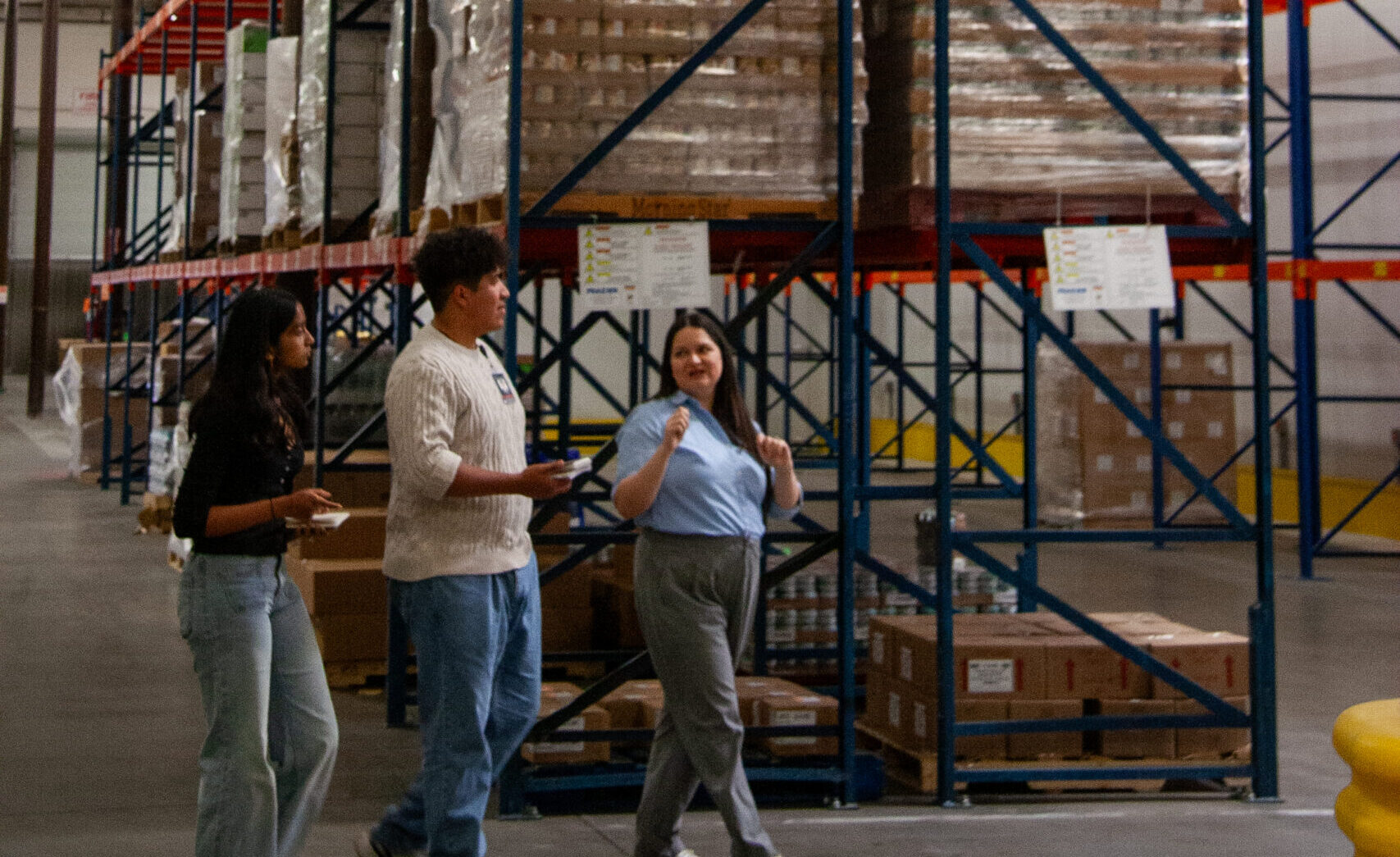
Rather than serving as a traditional storefront pantry, FARSB operates as a large-scale distribution hub. With a relatively small staff of about 40 people, the organization relies heavily on partnerships with local pantries, churches, nonprofits and universities to get food into the hands of those who need it most. In a comment from Interim CEO Joanna Solario, FARSB programs reportedly served 5.7 million individuals and distributed a total of 39.4 million pounds of food in the 2024-25 fiscal year alone.
Solario further notes that in the same fiscal year, the Fresh Start Pantry served 3,010 individuals, while the Nourish Now program supported 9,899 homebound neighbors that would otherwise face socioeconomic or physical barriers in accessing food support. Furthermore, during the government shutdown, FARSB saw an approximate 10.3% increase in households seeking assistance.
This model is both efficient and necessary. FARSB’s warehouse is not easily accessible to the public, but its network ensures that food reaches communities where people already feel comfortable seeking help. In this way, partnerships are not just helpful, they are essential.
And yet, this system only functions not because of true stability or security, but rather because of community support. Funding systems have struggled to keep up even as demand has risen across the Inland Empire, leaving it up to volunteers and local community partners to fill the gap.
Food banks are increasingly expected to respond to unprecedented and unforeseen surges in demand for food support services amid economic volatility, while being expected to operate under funding systems that are uncertain themselves.

Programs like the Senior Mobile Pantry Program highlight the organization’s adaptability. Despite its name, the program serves anyone in need and provides consistent monthly food distribution across Riverside and San Bernardino counties. Meanwhile, the Gleaning Program taps into the region’s agricultural roots by sending volunteers to harvest unused fruit from local homeowners’ trees, turning potential waste into valuable resources for families.
However, demand continues to rise while resources are becoming uncertain. Staff reported increasing numbers of individuals seeking assistance, driven by higher living costs, rising gas prices and broader economic pressures. At the same time, critical funding sources like the CalFood program face potential cuts. CalFood alone accounts for a significant portion of the organization’s inventory, particularly fresh and nutritious items like essential low-sodium staples.
Without that critical funding, the impact would be immediate. Smaller community partners, many of which rely almost entirely on Feeding America’s supplies, could struggle to keep their shelves stocked. Fresh food options would likely decrease, and the strain on the system would intensify.
What stands out most is how proactive the organization is in preparing for these challenges. Staff is already seeking additional grants from organizations like the Albertsons Companies Foundation as well as advocating for continued funding at the state level. But there is only so much a single organization can do without broader community support.
For students and residents in the Inland Empire, this should be a wake-up call. Food insecurity is not a distant issue; it is affecting neighbors, classmates and families across the city. Even at the University of California, Riverside (UCR), many students rely on food assistance programs, and resources remain fragile. Through partnerships such as the R’Pantry and UCR College Corps, FARSB and its network are integrated within campus support systems, underscoring how food insecurity is deeply embedded in campus life.
Supporting Feeding America does not have to mean large financial contributions. Volunteering time, donating when possible or even sharing information about available resources can make a tangible difference. Advocacy, in particular, is often overlooked but plays a critical role in securing the funding that keeps these programs running.
FARSB is doing more than distributing food, it is sustaining a network of care across two counties. But as demand continues to grow, so does urgency for community involvement. Hunger relief is not just the responsibility of one organization. It is a collective effort, and one that cannot afford to fall short.