If one has ever been to a party, quinceanera or any lively get-together put together by a Latino family when cumbias were playing, chances are they’ve probably been dragged to the dance floor to a song by Los Hermanos Flores. Originating from San Vincente, El Salvador, they made history not only as the first Salvadorean band, but also the first Central American band to perform at the Coachella Valley Music and Arts Festival.
Founded in 1962, La Orquestra Los Hermanos Flores was formed by Don Andres Rodriguez with the help of his 10 children and wife, Fildena Flores during a time when music was a luxury to make. Their discography consists of cumbias that showcase their love for Salvadorean culture, people, food and the natural beauty of the country. The cumbias Los Hermanos Flores exhibit Salvadorean pride and love for the country while encouraging everyone to get up and dance with one another.
The group was funnily enough contacted through the communication app WhatsApp by Rene Contreras who also recruited other Latin-American bands such as Los Angeles Azules and Los Tigres De Tijuana in past years for the Coachella festival. Contreras directly contacted one of the brothers, and asked him to join the Coachella lineup for the 2026 festival.
As the current main vocalist, Nory Flores and her son, Andrés Guerrero, stated in an interview from La Tribu FM that they didn’t believe it was real and thought the offer was fake. But after conversing with Rene about their consideration, he immediately rushed to his mother’s home and began showing the group iconic Coachella performances. No one besides the younger members of the band knew what the Coachella festival is because no one from the rural part of the small country of El Salvador really does.
After months of preparation, Los Hermanos finally showcased their Salvadorean sound at the Coachella Valley Arts and Music festival. They opened their set with a montage of Salvadorean scenery which includes the iconic volcanoes, beach sunsets and instruments that contribute to their cumbia sound such as trumpets, congas and bongos.
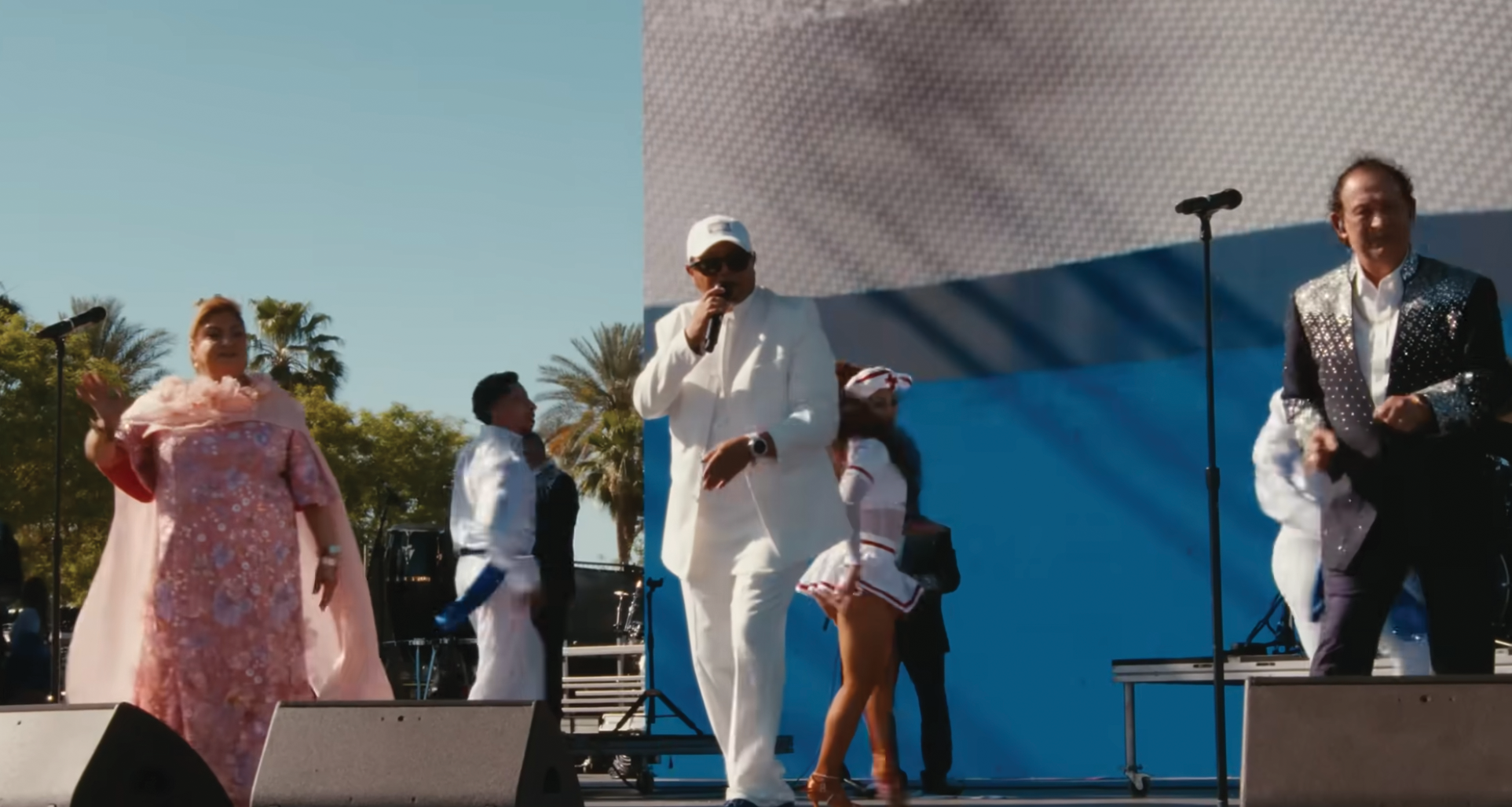
In the first week of the festival, they opened their set with the song “Yo Viviré” and Nory Flores walked on stage with a custom pink dress designed by Rossemburg Rivas and made by fashion students at Universidad Dr. Jose Matias Delgado. Rivas stated in an interview with La Presna Grafica de Noticias El Salvador that the dress itself was inspired by the Maquilishuat which grows in El Salvador. When they bloom, they coat the streets in beautiful pink petals. Nory’s week one dress consisted of over 400 pink flowers made by hand that were individually sewn onto the dress to carefully meet Nory’s personal preferences of a modest but moveable dress to still be able to perform and move around.
On the second weekend, Nory strutted onto stage wearing a striking deep green dress inspired by the Salvadorean national bird el Torogoz that represents freedom and liberty, which Nory has also represented throughout her singing career with Los Hermanos Flores. Rivas stated in the same interview that the deep green dress was accompanied by handmade sleeves which hang on the side of the dress to represent the feathers of the torogoz. Each feather is made using beads to craft a pattern, each differently designed by each student of La Universidad de Dr. Jose Matias Delgado.
Nory was accompanied onstage by the main vocalist of the group Cesar Cortez, along with the rest of their ensemble and band. They played iconic recognizable cumbias such as “La Bala,” “La Enfermera” and “Mi Pasaporte” which made the crowd erupt into a celebration.
The crowd was a sea of blue and white Salvadorean flags showing their own love and pride to be represented on the Coachella stage. The group made several shoutouts to their home country and invited everyone to take a trip to El Salvador and enjoy their beautiful homeland.
The Salvadorean musical act performing at one of the biggest stages recognized around the world is not only historically significant, but important to recognize during a time in which Latinos are constantly targeted by the current government administration. Their representation of Salvadorean culture brings to light the amazing resilience of people from such a small country. Showing how even though the band was formed over 60 years ago by a family that lived through many terrible phases of a country, their music continues to unite people from all backgrounds, spreading Salvadorean love and pride.