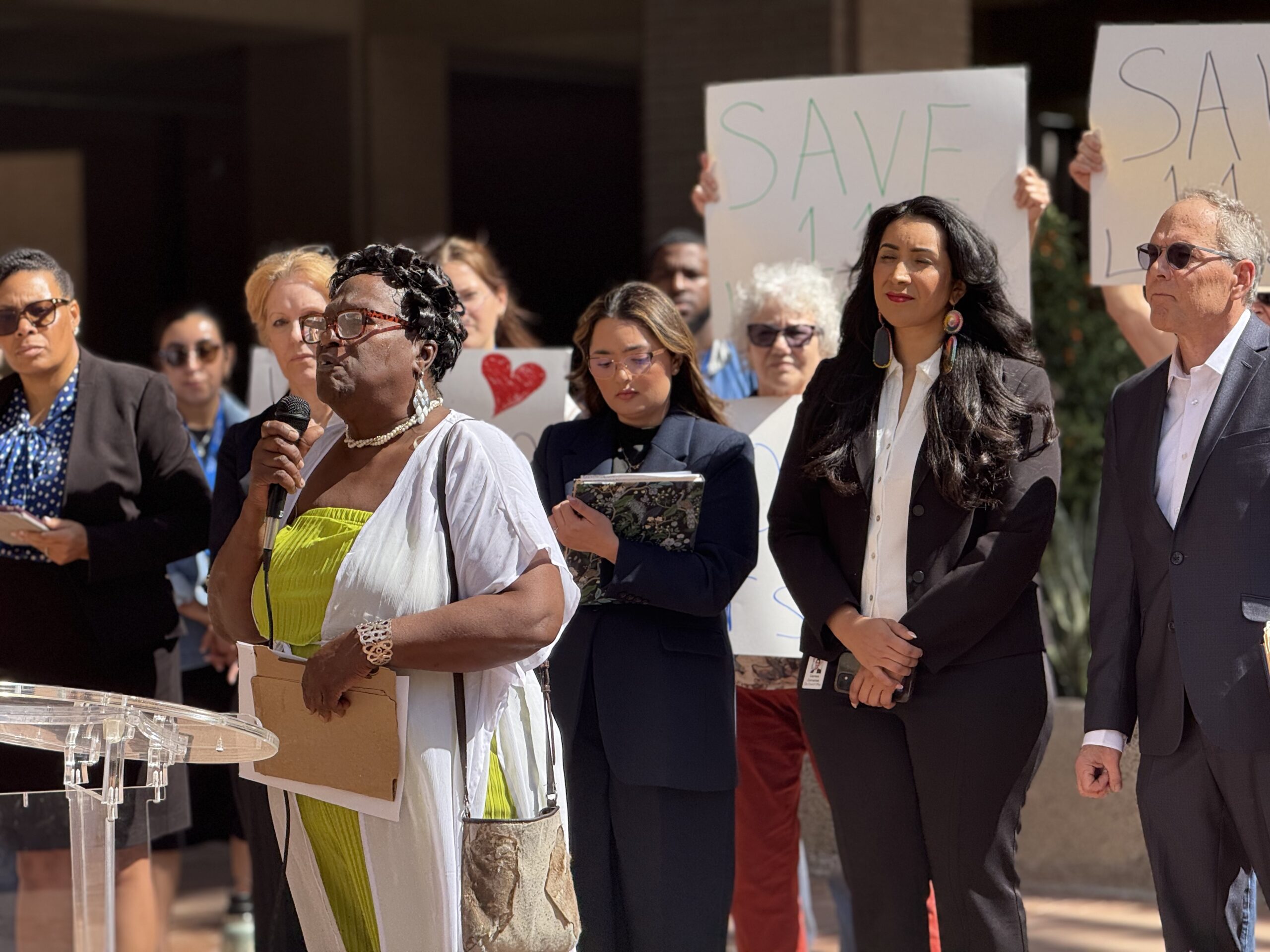
On Jan.13, Riverside’s City Council ruled in a 4-3 vote to reject $20.1 million in state funding to convert the Quality Inn Motel, located at 1590 University Ave, into 114 affordable housing units.
Although the period of reconsideration for the project passed in February and the rejecting councilmembers have stood firm in their decision, public discourse has remained active throughout the city.
The project was first publicly disclosed on April 28, 2025, when the city’s Housing and Homelessness Committee (HHC) approved a resolution to submit a joint application for the Homekey+ grant. The proposal, in partnership with an independent contractor and the local nonprofit Riverside Housing Development Corporation (RHDC), aims to convert the Quality Inn into supportive housing units.
That same day, the three councilmembers who sit on the HHC, Chair and Ward Two Councilmember Clarissa Cervantes, Vice Chair and Ward Five Councilmember Sean Mill and Member and Ward Three Councilmember Steven Robillard, met to consider it at the conceptual resolution stage. They unanimously approved it, albeit Mill and Robillard without recommendation.

The state granted the request, awarding the city and RHCD approximately $20.1 million in Homekey+ grant funds on Nov. 17, 2025, making the city one of five, out of 67 applicants, to be awarded funding.
The initial 4-3 vote occurred on Jan. 13 following presentations outlining the project’s development and funding plan. The proposal included preparatory action in designing the project prior to presenting it to the council, tenant procedures to be enforced once completed and a request for approximately $9 million in city loans — sourced from Riverside taxpayer funds — along with additional funding from the Homekey+ grant to fully fund the project.
A large public turnout followed the presentation, consisting of 60 public comment card requests, 100 e-comments and 50 letters. A majority of the commenters called on the council to approve the resolution.
Following the backlash that ensued the initial rejection, Cervantes called for the reconsideration of the items at the Feb. 10 meeting, where the decision was upheld.
The council members who rejected the project include Ward 1’s Phillip Falcone, Ward 4’s Chuck Condor and Mill and Robillard, who were skeptical of the project since its initial presentation. 
In an interview with The Highlander, Robillard reported that the project would need to be completed within 14 months due to Homekey+ grant requirements. He expressed “There’s no way this will be done in time, or done in that kind of timeline.”
Additionally, the rejecting council members reported that they — along with local businesses — were not included in its planning, whereas Cervantes and organizations, such as non-profits, were kept involved. Robillard stated, “I found out later that she was working with some non-profit groups and hotel owners. But working on this just doesn’t pop out of nowhere, right?”
Regardless, they allowed it to pass the conceptual resolution stage.
Rejecting council members alleged it had been deceptively pitched to suggest it was exclusively intended for unhoused seniors and veterans. Considering that “45% of homeless individuals in California are age 50+,” the council members passed it, yet later expressed feelings of being misled. According to Falcone, it was revealed that these groups would only receive preference over others in the community queue on the day of the initial vote.
A last-minute alteration he expressed seemed to undermine the others’ understanding of the project, stating, “To me, it was suspicious that they would not, even though we had discussed it and it had been agreed upon. It wasn’t until that January meeting that the rug was pulled off underneath us in real time.”
They also expressed skepticism of the Housing First model, which the city adopted in 2018 to address homelessness.
The Housing First model is recognized as evidence-based at the federal and state levels and was adopted by the HCD in 2016. When adopted in Riverside, it was done so without preconditions. Whilst concerns may still be expressed, Housing First is a component of the city’s Envision Riverside 2025 strategic plan.
Executive Director of Family Promise, Riverside, Claire Jefferson-Glipa — a non-profit which works to connect families experiencing homelessness with permanent supportive housing — spoke at the “What is Housing First” teach-in. The event was hosted at the Paine Sugar Gallery in downtown Riverside by local groups Ganamos Juntos and the Inland Empire of Reading Group for Political Education.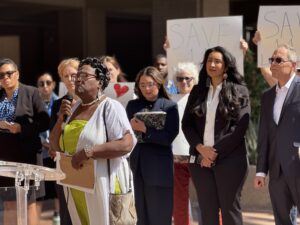
She emphasized that “the solution to homelessness is housing.” Glipa has found connecting with investors more challenging, as the council’s decision seemed to perpetuate the belief that Riverside is not prioritizing responding to homelessness.
At the April 7 City Council meeting, Jennifer Sampson, an unhoused Riverside resident said that while some people associate homelessness with crime, there are still “those of us that really sincerely need and want, and could use the help [from the community].” At an earlier Jan. 13 meeting, a project opponent argued the development could counteract the investments made into University Avenue and deter new investors, stating, “It’s not that we don’t want to provide affordable housing for the homeless, but this is not the right area.”
Conversation surrounding the project’s rejection seeped from the city’s political and communal sphere and into the University of California, Riverside’s (UCR) Associated Student Body’s (ASUCR) consideration, as ASUCR senators moved 14-0-2 to pass the “ASUCR Resolution in Support of the University Terrace Homes Project and Undergraduate Student Representation,” at their March 11 meeting.
It asserted that the project could have benefited UCR students by increasing access to affordable housing and expressed concerns about the misrepresentation of students in statements by council members who suggested the project posed a risk to the student body.
The College Working Families Party at UCR, Interim Vice President Vir Sinha elaborated, “Due to the implications this has on the student body — both regarding housing affordability and the accurate representation of the student body’s interest in the public sphere — this is something we think the student body should strive to rectify.”
Falcone responded that concerns about student safety were speculative, adding that it’s an “extreme” claim to suggest that UCR students themselves had expressed opposition.
Condor told the Raincross Gazette the project posed “a grave risk to the lives and safety of the over 29,000 students, faculty, who attend and work at (UCR).”
Rhetoric insinuating that the project would have exclusively served seniors and veterans was not corroborated by the City Council Memorandum, which detailed the planning and functioning guidelines of the project. It noted that of the 114 studio apartments which would be developed, 20 would serve very low income residents and the remaining 94 would serve extremely low income individuals with “documented mental health of substance use challenges,” as mandated per Homekey+ regulations.
Before the City Council’s Feb.10 meeting, the Inland Counties Legal Services (ICLS), the American Civil Liberties Union of Southern Calif. (ACLU SoCal) and the Public Interest Law Project (PILP) sent a letter to the City Council asking them to re-consider their decision and cited possible legal consequences ranging from the loss of the Pro-Housing designation and the risk of litigation on the grounds of discrimination.
On April 14, ACLU SoCal filed a complaint against the City of Riverside to the California Civil Rights Department, citing “unlawful discrimination in violation of civil rights law.”
The California Department of Housing and Community Development (HCD) also sent a letter to the City Council following the initial rejection, urging them to reconsider their decision and cautioning a potential investigation into the city’s dedication to its adopted prohibition element, commitments as a Pro-Housing Designation, them being far from satisfying Regional Housing Needs Allocation (RHNA) mandates.
The HCD’s media team told The Highlander that they could not provide further comment regarding an “open case”.
As of May 1, the Homekey+ funding has not been reallocated, and as proponents continue to advocate for the project, city officials, including dissenting council members, are looking into re-obtaining and reallocating the funding to other housing projects. The precise nature of the housing projects remains unknown, but the council members all expressed their desire for a supportive housing model that holds tenants accountable to participate in supportive resources.
With next steps continuing to be deliberated, the HHC reported during a City Council meeting on April 27 that there are currently 336 affordable housing projects in the committee’s pipeline, which seek to improve Riverside’s low RHNA mandates.