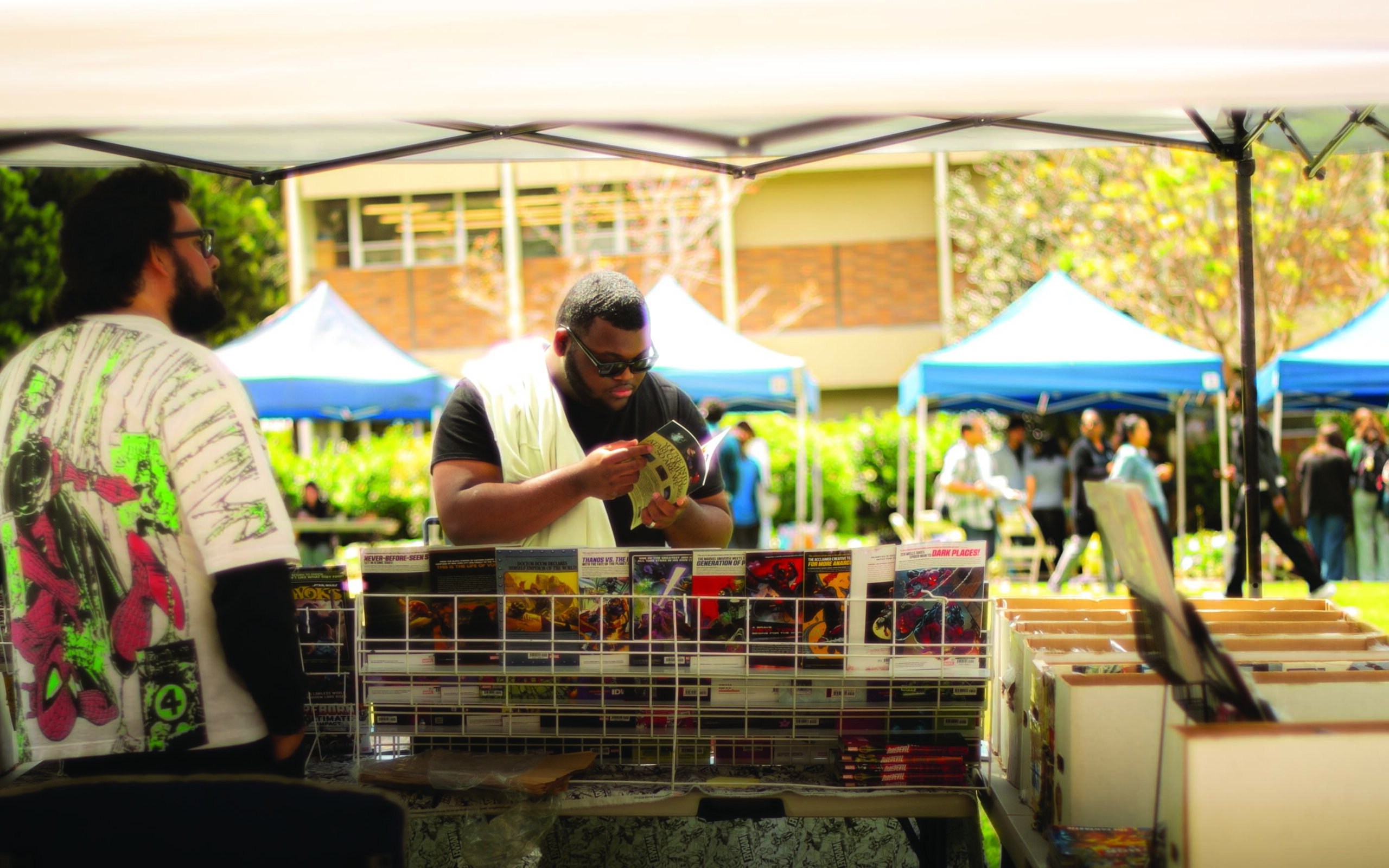
fuadEvery Wednesday at the University of California, Riverside (UCR), the lawn surrounding the Bell Tower becomes the heart of campus life. Walkways lined with tables are adorned with colorful banners and flyers, and the sound of student interactions creates a radiant atmosphere.
Tabling is a critical way for student organizations to recruit new members and promote events. Most don’t realize how much labor is required just to set up a table. Behind every neatly arranged table is a car packed with supplies and a trek to the center of campus. Some students take the risk of unloading behind the Rivera Library, where parking is limited to service vehicles and ParkMobile spaces. For many, the primary obstacle to tabling at the Bell Tower isn’t lack of interest or energy; it’s logistics.
When transporting materials to the Bell Tower becomes difficult, fewer organizations attend and campus life suffers. Although UCR cannot control broader parking concerns, such as limited parking availability and heavy commuter demand, it does have the power to improve accessibility.
Implementing simple measures such as short-term loading zones behind the Rivera Library, digital parking passes via a Google form and storage options for student organizations can remove unnecessary barriers and facilitate greater engagement within the campus community.
These challenges disproportionately impact certain student groups. Commuter students, who rely on personal vehicles, are most exposed to these issues. With a trunk full of tabling supplies, they must choose among spending significant time carrying materials, risking a ticket by unloading closer to the Bell Tower or skipping tabling altogether.
Smaller and newer student organizations are also especially vulnerable. With limited members, funding and access to carts or storage, these groups often rely on one or two representatives to transport everything. The result is that the organizations most in need of visibility to students are the ones least able to show up consistently, leading to a less diverse and representative campus presence.
The challenges are not just about where students can or cannot park; they are about who gets to fully participate in campus life. UCR highlights nurturing tomorrow’s leaders and fostering a collaborative community, but parking and logistical barriers quietly limit who can actually take part in those experiences. Once it becomes too complicated to table, organizations scale back their presence or halt participation.
That means fewer chances for students to discover new communities, learn from political and cultural groups or find support networks. Over time, this weakens student life and the visibility of organizations to only those who can afford the extra time, money and risk to receive citations. Ultimately, the campus appears engaged on the surface, but is less accessible and inclusive than UCR’s messages suggest.
That is not to say that UCR needs to redesign the entire parking system to address these issues. However, UCR can implement simple, targeted solutions. Establishing 30-minute “tabling loading zones” near the Bell Tower would allow students to safely unload without fear of receiving a citation of $49 or more.
The university could also introduce a temporary unloading pass linked to tabling reservations, granting designated vehicles part-time access to closer spots, such as behind Rivera Library, Lot 1 or Lot 11. For students with long days on campus, short-term storage options, like lockers or shared storage rooms at the Highlander Union Building (HUB), would minimize the need to repeatedly haul heavy equipment. None of these changes require major reconstruction of the parking policy, but altogether would make it far more feasible for students to show up, stay involved and sustain the vibrant campus life UCR fosters.
Some may argue that granting special accommodations or loosening parking regulations would open the door to abuse of parking passes or confusion with changed parking regulations. The current system is already clear, and making exceptions would lead to more rigorous ticketing and a more unfair, stricter enforcement. However, the solutions proposed are both limited and regulated.
Time-bound load zones, digital unloading passes and storage access are all structured, trackable measures. Rather than weakening parking rules, these measures adapt them to reflect how the campus practically functions. A system that impedes student organizations’ participation is neither fair nor consistent; it fails to support the student engagement UCR prioritizes.
UCR often emphasizes leadership, inclusion and community as its core values, but these ideals should be reflected in the campus rules that shape student life. The inability to easily unload a table and a few boxes may seem like a small inconvenience, but for many student organizations, it is the difference between showing up and being invisible.
Barriers turn what should be a straightforward act of participation into a sometimes costly, stressful gamble, especially for commuters, newer organizations and underrepresented groups. When those most in need of publicity are the ones least able to navigate these obstacles, campus engagement becomes a privilege rather than an accessible opportunity for all. To truly foster a diverse, vibrant and engaged student body, participation should be readily accommodating all students.