
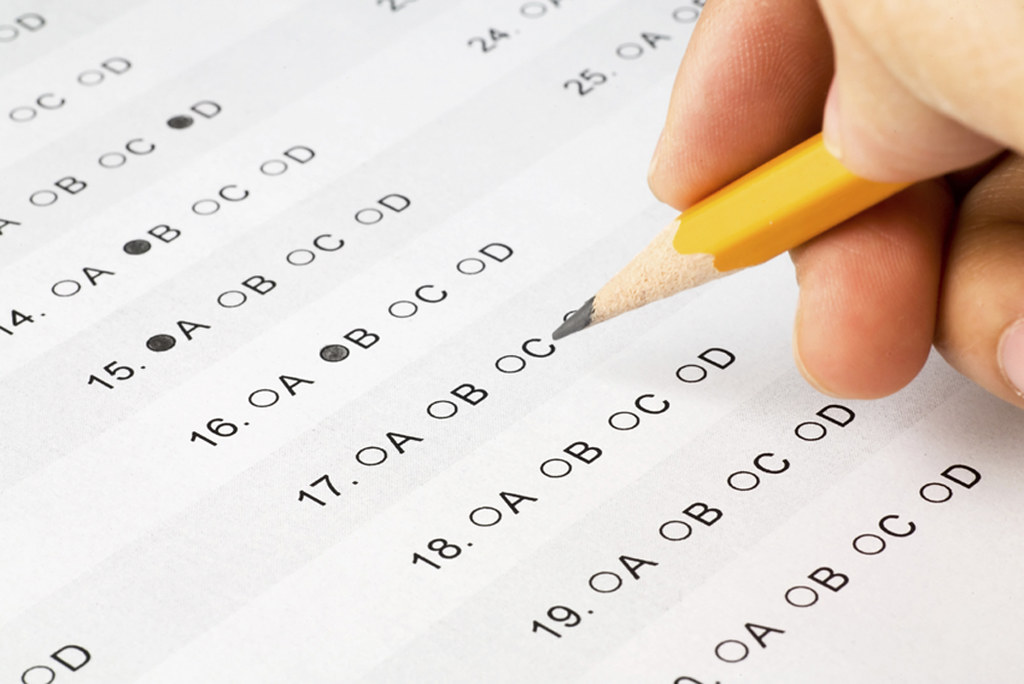
Midterm season has finally come to an end, after a month-long battle of all-nighters, infinite textbook chapters and a soul-crushing amount of lock-ins, it’s only three weeks until finals start. In an ideal version of college, midterm season is a dramatic seven-day sprint: stock up on energy drinks, camp out at the library for one brutal week, take all in-person and online exams in one go and emerge on Friday afternoon into the sunshine of relief. But at the University of California, Riverside (UCR), that version of college simply doesn’t exist.
Under the relentless pacing of a 10-week quarter system, the phrase “midterms week” has become a work of fiction. For most students, midterms do not arrive as a single, contained storm. Instead, they sprawl across the calendar like a low-pressure system that refuses to leave your life, costing almost 25% of your class grade. From week 3 to week 8, students won’t recognize the phrase “free time,” submerge themselves in centuries-old textbooks and scratch their heads as they attempt to not have another crash out.
The math behind the misery is simple. Professors have just ten weeks to cram in a semester’s worth of material before finals hit; there is no unified week set aside for mid-quarter testing. Instead, every syllabus operates on its own rogue timeline.
One professor decides an early midterm in week 3 makes sense. For example, a chemistry lecture can schedule two midterms — one in week 4 and one in week 7. Meanwhile, humanities seminars tend to skip traditional exams altogether, opting for a 10-page paper due in week 6 instead, just as lab finals typically roll around. By the time students finish studying and taking their “first” round of midterms, the second wave is already knocking on their door.
This rolling exam schedule creates a uniquely exhausting psychological trap with practically no finish line.
When exams are compressed into a single week, students get a clear period of high intensity followed by an equally clear period of recovery. However, with how the quarter is going the recovery seems to be permanently postponed. Students cannot afford to take a weekend off after surviving a Friday exam when there’s another test on Tuesday, followed by a project deadline on Thursday.
To add salt to the wound, both the Tomas Rivera and the Orbach Science libraries don’t empty out after a single rush week. Instead, they stay at almost full capacity for a month straight. Even worse is that studying for one class’s midterms doesn’t mean regular instruction stops for other ones. Unlike finals week, where lectures end so students can focus on cumulative exams, quarter system midterms happen simultaneously with new lectures, weekly discussion sections, homework assignments and lab reports. You are expected to master week 6 material while trying to prepare for the content of weeks 1 through 5 for the midterm.
The toll this takes on student burnout is undeniable. Living in a constant state of academic stress for nearly half the quarter dulls focus, disrupts sleep and turns campus life into a cycle of cramming and forgetting, leaving the main point of learning behind. When every week feels like an exam week in one way or another, nothing feels manageable. By the time finals week comes around, students are running on little to no fuel to finish the real race for securing their desired grade in class.
Acknowledging the reality of “midterm month” matters. Whether through better departmental coordination on exam dates, more flexible “drop-lowest-exam” policies or simply professors recognizing that their class isn’t the only one running on a 10-week clock, small shifts could give students room to breathe and actually learn.