The chief executive officer of the California High Speed Rail (CAHSR) authority resigned wake of a scandal where hired consultant firms misused taxpayer dollars to fund luxurious trips. The consulting firms have since repaid the authority $1.3 million; however, this leaves another bad mark on a project already experiencing numerous delays and cost overruns.
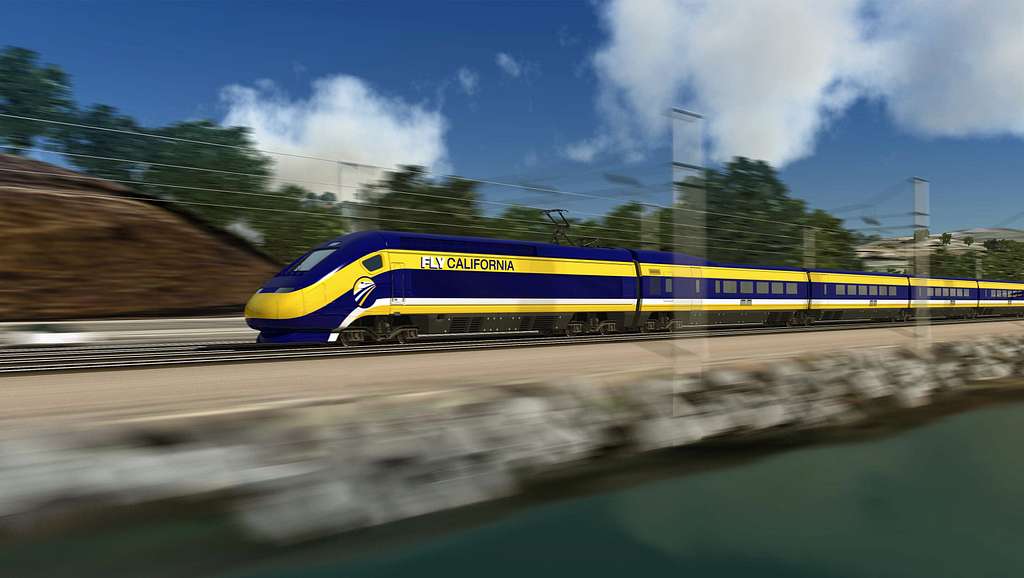
Proposition 1A was voted on by Californians in 2008, allocated funds to the CAHSR authority, and promised a High Speed Rail line that could go from Los Angeles (LA) to San Francisco (SF) in 2 ½ hours. An option — shorter than the usual 6 hours by car, more environmentally friendly, ideally offering fares lower than airline tickets and current train prices — enticing to Californians looking to travel the 400 miles.
This is important in getting cars off the road and reducing flights between LA and SF, reducing CO2 emissions and reaching the state’s goal of carbon neutrality by 2045. Additionally, there’s economic benefits that come with linking LA, SF and all the cities and their economies along the way by rail. Estimates show the creation of a million job-years of employment along with $221.8 billion in economic activity.
Californian students that attend college on stateside opposite from home are a group that would largely benefit. The younger generation, including students, would reap these benefits the most as climate change, the housing crisis and economic conditions affect us the most.
Construction of CAHSR started in 2015, after a lengthy planning process, and it has not been perfect. The original estimated completion date of 2020 is now pushed to 2039, while ballooning the estimated cost to $230 billion from the original $33.5. So if this project is so vital to California, what’s the hold-up?
The aforementioned scandal is a piece of a larger structural flaw within the project — the project’s reliance on outsourcing to outside consultancy firms. Instead of hiring in-house engineers or legal consultants, nearly every aspect of the project has been outsourced. The rationale behind this decision was to save the project money; however, this has failed and contributed to further delays and general incompetence in management.
The constant delays and surge in costs are egged on by lawsuits under the California Environmental Quality Act (CEQA), a law that forces public agencies to protect and mitigate harm to the environment that a proposed construction project might cause. A flaw with this law is that anyone can file a lawsuit claiming an agency hadn’t properly assessed environmental harm, which can put a halt on progress for any project.
CAHSR has been victim to over a dozen CEQA lawsuits, forcing CAHSR authority to redo station designs, pay out settlements and change its route. A law meant to protect the environment is being used to defer a project that, in the long run, is meant to help.
It doesn’t help that Republicans, in state and federally, oppose construction and support these delays. Staunch fiscal conservatism generates opposition to most big government infrastructure projects. Just take Prop. 45, a recent (2026) ballot measure backed by California Republicans that would expedite certain projects like housing from standard CEQA review, as an example. The rail is explicitly excluded from the list of projects that would be permitted to skip CEQA review.
On the federal level, Trump cut desperately needed funding, up to $4 billion, from CAHSR. The cut has strained the finances of the Rail Authority, who says they could run out of money as soon as next year.
CAHSR has always struggled with funding, only receiving $1 billion a year, not enough to keep up with the spending schedule, thus slowing the rate of construction. This is also the reason why only the Central Valley Segment of the line is under construction. The entire completed line won’t be complete for decades as well.
CAHSR is often described in the media as a fantasy that’s too idealistic to become reality. This notion is false; just look at Europe, China and Japan, where high speed rail systems exist and are a critical piece of their infrastructure, national economies and everyday life that’s broadly supported and funded by their governments.
The struggles of the CAHSR project do not lie in the innate flaws of High Speed Rail, but in issues with state laws, funding and certain structural flaws of the project. Public support for CAHSR is at 62%, despite everything. These issues must be remedied to spur the project towards completion, and Californians can enjoy the fruit of their tax dollars.