
On Nov. 9, 2026, the entertainment industry was blindsided by the announcement that James Gunn and Peter Safran were removed as Co-CEOs of DC Studios. Despite initial assurances that they would continue on David Ellison’s team, the news arrived just weeks after Skydance and Paramount’s $111 billion acquisition of Warner Bros. Discovery closed in October.
Their abrupt exit is a case of corporate short-sightedness. Ousting promising creatives behind the new DC Universe (DCU) barely two years into its relaunch proves that Skydance wants Marvel-level profits without the patience required to create a cinematic foundation. Replacing them with former Marvel Producer Jeremy Latcham, signals a shift into sanitized commercialism at the expense of creative authenticity.
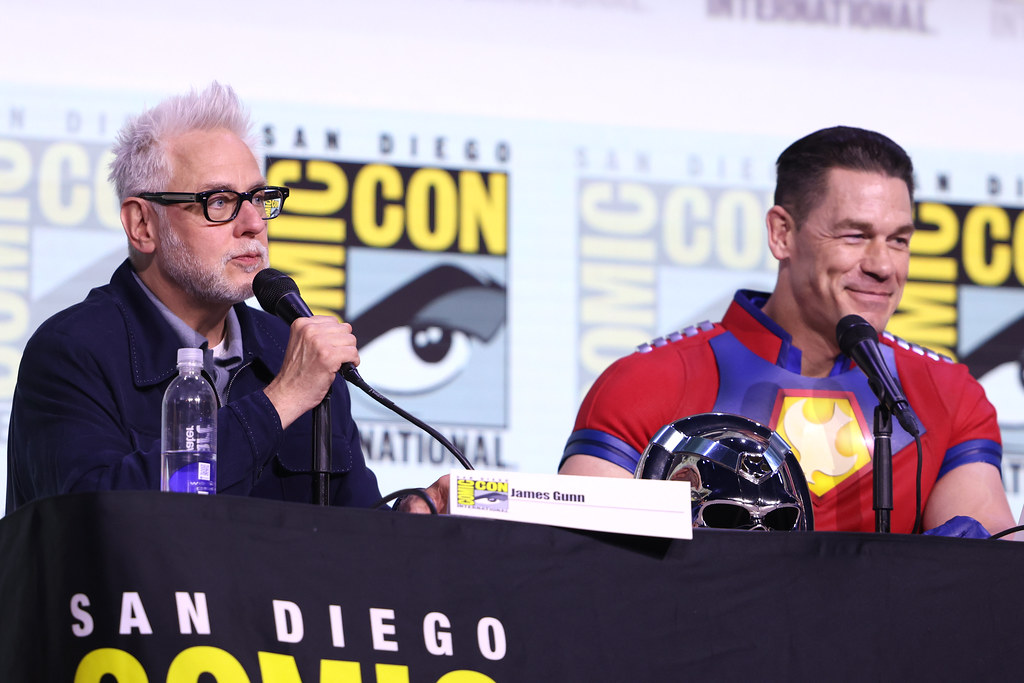
According to Variety, the shakeup stemmed from pressure over immediate financial returns, especially highlighting the underperformance of this summer’s “Supergirl.” Rather than allowing the new narrative to find its footing, Skydance panicked at its first box office shortfall, echoing Warner Bros.’ notorious 2022 write-off of “Batgirl,” and aborted a decade-long roadmap.
Comparing Gunn’s two-years working on the DCU to the Marvel Cinematic Universe (MCU) ignores Marvel’s history. In 2008, Marvel started building its legacy methodically, introducing two characters across “Iron Man” and “The Incredible Hulk,” taking four years to reach its first cross-over film, “The Avengers”.
Skydance’s claim that “Superman” lacked “pop culture impact” conveniently erases the film’s many successes. The film outperformed all three Marvel films that were released to become the highest-grossing superhero film of the year and was Letterboxd’s “Most Obsessively Rewatched” film of 2025. It sparked a 500% surge in dog adoption inquiries and propelled Teddybears’ song “Punkrocker” onto the Billboard charts for the first time. The film introduced Superman to a new generation of fans, saturating the summer with themes of hope and kindness.
Skydance insiders also claimed HBO Max’s “Lanterns” failed to “capture the zeitgeist,” yet it ranks among the platform’s top five shows of all time, averaging 19 million global viewers per episode and drawing 10.5 million for its finale. It rehabilitated Green Lantern’s reputation after the 2011 film flop and even sparked a viral fandom trend on social media. Recently, “Clayface” made nearly 300% of its production budget in under a month while the season two premiere of “Peacemaker” outpaced its season one finale.
DC Studios now belongs to Jeremy Latcham, which has sparked widespread criticism. Beyond his viral “Would my grandma like it?” greenlighting metric, Latcham’s resume reveals a stark lack of creative leadership. Most of his Marvel credits are as an executive producer, which is a more supervisory, less hands-on role. He has only served as a producer on four films. Furthermore, his last three movies have been largely unsuccessful, making little profit or failing critically, including the 2026 flop “The Breadwinner,” which sits at 19% on Rotten Tomatoes.
This creative retreat is inseparable from the political landscape following the Paramount-Skydance merger. “Superman” took bold thematic swings, engaging with real-world political allegories through its depiction of the Jarhanpur conflict, a storyline that is widely interpreted as a critique of military occupation, displacement and warfare. In an era of rising conservatism in media, art that challenges institutional power or geopolitical controversies becomes a corporate liability. When creatives are steered by stakeholders with strong ideological commitments, bold political subtext is seldom tolerated.
Only “Man of Tomorrow,” “The People V. Gorilla Grodd,” “Mister Miracle” and “Creature Commandos” remain confirmed. 13 other projects including, “Batman: The Brave and the Bold,” “Teen Titans,” “Wonder Woman,” “Mr. Terrific” and season 2 of “Lanterns” are in limbo, casting doubt over Matt Reeves’ “The Batman: Part 2.”
James Gunn had already mapped out the DCU’s trajectory with “Batman: The Brave and the Bold” by 2028 and a “Justice League” crossover by 2030. By pulling the plug after barely two years, Skydance has proven that Hollywood executives would rather burn down a promising foundation in favor of short-term control and monetary gain than to let bold, long-term storytelling take root.