Many thought 2026 would be THE year. But it’s not even halfway through the year and the U.S. has already lived through the war in the Middle East, U.S Immigration and Customs Enforcement (ICE) agents acting as Transportation Security Administration (TSA) workers at several airports and skyrocketing gas prices. Now, to add to the list, the U.S. Department of the Treasury has decided to say goodbye to the $1 bill for the better.
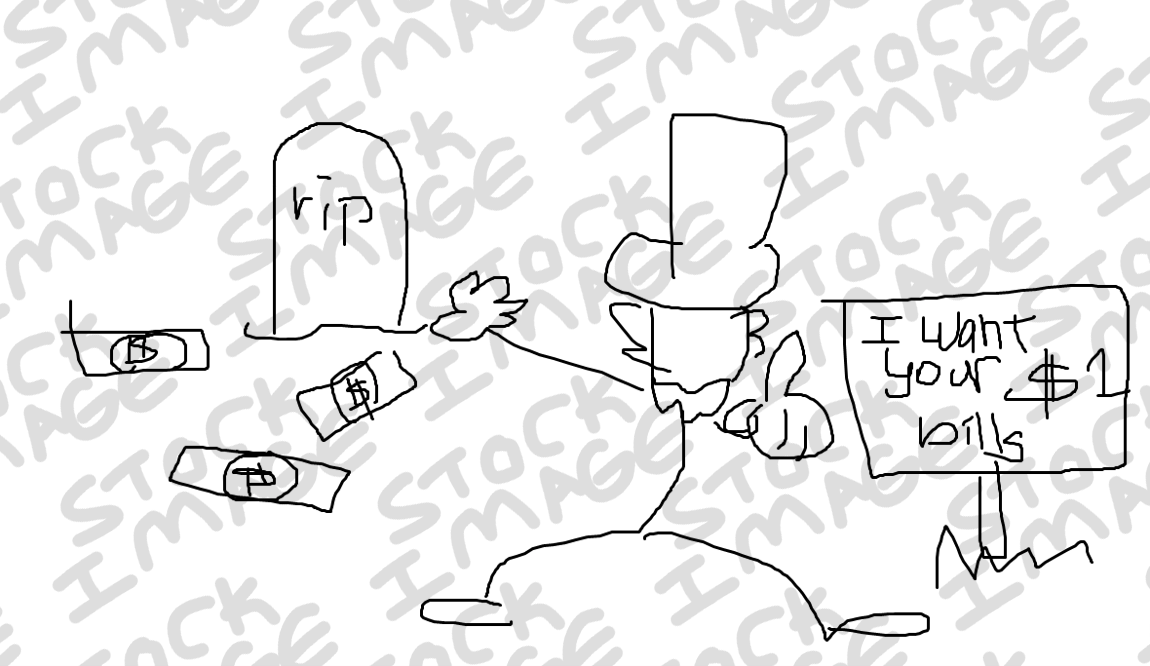
Founding Father George Washington has blessed this bill, which will finally be put to rest in May 2026, since 1869. This policy came as part of modernization efforts and the push towards digital efficiency and monetary transactions. This decision represents a shift away from low-value paper currency toward digital transactions due to the rise of technological advancements. As the world turns towards quick one-tap payments, this announcement serves as exciting news for the younger population.
The elimination of the $1 bill came about as the next logical step after the one-cent shutdown. In February 2025, the federal government announced the discontinuation of the U.S. penny due to high production costs, demeaning it as a “wasteful expense.” This decision will save the nation $56 million per year.
It might come as a surprise at first, but there are many benefits to this decision. One is its minimal inflation impact, with its low value and the ability to round to the nearest five cents or a dollar. Now, with the $1 bill being retired, the U.S. Treasury plans to save even more, investing it in far more important issues and efforts.
When the $1 bill cessation goes live in May 2026, purchasing power will be reduced dramatically over the recent inflation period. Market prices, where nothing really costs $1 — even at Dollar Tree — show that cash transactions are far less common in the present-day payment system. This also helps with the modernization efforts that the federal government is pushing towards.

According to Fortune, around half of Generation Y and Z use Buy Now, Pay Later (BNPL) services, while cash payments are becoming less popular. With these trends, the federal government assessed ceasing production of the $1 bill, pushing people towards digital payments such as Apple Pay and reducing printing costs as its usefulness declines.
After May 2026, printing will be reduced and no businesses will be allowed to accept $1 bills as payment. Around early fall 2026, banks will begin withdrawing $1 bills from ATMs and cash stocks. By 2027, the circulation of the $1 bill will completely fade out. This is a great sign of progress for future generations who don’t have the habit of carrying wallets with cash and credit cards, but have the luxury of digital wallets on their phones. Slowly, banks will shut down because there is no need for cash withdrawals, since all payments can be processed digitally.
Before anyone knows it, once the elimination of the $1 bill has passed, other cash notes will not be too far behind. Soon, cash will be out of the way and everyone will adapt to Apple Pay.
However, there are some downsides. This decision will harm those who rely on $1 bills for vending machines, which often require $1 bill payments. Whipping a bill out and buying a soda or snack pack will now become more complicated.
Club fundraisers also account for the latter effects of this ban. The $1 World’s Finest Chocolate bars sold at middle and high school fundraisers will now sell for the next whole dollar amount, putting an end to a period of old memories. With these policy effects, students will have to shift to digital payments on their phones, such as Apple Pay, Venmo, credit cards or turn to higher rounded cash transactions.
Soon, the U.S. will gather to say one last goodbye to the beloved $1 bill. Public resistance is expected from cash-reliant communities, small businesses and older Americans who have the habit of feeling the paper money under their thumbs. But due to current political events, this is the most logical step for the future of U.S. currency.
With global conflicts, an inflating economy and the rise of the digital age, budgeting is becoming a top priority of the U.S. Treasury. After saving $56 million from the elimination of U.S. penny production, the $1 bill is next in line for increasing savings. It’s time to embrace digital currency as the world adapts to this cashless age and frame the $1 bill as an antique on the walls.
*This is an April Fools’ publication. This article is not intended to communicate any true or factual information about the writer’s opinion except through humor and/or exaggeration. Any resemblance to persons, living or dead, is entirely coincidental or is intended purely as satire, parody or spoof of such persons and is not intended to communicate any true or factual information about that person.