
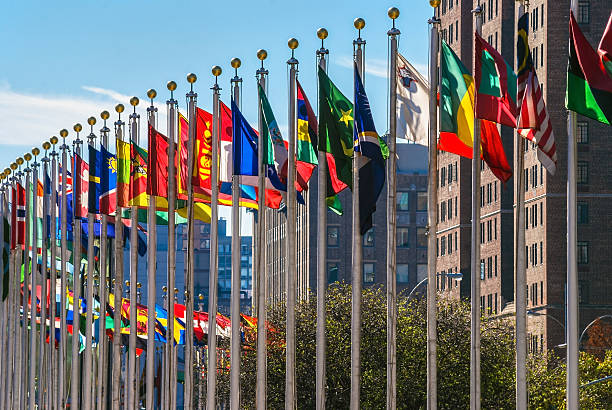
On Jan. 30, Secretary-General Antonio Guterres of the United Nations (U.N.) announced the organization’s ‘imminent financial collapse’ and attributed it to being a result of members’ mandatory unpaid dues. In a letter sent to all 196 members on Jan. 28, the chief claimed that the financial constraints the organization is currently facing differ from any the agency has previously faced.
The United States is one of the named U.N. members that has failed to pay its annual dues that equate to “billions of dollars,” even after announcing on Jan. 7 its withdrawal from 31 U.N. entities, including but not limited to: the UN Human Rights Council, U.N. Women, the U.N. Population Fund and the U.N. Framework Convention on Climate Change. The White House reported this was due to how they “operate contrary to U.S. national interests, security, economic prosperity or sovereignty.”
When asked about the factors that played into the White House’s decision-making process, Secretary of State Marco Rubio claimed it was done to save American taxpayers’ money and because the U.N. organizations were “mismanaged, unnecessary, wasteful and poorly run.”
This has since left the U.N. in a financial predicament, as the U.S. is responsible for “about 95 percent of the money owed to the United Nations” — or approximately $2.2 billion — as reported by a U.N. senior official during a briefing of reporters on the U.N.’s budget crisis. It should be mentioned that this is the amount of both the unpaid dues for 2025 and 2026.
Each member country’s dues are determined by its respective country’s gross domestic product, and failure to pay them could result in the penalty of the country being stripped of its voting rights at the U.N. In fact, this was the case seen with Venezuela in 2025, which it also happened to be the U.N. member country with the second-highest amount of unpaid dues.
Returning to the letter sent out to members, Mr. Guterres writes, “The crisis is deepening, threatening program delivery and risking financial collapse,” and emphasizes how he “cannot overstate the urgency of the situation.” Here, he refers to how the agency will be forced to shut down its New York headquarters and the Office for the Coordination of Humanitarian Affairs if funding continues to remain scarce.