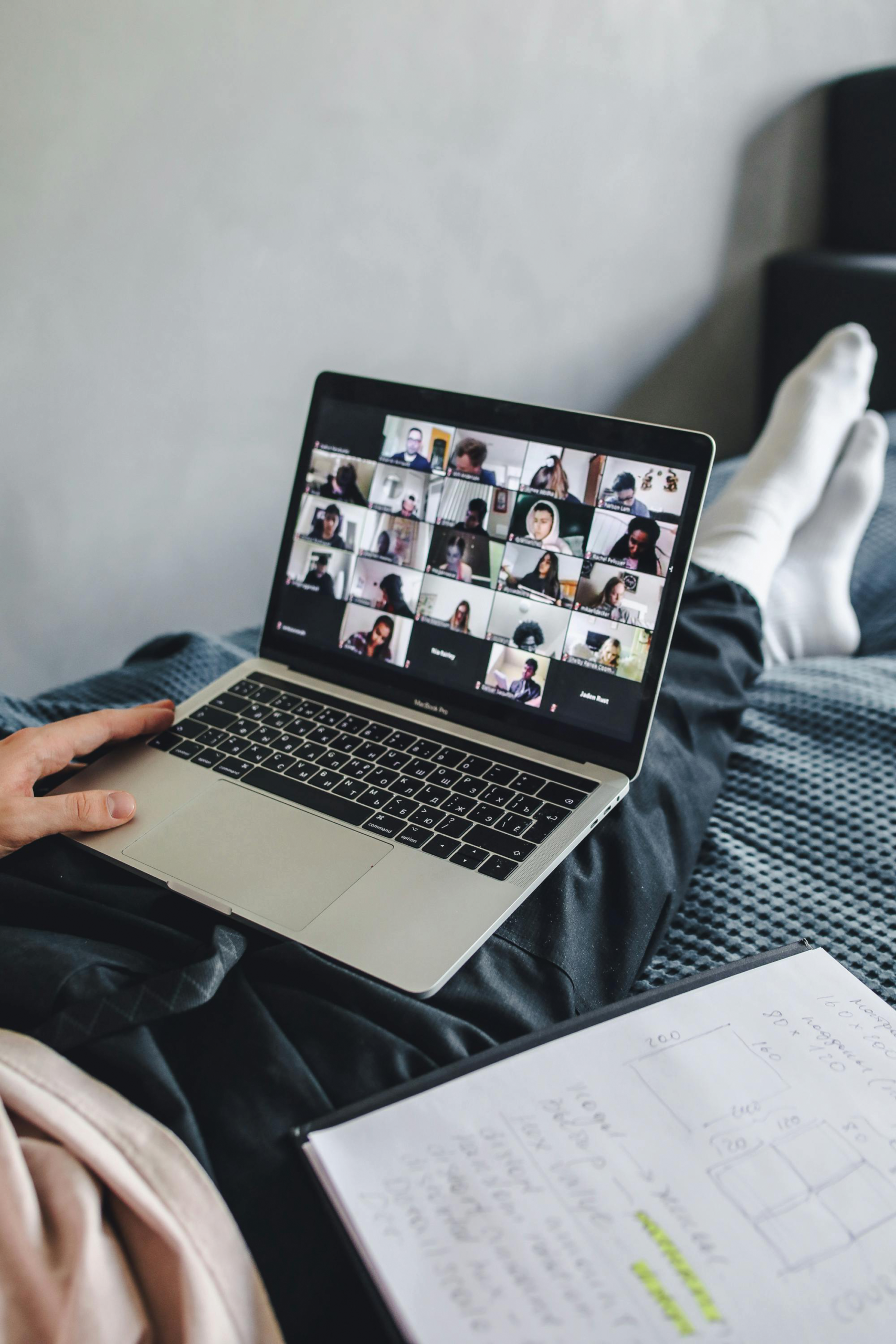
Since the early 2020s, the rise of online learning has drastically increased. The cause of this shift was the COVID-19 pandemic, as many colleges and universities turned to online classes. Zoom became widely used, reaching up to 90,000 schools at its peak. While online classes were beneficial at the time, it has now become detrimental to many college students who aren’t learning from virtual classes and often lose social and academic skills.
Unlike in-person classes, where students must actively listen to lectures and can meet face-to-face, online courses do not provide that. Virtual classes have become known as “free” because the course will give them an easy “A.” Students take this “easy route” by intentionally avoiding the material and simply searching up answers online for their assignments.
Since no supervision is present because they are behind a screen, it’s easier for students to continue taking advantage of online classes and professors. This often leads to poor engagement, constant distractions, weak communication skills and in some cases, academic dishonesty.
Additionally, online classes lead to poor engagement. Group discussions between classmates during a project or simple conversations during class work are awkward and uncomfortable interactions. Students can’t express themselves the way they would in a real life classroom, with cameras off, giving brief yes or no responses and only using the chatbox. It’s a challenge for students to contribute value to a lesson or discussion when their only form of engagement is through a microphone.
Poor engagement also weakens grades. According to Education Next, students tend to engage much less online, as students’ final grades can decline by 22%. This is a significant decline as it could mean a drop from an A- to a B+ grade. Therefore, students are often not held accountable in online classes because they may feel less academically pressured to follow consistent in-person deadlines, causing them to procrastinate their work.
There is also less direct supervision, allowing students to get off topic. Poor engagement has reached a point where academic results are often affected and will worsen as online learning progresses.
Apart from poor engagement and constant distractions, weak communication skills also arise from online classes. It can be hard already to socialize with fellow peers, but online classes make this worse. For example, online classes can cause students to feel more isolated. Since there isn’t much face-to-face communication, interactions often occur without much discussion or real time feedback. It feels asynchronous and removes immediate in-person support, resulting in a harder time for individuals to stay engaged.
Professors and students often experience miscommunication because of the lack of physical body language. Oftentimes, people present with weak voices, which causes confusion when students may need assistance or are too afraid to speak up. This highlights that communication skills aren’t and cannot be created in an online environment.
Another reason for poor engagement in online classes is being easily distracted. Constant distractions from external sources, such as the home environment and multitasking, affect focus in online classes. According to the National University, a variety of distractions have increased, including social media and distractions at home. It is difficult to learn when college students are constantly distracted, making online classes impossible. Poor engagement and constant distractions together demonstrate that online classes are hindering student growth.

Nonetheless, some may claim that online classes are an effective way for students to learn because they provide flexibility, particularly for commuters. It also allows students to spend their time more efficiently, as students can complete homework when it’s most convenient for them. Virtual classes allow students to take a course when their schedule may be too tight for an in-person course.
However, this online flexibility also gives too much leeway for cheating. Taking an online class gives college students the option to take the easy way out with learning, especially when they may feel anonymous. For example, research by the International Journal for Educational Integrity highlighted that “increased cheating has been linked to a greater sense of anonymity in online courses.” Since they may be in larger classes, where too many students make it difficult for professors to manage, students may feel “safe” to cheat and have a sense of evading consequences.
Ultimately, online classes will continue to be an option for students to take in college. Although there may be advantages, it’s still not the best way to learn. Students aren’t developing communication skills, often have weak retention, face many distractions and resort to cheating. It’s important for students to realize that they are hindering their own growth by heavily relying on online classes. If online classes continue to increase in enrollment at college, there may simply be no real purpose in even attending.