
When I talk about pain in your 20s, I am not referring to physical pain. It is not the type of pain from bones developing, getting taller or menstrual cramps. Instead, it is a kind of emotional pain that we experience while growing up. A feeling of confusion, pressure and uncertainty that slowly appears as adulthood nears.
Being in your 20s is exactly where this kind of pain becomes most apparent. At this age, we are no longer young enough to live carefree and we are also not mature enough to feel fully confident about our future. We stand in between, neither here nor there. Twenty feels like a turning point, almost like a milestone in life, where expectations suddenly become too real and decisions start to matter more than before.
The feeling of uncertainty in your 20s often starts with a series of questions about the future, such as what major to choose, what career path to follow or what kind of person you want to become. They seem pretty simple at first, then quickly grow into something much bigger. For instance, a college student picking their major might start by thinking between science, technology, engineering and mathematics (STEM) or business, but later start worrying about their strengths and weaknesses for future life. There are no right answers, and unfortunately, no class teaches you how to figure out those questions.
First-year students might still have time to explore and stay “undecided,” but for those in their second year and above, the pressure to have an answer about filling out a major declaration form or sending job applications holds more weight. The pressure of selecting a career is even more overwhelming. The image that many students present of themselves is shaped by others’ expectations, such as choosing a popular major and pursuing a “steady” career decided by their parents.
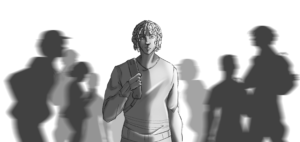
Besides feeling uncertainty, people in their 20s often feel a deeper sense of loneliness and alienation, even in a crowded environment. In high school, everyone shares a similar routine and goals, but in college, those shared structures quickly disappear. People around you start moving in different directions, and we feel less familiar and connected with them.
In high school, it is easier to meet others, but in a busy environment like college, building long-lasting friendships may require a lot more effort. Finding a true friend may take many attempts, and that fragile sense of connection can sometimes make you doubt yourself.
Uncertainty and loneliness are two sides of the same coin, one side being, “I don’t know where I’m going,” and the other side being, “No one really understands me.” When both of these feelings appear at the same time, your 20s feel heavy.
Admitting that you feel lost or anxious is not giving up; rather, it is the first step towards actually seeing the problem clearly. Many people in their 20s feel stagnant, not because they lack ability, but because of pressure. Instead of being trapped in a vicious cycle, it is important to turn pressure into motivation.
This small change can help you face challenges you ignored in the past. For example, as an international student, I was afraid to speak to native speakers at first because of my accent and grammar issues, so I preferred to stay silent. I often felt sad about my ability to socialize with others.
However, with my roommate’s encouragement, I started with small talk and realized the biggest barrier was my mindset. Overcoming loneliness takes effort. Not every relationship needs to be close, as sometimes even small interactions can turn into meaningful connections. How deep a connection goes is rarely something you can predict ahead of time.
Maybe our 20s are not meant to be easier than they are supposed to be. For ambitious people, their 20s are often painful and filled with the intense pain of growing up. Nevertheless, this pain can be the strongest proof of their vitality and desire to grow. It is meant to challenge us and, in this process, push us out of our comfort zone.
During this period, we will likely feel pressure, loneliness and anxiety. Questioning, doubting and trying again is not a sign of failure, but a necessary part of growth. The pain that can come with being 20 is not something we need to overcome, but a necessary discomfort we need to undergo, as it is this very discomfort that shapes who we become. This pain cannot be fixed or avoided — it is part of becoming ourselves.