
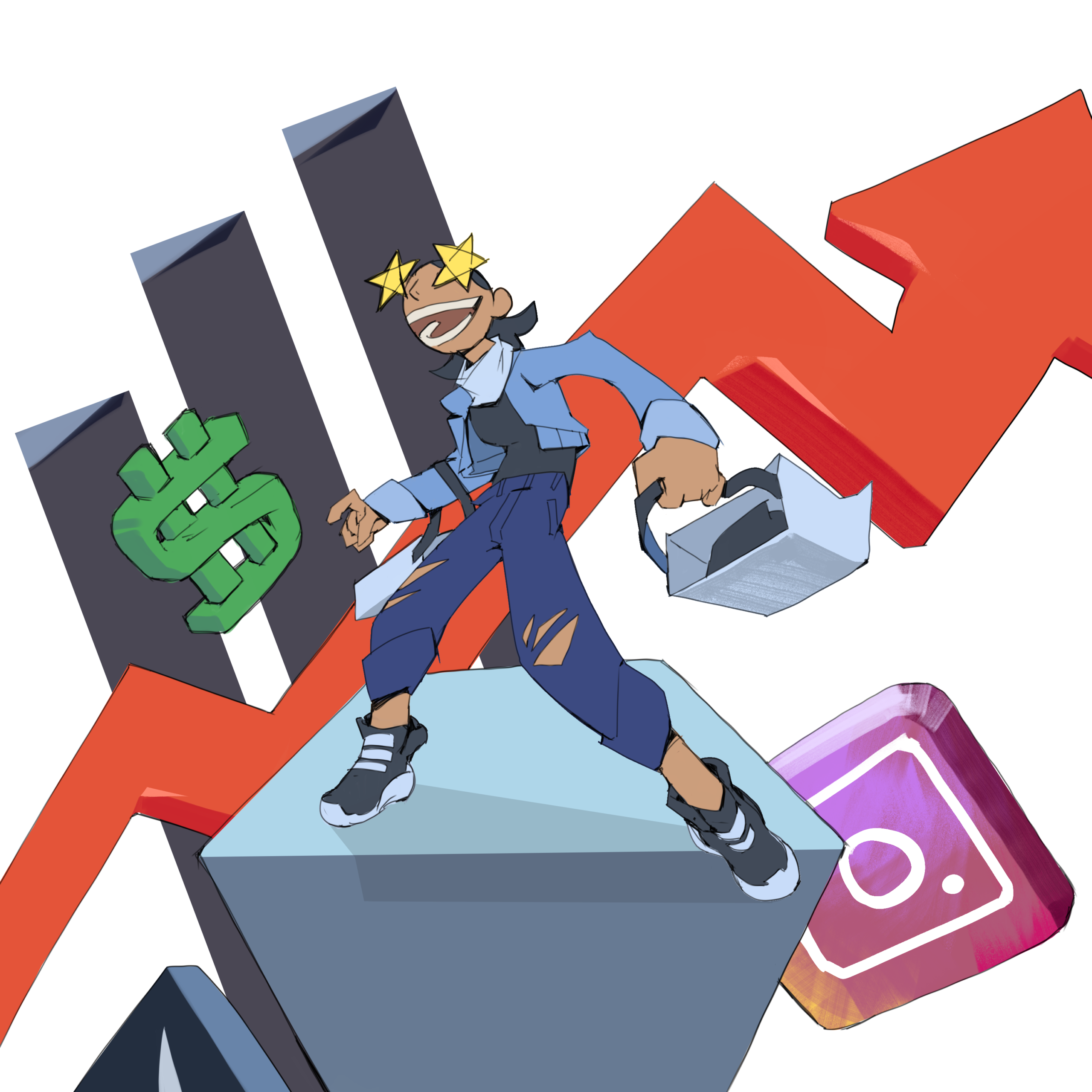
Individual creativity and aesthetically appealing patterns are increasingly shaping fashion culture, seen in students incorporating Coach bags, camo hoodies, Yeezy slides and Lululemon jackets into their outfits. At first glance, these choices can appear to be simply self-expression and personal style, but each piece of clothing speaks to a larger idea regarding identity and social perception cultivated through fashionable means.
Fashion is primarily recognized as a form of self-expression in numerous ways, including selecting colors, patterns and silhouettes that represent an individual’s personality and artistic creativity. Beliefs and values can also be self-expressed by purchasing from ethical brands, boycotting fast fashion or buying sustainable fashion to protest against microplastic pollution.
However, according to Fortune Business Insights, the global demand for affordable luxury fashion goods continues to rise due to the middle class seeking high-quality and brand prestige for a budget-friendly price. The transition from self-expression to identity signaling starts with consumers seeking to purchase a product because of the social reputation, image and status attached to it.
The main difference between self-expression and identity signaling lies in self-expression being a personal act of showcasing oneself authentically, whereas identity signaling is a communicative strategy to externalize group membership, values and socioeconomic status. Affordable luxury brands pinpointing this upwards trend result in a shift towards them selling exclusivity, status and lifestyle rather than products that only serve for self-expression.
Increasing product value is built on consistent marketing strategies, with artificial scarcity being a paramount one to increase demand. Artificial scarcity involves using limited drops and waitlists to boost desirability. Limited drops evoke a sense of urgency because the difficulty of obtaining scarce items leads consumers to believe them to be more important and highly valuable. Once they are socially perceived as such, people are willing to pay a higher price for them than at their retail value.
For example, Nike resales experienced a 200% increase in resale price compared to retail price because of the scarcity of particular colors and designs the product came in which amplified its status of exclusivity and limited access.
The sense of accomplishment from obtaining what this good represents translates into a subset of identity and status signaling, which uses products or certain behaviors to display financial wealth, social position and economic power. Artificial scarcity contributes to the broader business ecosystem of brand equity, which is the brand’s reputation amongst consumers adding value to the product, elevating its attractiveness.
Companies within the fashion industry invest heavily in trending visuals and strategic partnerships with influencers that display lavish lifestyles to authentically replicate the social meaning luxury brands have. Luxury in recent years has now been defined as quiet luxury, which prioritizes quality and minimalist aesthetics rather than large labels. Focusing on this fashion trend drives up demand since consumers feel socially and emotionally attached to the product.
Therefore, this shifts pricing power to the companies, allowing them to steadily raise the price of their products despite catering to the affordable luxury market. Due to budget restraints, consumers’ willingness to pay eventually reaches its limit, causing them to turn to dupes. Rather than authentically creating products, dupes mimic the exact design and social presence of high end products at a lower price point.
The growth of the dupe market implies that consumption is continuously driven by the desire to appear affluent, as it can boost self confidence and respect, even if the product is not attached to the authentic brand. Secondhand shopping and thrifting can involve purchasing pre-owned, authentic and affordable luxury brands at a lower price, again offering alternative methods to engage in status signaling.
By finding and purchasing these items in a cost-conscious manner — whether that be in the form of affordable luxury, dupes or thrifting — one recognizable item is capable of shaping the ways an entire outfit and its wearer are perceived.
Fashion naturally encompasses self-expression and identity signaling. However, companies within the fashion industry profit from the social meaning people attach to products, such as attractiveness, wealth and exclusivity, to increase the value of that product and the amount consumers are willing to pay for it.