
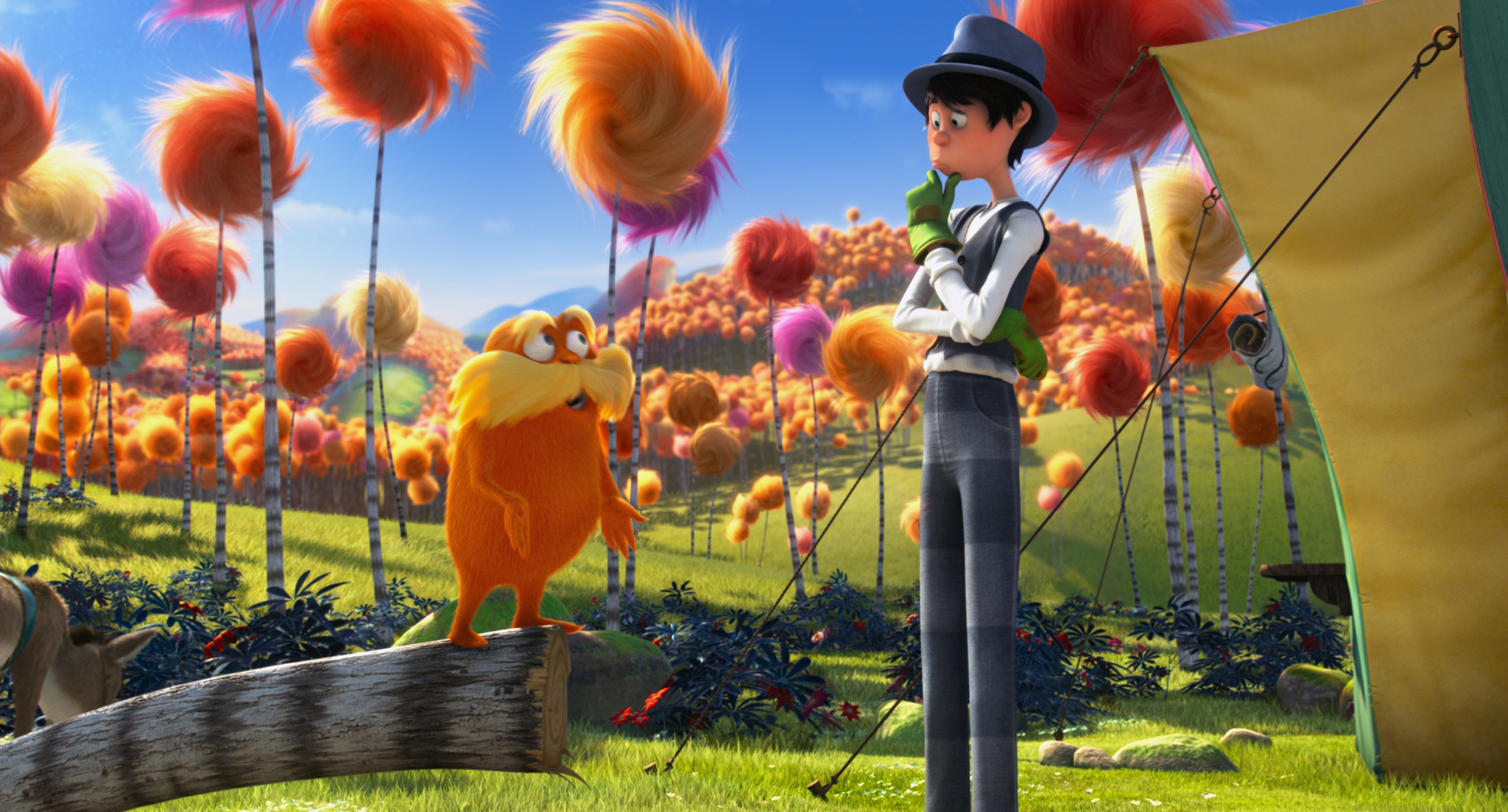
On March 2, 2012, “The Lorax” was released in the United States. Produced by Universal Pictures and Illumination Entertainment, its inception was initiated by Seuss’ widow Audrey Geisel, who previously worked with the founder of Illumination, Chris Melendandri, on “Horton Hears a Who!”
The film is based on the 1971 children’s book written by Dr. Seuss under the same name. It centers on the figures the Once-ler and the Lorax, discussing the impact the destruction of the “truffula trees” has on the environment. It personifies figures involved in capitalism from the industry players responsible, environmental activists and the environment itself to educate children.
Actors casted to voice the characters included Danny Devito for the central mystical orange bushy mustache figure of the film, the Lorax. Zac Efron voices the protagonist Ted and Taylor Swift voices the female protagonist Audrey. Ed Helms was cast as the antagonist of the film, “The Once-ler.”
“The Lorax” is set in a dystopian future in which the townspeople of Thneedville live in a hyper consumerist society. They not only purchase genuinely basic necessities such as air, but due to the effects of environmental harm, they manufacture artificial plastic trees and bushes to create the facade of nature within their city. The cheerful opening musical note overshadows the unnerving themes lying underneath to present a concerning future far from today. The number is done in a catchy upbeat style so the viewer could question whether this is a happy song about a happy town or not.
The protagonist Ted ventures outside of Thneedville to attempt to find a seed to plant a real truffula tree for his love interest Audrey. He discovers the Once-ler and the small pile of rocks that says “Unless.” He tells Ted the story of what happened to the truffula trees, the Lorax and why his past actions make him responsible for how Ted’s city lives in the dystopian reality of paying for air to breathe and plastic pieces of nature.
The Once-ler was a capitalist whose idea of making an invention for profit ignited his journey. He discovers the beautiful landscape of nature filled with “truffula trees” where he would eventually meet the Lorax after chopping down one to use for his all-purpose “thneed” invention. His presence in the film and book provoked the peace of the animals and trees to the point that they wanted payback. They purposefully orchestrated his farewell trip by sending him off a waterfall, but ended up saving him since a fellow little bear was with him.
What follows is a mass destruction of the beautiful landscape as far as the eye can see in the name of profit. In the end, the last truffula tree is cut down, and the reign of the Once-ler is once and done. The birds all flew away from the smog filled skies, the fishes walked on fins to find new clean water sources and the bears all migrated far away leaving behind the home they’d always known.
The Once-ler’s story finishes once the Lorax grabs himself by his behind, and lifts himself up into the sky, leaving behind a pile of rocks that says the word “Unless.” The child in the book who listens to the Once-ler resembles Ted from the film. The Once-ler tells the young child, “UNLESS someone like you cares a whole awful lot, nothing is going to get better. It’s not.” Ted in the film does just that. He cares enough against odds from his town and the corporate giant that stands in his way, to advocate for the environment and speak for the trees he’d plant. Eventually, the Lorax comes back and nature starts to heal.
However, the main point of the story from the book is that no one knows what the future holds for the environment. The effects of industrialization, consumerism and profit have caused lasting damage that is only growing. There is no Ted to come save everyone. The people have to find it in themselves to be Ted and learn from the mistakes of the Once-ler, who, despite having only one reign, can be found in many different places where profit holds priority over people and the planet.
Verdict: Where the film may fall flat at capturing the source material, it makes an enjoyable family friendly adaptation to teach the youth about caring for the environment. One could have only asked for more Danny Devito and Taylor Swift to be included on the soundtrack.