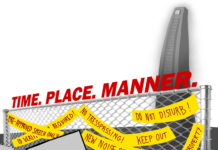

There is no perfect world that exists where students don’t abuse artificial intelligence (AI). Many have faced that two-second pause where they decide whether to ChatGPT their way through the physics homework so they can enjoy the night or actually work through the problems so they can practice for the midterm next week. Most end up choosing the first option.
This raises the question of whether learning is actually happening in classes and can be proven honestly through exams. Facing a crisis in learning and fear of losing critical thinking skills in younger generations, professors across the U.S. are reviving oral exams, forcing students to defend their assignments to instructors in real time. And honestly, it might be the best way to prevent students from skipping the hard work of thinking as AI rises in education.
Cornell University biomedical engineering professor Chris Schaffer sets up oral defense exams for students instead of paper exams. He claims that students cannot AI their way through in-person speaking to prove understanding and defend their ideas. This style of testing involves no writing tools or technology, preventing not only cheating but also outside help.
Educators are no longer just guessing whether students will use generative AI to do their homework for them. They have them prove their comprehension of the assignment verbally, creating a way to determine what students are actually learning. This “old school” type of testing will be a key part of saving critical thinking and comprehension skills.
Other universities are switching from online to in-person exams, including the University of Pennsylvania (UPenn). During the COVID-19 pandemic, many institutions turned to online learning and testing modes, avoiding physical contact and complying with social distancing rules. However, from 2020 to 2022, ChatGPT was launched, and the take-home homework and essays started coming back perfectly. No mistakes, meeting all the rubric criteria and earning a solid 100.
This intensified concerns surrounding online cheating. At UPenn, professors are now pairing in-person exams with oral exams in seminar classes as a way to save cognitive capacity and creativity. Although the usage of AI is forbidden in many classes, it cannot really be enforced, as students will abuse the technology when no one is watching.
But this causes issues when they have to defend their paper face-to-face. This idea is the perfect mixture of the classic paper test, combined with a twist to save one’s material by defending it verbally, allowing professors to gauge how much students are actually retaining from their class.
In science, technology, engineering and math (STEM) and humanities majors, abusive use of AI can lead to more damage than in other disciplines. Educators worry that students might struggle with the necessary problem-solving skills that they need to advance in their upper-level classes and careers, especially if one plans to attend law or medical school.
One way to combat this might be through one-on-one sessions with professors to build connections, learn or strengthen communication skills and prove their understanding of the material in class. To pass, students would have to pay attention in class so that they are prepared for the “talking session” later on. It could be nerve-wracking at first, but oral discussions are a way to build the skill of articulating technical knowledge, as one would need in a job.

For example, if doctors were to use AI to pass their way through medical school and residency, they might find it hard to connect and collaborate with patients. It is especially concerning since they need to prescribe medication to patients or provide them with treatment when the time comes.
Therefore, dependency on AI not only has an effect on students who use it, but also on those who rely on workers, like doctors, who are integral to saving lives. This proves why “old school” techniques should be considered and brought back to test understanding of the course material.
With generative AI becoming more advanced and sleek with its responses, educators must get creative with the ways they test their students, ensuring learning still happens. Students may believe that critical thinking and processing information are optional now with the rise of AI in undergraduate institutions. However, with professors going back to traditional testing, they are taking this option away and ensuring that these essential skills that are needed for real-life careers are developed by students.
Students should join professors in their efforts to save cognitive capacity and go back to the great “lock in” times that were present before the COVID-19 pandemic and AI. Overall, AI usage is not bad or damaging, but the more one relies on it, the less their mind is used, degrading its own capacity and building a dependency on AI.