
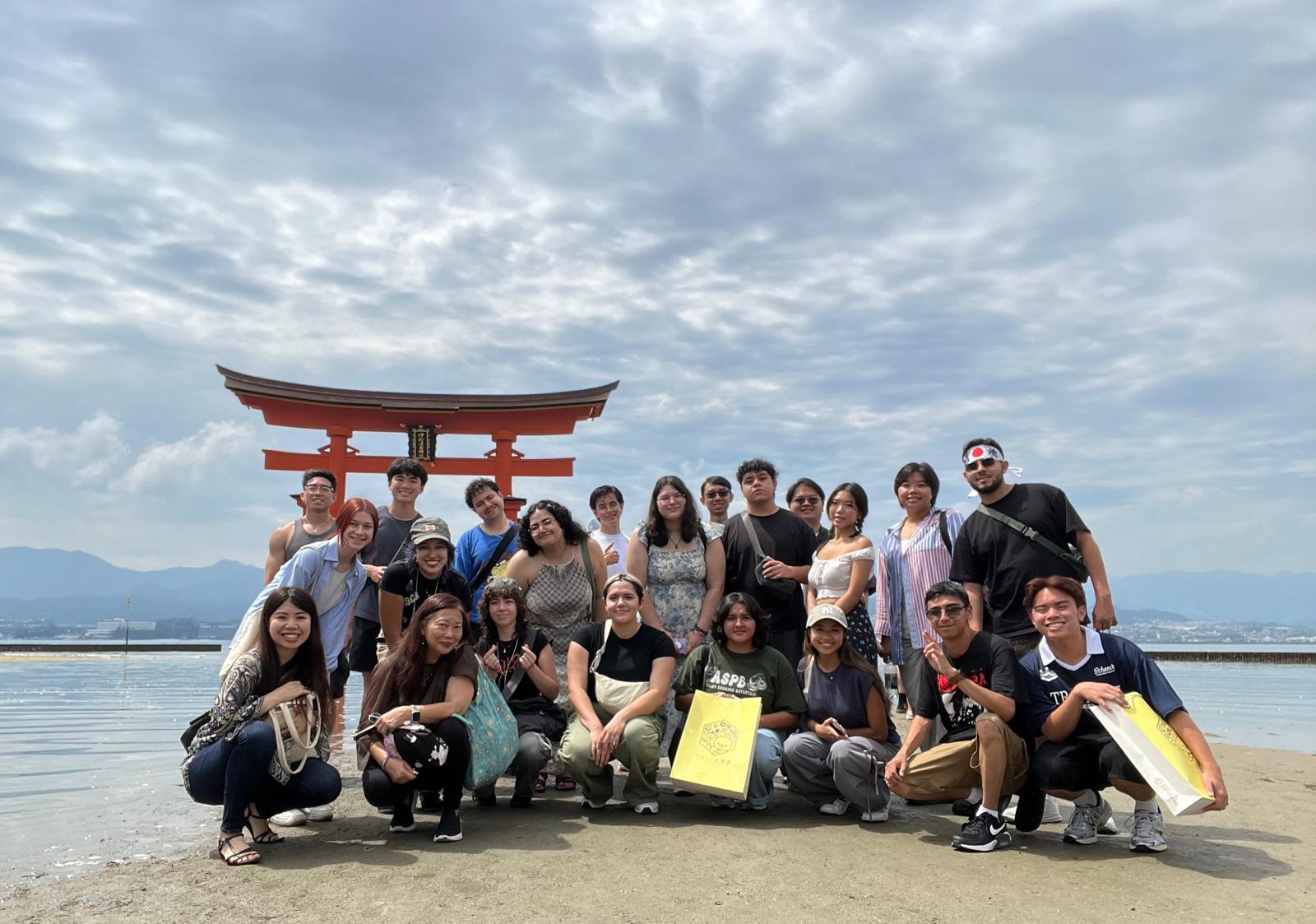
Elisabet Raquel García, Education Abroad Outreach Coordinator, and Sonja Lind, Assistant Director of Education Abroad, wrote this article on behalf of the UCR Education Abroad Office, which is proposing the Highlander Abroad Referendum (HAR) Fee. Contact them at educationabroad@ucr.edu if you have any questions about the HAR fee or education abroad.
Since 1962, the University of California, Riverside (UCR) Education Abroad Office has sent thousands of students on study abroad programs, changing lives for generations. Study abroad means studying, interning or participating in experiences in other countries and U.S. states.
At just $3 a student per term, the cost of an iced coffee, the Highlander Abroad Referendum (HAR) Fee is an investment in your present and future, opening doors to educational travel for not just yourself but all Highlanders. The Associated Students of UCR (ASUCR) election runs this week from Monday, April 27 through Friday, May 1, 2026, and the HAR is back on the ballot.
In 2019, UCR students approved the HAR Fee for five years of funding. The fee has been awarded to the Education Abroad Office, which distributed $99,000 in travel grants to 150 students, hired up to 10 student workers each year and funded multiple food-filled events. In 2025, low voter turnout, not opposition, led to the referendum’s failure, and the HAR expired then. This week, we encourage students to vote “Yes” on the HAR Fee again.
There is much at stake. The $3 fee has supported five years of financial support for students from all backgrounds to participate in programming, a budget to sustain the application portal (MyUCR Abroad) and paid student positions in the Education Abroad Office. The Education Abroad Office primarily relies on limited state funds, so without the HAR fee, programs and grants are at risk. This election, students have the opportunity to provide HAR funding for travel grants, more effective outreach events and more student jobs at UCR.
Take it from Brenda Baltazar Basilio, a graduating business economics student who has worked in our office for four years. She says, “As a student who did not have prior marketing or travel experience, I am grateful for the on-campus job I’ve received through the Education Abroad Office. The office has provided me with stable employment for three years, guaranteeing 15 hours per week with opportunities extending into the summer. I hope the Highlander Abroad Referendum passes successfully so the office can continue providing support not only for study abroad students, but for UCR students at large.”
By voting YES on the HAR fee this week, you are voting for all UCR students to:
- Receive travel grants to study or travel anywhere in the world, including the U.S.
- Work as a student employee in the UCR Education Abroad office, regardless of study abroad experience.
- Participate in funded education abroad events open to all students.
- Be a paid member of the student-led Highlander Abroad Advisory Committee (HAAC), making decisions about how HAR funds are used.
Kalani Gunasekera, a second-year sociology major at UCR, served on HAAC before studying abroad. “Being on [HAAC] allowed me to have hands-on experience in the study abroad process … While on the committee, I took part in putting on multiple events, explaining and presenting on different study abroad programs. Through my experience in the committee, I made the decision to study abroad next school year.”
For decades, UCR has sent students abroad, many of whom are first-generation and low-income, needing financial assistance to participate in study abroad programs. In 2022, Lesley Hernandez, a psychology major, received a travel grant to study abroad in Italy on a University of California Education Abroad Program (UCEAP). The grant helped her pay for her flight. “As a low-income first-generation student, I did not understand how much the trip was going to be, so this greatly helped me out financially.”
Demand for funding is rising, with twice as many UCR students applying for study abroad scholarships in 2026. Additional funding will help more students, including those participating in U.S.-based and non-credit programs (which receive no financial aid).
The HAR fee reduces financial barriers so all Highlanders can participate. Each year, over 300 students rely on this support and we aim to expand access to it. Additionally, 25 cents of the $3 HAR fee will return to financial aid, helping 80% of UCR students who receive aid.
Study abroad offers experiences that build career skills and create global citizens. According to a Forum on Education Abroad survey, most alumni said that studying abroad developed job skills, such as adaptability and intercultural communication, which shaped their careers. Highlanders who study abroad return with new perspectives and stronger resumes.
Karina Chang, a graduating neuroscience pre-med major, received a grant to go to Italy in 2023, and believes that “study abroad changes how students see themselves and their place in the world. The [HAR] helps make that transformation possible to every Highlander, regardless of background.”
Take action and vote in the upcoming election, not only to elect the student government but also to secure the HAR fee and its benefits for UCR students like you.
For more about UCR HAR recipients, please see our HAF Travel Grant Lookbook at https://tinyurl.com/haflookbook. Vote “Yes” on the HAR fee this week (and “Yes” for the R’Garden). Email us at educationabroad@ucr.edu to learn more about the referendum or studying abroad.